

Jeff Tremaine says Jackass ends for real, with no new cast
The director lays out why the franchise cannot safely scale, and how the latest brutal footage changed his view.
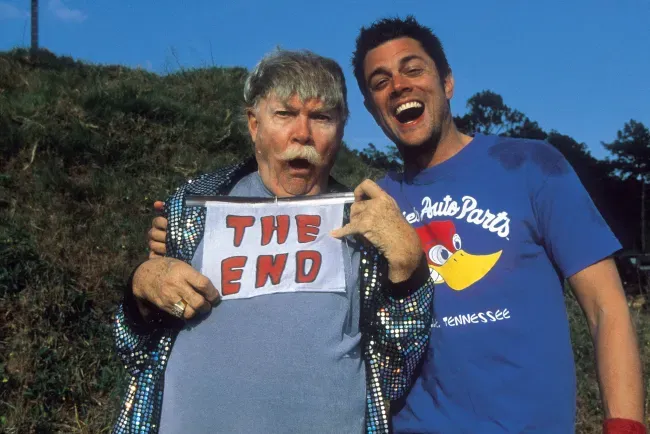
Jeff Tremaine, director of Jackass, says the series will not continue with a new cast. The decision has real implications for executives managing talent-led brands, content risk, and long-term audience expectations.
Jeff Tremaine says this time really is the end of Jackass. The director is clear that the franchise will not continue with a new cast, closing the door on the common “we can just swap the lineup” strategy for long-running brands.
That is not just a creative choice. Tremaine points to the physical reality behind the stunts, including brain injuries, and to what he describes as newly surfaced footage in which he is traumatized after thinking Johnny Knoxville died. In other words, the endgame here is not paperwork or franchise fatigue. It is bodily consequence, plus the emotional aftermath of realizing how close things can go to catastrophic.
To understand why this matters beyond one comedy brand, look at how talent-led franchises work when they age. Jackass has always been anchored to specific performers, their willingness to take risks, and their on-camera chemistry. When those people are no longer available, brands typically face a brutal question: can you preserve the audience promise without the core engine that made it work in the first place? Tremaine’s stance suggests the answer is no for Jackass, not because the audience stopped caring, but because continuing creates a risk profile that is no longer worth carrying forward.
The brain injuries piece is the key. Even for executives who do not track medical literature, the direction is obvious. When a business model depends on repeat exposure to high-risk activity, the “unit economics” of stunts change as harms accumulate. A franchise can sometimes survive one-off controversies or accidents. It is harder to normalize repeated injury when the consequences are neurological and potentially long-lasting. Tremaine’s framing signals that this is not a case of bad luck, it is a pattern that eventually collides with human limits.
There is also the governance angle, the part boards and legal teams care about even when the cameras are rolling. When studios, streamers, and partners invest in physical comedy, they are not just funding a show. They are underwriting safety planning, insurance assumptions, release strategies, and incident response. A director saying “no new cast” is a statement that the existing safety and risk management approach has reached a boundary. It implies a reckoning with how far the operation can go while still meeting internal and external expectations.
And then there is the footage. Tremaine discusses new footage of him being traumatized after thinking Johnny Knoxville died. That detail matters for more than shock value. It highlights how quickly risk cascades. In high-intensity productions, what looks like performance can turn into real emergency in seconds, and the crew and performers then have to process what happened. For decision-makers, this is a second-order risk: beyond the injury itself, there is the psychological impact on the people involved, plus the trust and mental readiness required to keep doing it.
For executives in media and entertainment, the broader lesson is how “legacy” brands get managed once the cost curve moves. Jackass was built on pushing boundaries. But once those boundaries start producing brain injuries, “brand legacy” becomes less about preserving an aesthetic and more about protecting people. That is a different kind of stewardship, and it comes with tradeoffs. You might lose the revenue potential of additional seasons. You gain credibility, reduced legal exposure, and a clearer moral line for talent, crew, and partners.
If you are leading a comparable project, Tremaine’s comments are a warning label disguised as a creative statement. Swapping casts is often treated as a workaround. Here, it is not. The end is driven by the combination of injury risk and the emotional toll revealed by new footage. The strategic stakes are simple: when a business depends on extreme physical acts, you cannot out-edit biology. At some point, the boardroom question shifts from “How do we continue?” to “How do we stop responsibly?”
This story's Key Insights and Take-aways are locked.
Create a free account to unlock Executive Actions for one credit.
Register to UnlockAlways free for Executives Club members. Join the Club
More in Entertainment

Russell Brand's accuser 'bewildered and confused' as he denies 7 sex charges
The criminal case against the comedian is a live test of how media companies manage talent risk when serious allegations go public.

'It's a Magic Trick': Ballet Experts Say Rosalía's SNL Pose Is Impossible
Three ballet experts tell Rolling Stone Rosalía's gravity-defying SNL stillness shouldn't be possible - and why the debate is now part of the show.

Activision CMO: GTA 6 Will Boost Call of Duty, Not Bury It
Activision's top marketer says Rockstar's blockbuster will drive players back to consoles and into Modern Warfare 4, even as the company admits its recent strategy failed.