
Steam Machine costs $1,049-$1,428, but the casual console promise still falls behind
Valve’s living-room PC claims plug-and-play ease, yet the price-to-performance math lands awkwardly for serious buyers.
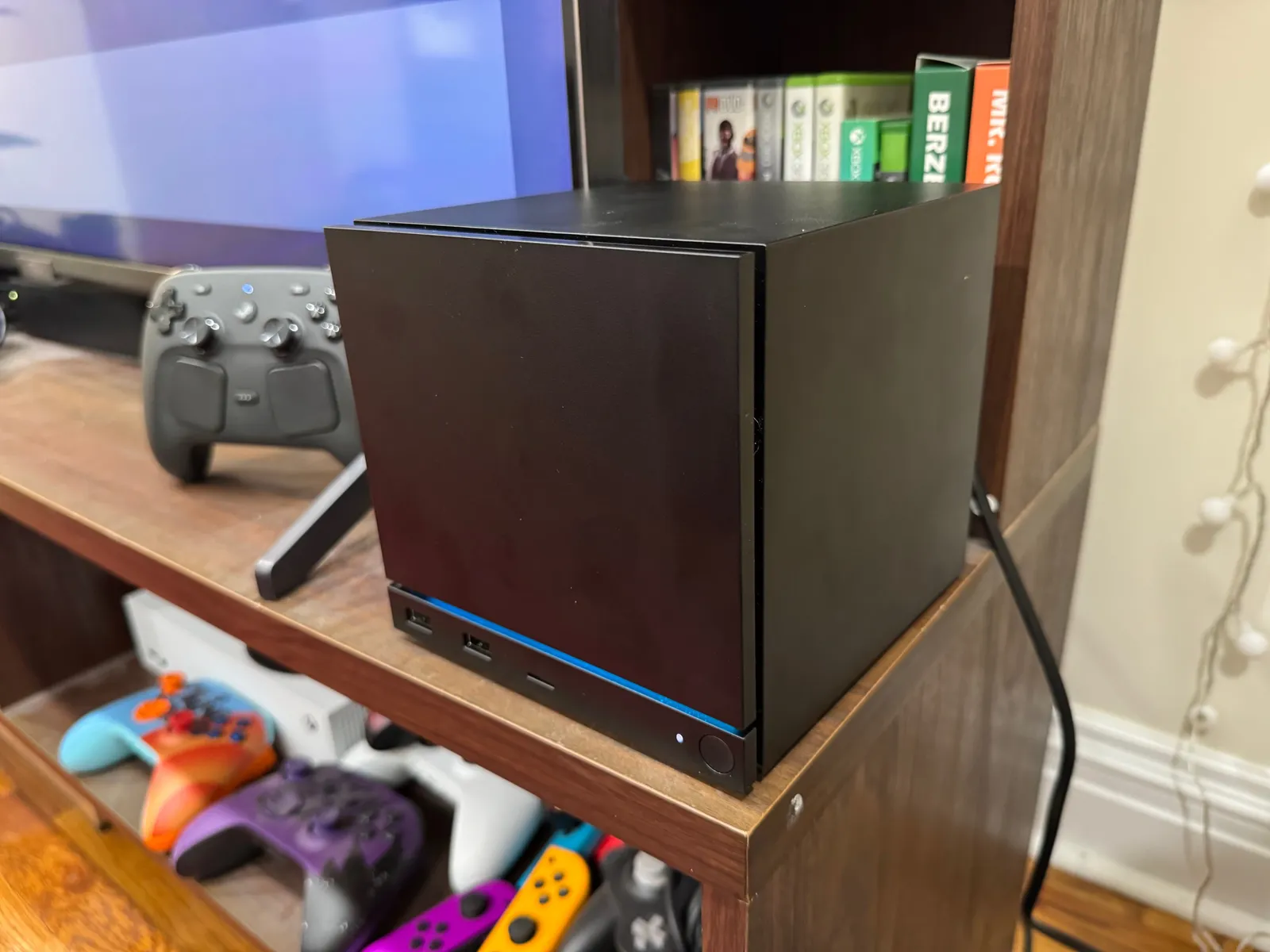
Valve’s Steam Machine is positioned as a “plug-and-play” bridge between PC and console players, priced between $1,049 and $1,428 for the top-end model. For decision-makers, the core consequence is simple: hardware underperforms the premium cost, making value harder to justify.
Valve’s Steam Machine is priced between $1,049 and $1,428 for the top-end model, and that number is the entire story. The device aims to close the PC-to-console gap with a “little black box” experience that is meant to feel as easy as a PlayStation 5. The review’s bottom line is that the Steam Machine largely delivers on the casual ambition, but it does not deliver the kind of value buyers can defend when the price tag is this high.
After spending time “living with the device,” the review says it works as a practical casual entry point. It is a major graduation from a Steam Deck, and it can help some players avoid upgrading their PC during a “RAM apocalypse.” That is the good news. The bad news is more decisive for hardware-minded readers: even if the device feels like a console, its performance reality does not make financial sense “any way you slice it” once you compare cost to hardware capability. And the review makes the uncomfortable tradeoff explicit: the value you get from the Steam Machine is inversely proportional to how much you know about hardware.
So what is actually happening here? The Steam Machine’s pitch is about usability, not specs. In the console world, the value proposition is usually tied to a curated experience, predictable expectations, and minimal tinkering. In the PC world, the value proposition is usually tied to performance per dollar and the freedom to upgrade or optimize. Valve is trying to blend those worlds. For casual players, that can be a real win: the review frames the device as an “easy-to-use gaming device” that is meant to be as simple to live with as a console. That usability advantage is real, and it is the reason it can be a “graduation” from a Steam Deck.
But the price anchors the entire equation. The Steam Machine is framed as a bridge for console owners, meaning it competes not only with PCs, but also with the very expectation-setting device buyers already understand. When the review says the underwhelming power fails to match the price, it is basically saying the product is paying “console convenience” pricing while delivering “PC hardware” outcomes. If you are buying it as a set-and-forget gaming box, you may still enjoy it. If you are buying it like a hardware rationalist, you are likely to feel the mismatch.
That mismatch matters beyond personal preference because it shapes adoption curves. When a premium-priced entry point underdelivers on performance, it tends to slow category growth. Enthusiasts usually communicate with their wallets and their benchmarks. Casual players communicate with retention and word of mouth. This review explicitly points out the split: the more technically minded a buyer is, the less the financial logic holds up. That is a second-order risk for any company betting on a new form factor or distribution model, because early impressions can become the default narrative.
There is also a broader market context hiding in the “RAM apocalypse” line. Memory shortages and pricing stress have historically pushed buyers into stopgap decisions and delayed upgrades. The Steam Machine, in this telling, becomes attractive partly because it can postpone a PC build. That is a narrow but meaningful incentive. However, it is also temporary by nature. Supply conditions change, and buyers eventually return to the baseline question: what can I buy today for the money I have.
On top of that, “plug-and-play” marketing introduces its own governance and expectation dynamics. A device designed to feel console-like is often judged like console hardware and supported like console software, even though it sits in the PC ecosystem. That creates a tension in how buyers evaluate long-term value: casual buyers expect simplicity to stay simple, while hardware-informed buyers expect the dollar-to-performance ratio to stay rational. If either side feels shortchanged, the product can struggle to expand the audience it is targeting.
For executives and boards watching categories like console-like PC devices, the strategic lesson is straightforward. Usability and “bridging” narratives can work. The Steam Machine can earn attention from casual PC players because it delivers an easy-to-use experience. But price-to-performance is the constraint that eventually wins the procurement process. If the platform becomes a luxury convenience rather than a compelling value, growth can become limited to buyers who are paying for the experience rather than chasing the best build.
In other words, the Steam Machine review is not arguing that it is a bad device. It is arguing that the pricing turns it into a hard sell. And when that hard sell is visible to anyone who can read a benchmark, it reduces the number of people who can justify buying now and defending the choice later.
This story's Key Insights and Take-aways are locked.
Create a free account to unlock Executive Actions for one credit.
Register to UnlockAlways free for Executives Club members. Join the Club
More in Entertainment

Russell Brand's accuser 'bewildered and confused' as he denies 7 sex charges
The criminal case against the comedian is a live test of how media companies manage talent risk when serious allegations go public.

'It's a Magic Trick': Ballet Experts Say Rosalía's SNL Pose Is Impossible
Three ballet experts tell Rolling Stone Rosalía's gravity-defying SNL stillness shouldn't be possible - and why the debate is now part of the show.

Activision CMO: GTA 6 Will Boost Call of Duty, Not Bury It
Activision's top marketer says Rockstar's blockbuster will drive players back to consoles and into Modern Warfare 4, even as the company admits its recent strategy failed.