

Jen Psaki calls Republicans’ Mitch McConnell health “cringey and bizarre” explanations
Psaki questions 20-minute call claims after McConnell last appeared June 14, arguing taxpayers deserve updates.
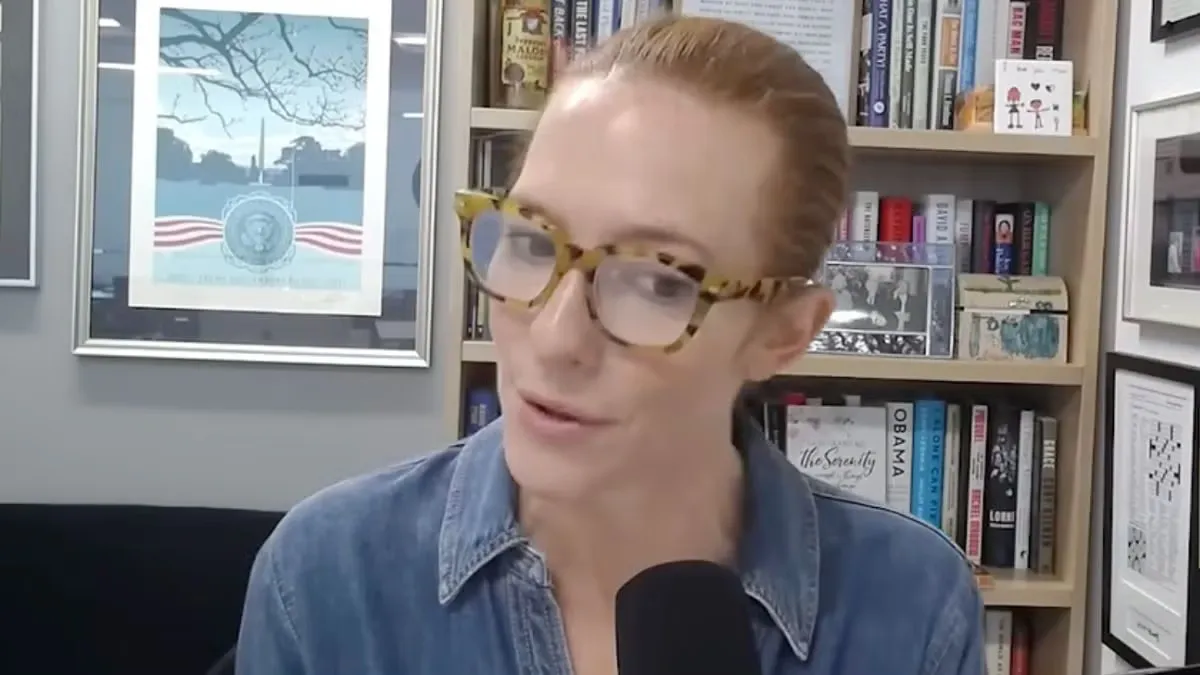
MS NOW host Jen Psaki blasted Republicans’ attempts to explain the status of Sen. Mitch McConnell’s health in a Thursday YouTube video. Her critique centers on claims that colleagues spoke to him at length, while noting the public has still been left with few verifiable updates.
Jen Psaki did not mince words. In a Thursday YouTube video, the MS NOW host tore into Republicans for what she called a “cringey and bizarre” effort to explain the health status of Sen. Mitch McConnell (R-Ky). Her point was simple and, frankly, political: McConnell has not been seen since his reported hospitalization last month, yet the public narrative has been filled with posts from Republican figures claiming they spoke to him.
Psaki framed the underlying problem first: there have not been “many updates about his health or what landed him there in the first place.” She then pivoted to a second, more accountability-focused argument. Because “McConnell is a public servant” and his salary is paid by taxpayers, the public “of course” has a right to “know more about his health.” That is where the story moves from gossip to governance, because what looks like a communications strategy also becomes a legitimacy question for voters, lawmakers, and anyone watching how the Senate handles uncertainty.
From there, Psaki targeted a specific example that has become the centerpiece of the controversy: a post by CNN commentator Scott Jennings at X. Psaki said the “earliest cringey effort” came from Jennings, who posted that “I spoke to my old friend Mitch McConnell, the senior senator from Kentucky. He's recovering in the hospital. We talked for just shy of 20 minutes about Iran, Ukraine, the unfolding situation in Maine, my visit to the TR presidential library and even a little bit of Senate history. I told him we want to see him back at work as soon as possible.” Psaki read the message aloud and reacted with heavy skepticism, quipping along the lines of “Did you now?”
Her skepticism is the crux: Psaki argued it is hard to square the timing and content of those reported conversations with the fact that McConnell “hasn't been seen or heard from since June 14th.” She said it is “hard to believe” that McConnell, absent from public view since that date, was having a detailed conversation about Iran and Ukraine. And then she sharpened the critique: there were “other posts like this,” where it appears “everybody has had a 20-minute conversation with him that is in-depth about some complicated policy issues.” Psaki concluded, “I don't really buy it, but who knows?”
Notice what she did in that middle stretch: she did not argue McConnell could not be recovering. She argued the public has been asked to accept too neat a story, too quickly, without enough concrete, consistent information. She also pointed out that only a handful of Republicans were “tout[ing] this narrative,” while others seemed to treat it as material for satire. That distinction matters because it suggests the controversy is not simply partisan messaging, it is a credibility fight. When public figures are absent and claims circulate faster than verification, the gap fills with doubt.
Psaki then highlighted the broader ecosystem of reactions, including jokes that reframed the same claims in a way that readers could immediately understand as absurd. She specifically shouted out Rep. Thomas Massie’s joke response, which read: “I spoke to McConnell for about 20 minutes this morning. He said we should end the war with Iran. Quit giving aid to Israel. Stop spying on Americans without a warrant. And he's really sorry about how my primary turned out.” That kind of punchline is not a policy argument, but it is still a second-order signal: even some lawmakers are pushing the narrative into ridicule because the communications story, as told, does not feel grounded.
There is also a structural angle executives and board members should recognize, even if this is a political story. In any high-stakes institution, when a key leader becomes unavailable, the organization faces a communications dilemma: share too little and you invite rumors, share too much and you risk privacy and speculation, and share the wrong details and you lose credibility. Psaki’s critique is essentially that Republicans are trying to win the credibility game with anecdotes and social posts rather than verifiable updates. She even brought in a real-world accountability mechanism via Kentucky’s governor, noting that the governor sent a letter to McConnell’s office asking for an update as concern grows.
If you zoom out, the implications are bigger than one lawmaker’s health status. Psaki’s attack pressures how the Senate and political leadership manage succession, continuity, and public trust when a senior figure is sidelined. For peers in similar roles, it is a reminder that communications are a form of governance. In the absence of clear, consistent updates, every “we spoke to him” claim becomes a test of whether the institution can withstand scrutiny. And for decision-makers across government and adjacent industries, the lesson is brutally transferable: when the public is paying attention and the timeline is measurable, your credibility will be judged on evidence, not vibes. Psaki’s framing of the effort as “cringey and bizarre” is not just a rhetorical flourish, it is a warning shot to the people trying to manage information flow while the facts on the ground remain thin.
This story's Key Insights and Take-aways are locked.
Create a free account to unlock Executive Actions for one credit.
Register to UnlockAlways free for Executives Club members. Join the Club
More in Politics

Glacial collapse, not rain, killed 180 in Nepal's Himalayan flood
The Himalaya's extreme geography hid the true cause of Nepal's catastrophic flood, a glacial collapse that turned a geological battleground into a mass-casualty zone.

Iran’s Esmail Baghaei says Oman talks start shipping via Hormuz, not US talks yet
Temporary route plans with Oman aim to restart commerce while Tehran says Washington dialogue is not on the table.

Standards watchdog opens probe into Reform UK deputy leader Richard Tice over interests
The parliamentary standards commissioner says it began an investigation on 28 July into a possible undeclared interest.