
Jim Cramer calls Intel his top stock pick as AI focus outweighs the hype
CNBC’s Jim Cramer says investors should look past the noise and bet on Intel’s future AI opportunity.
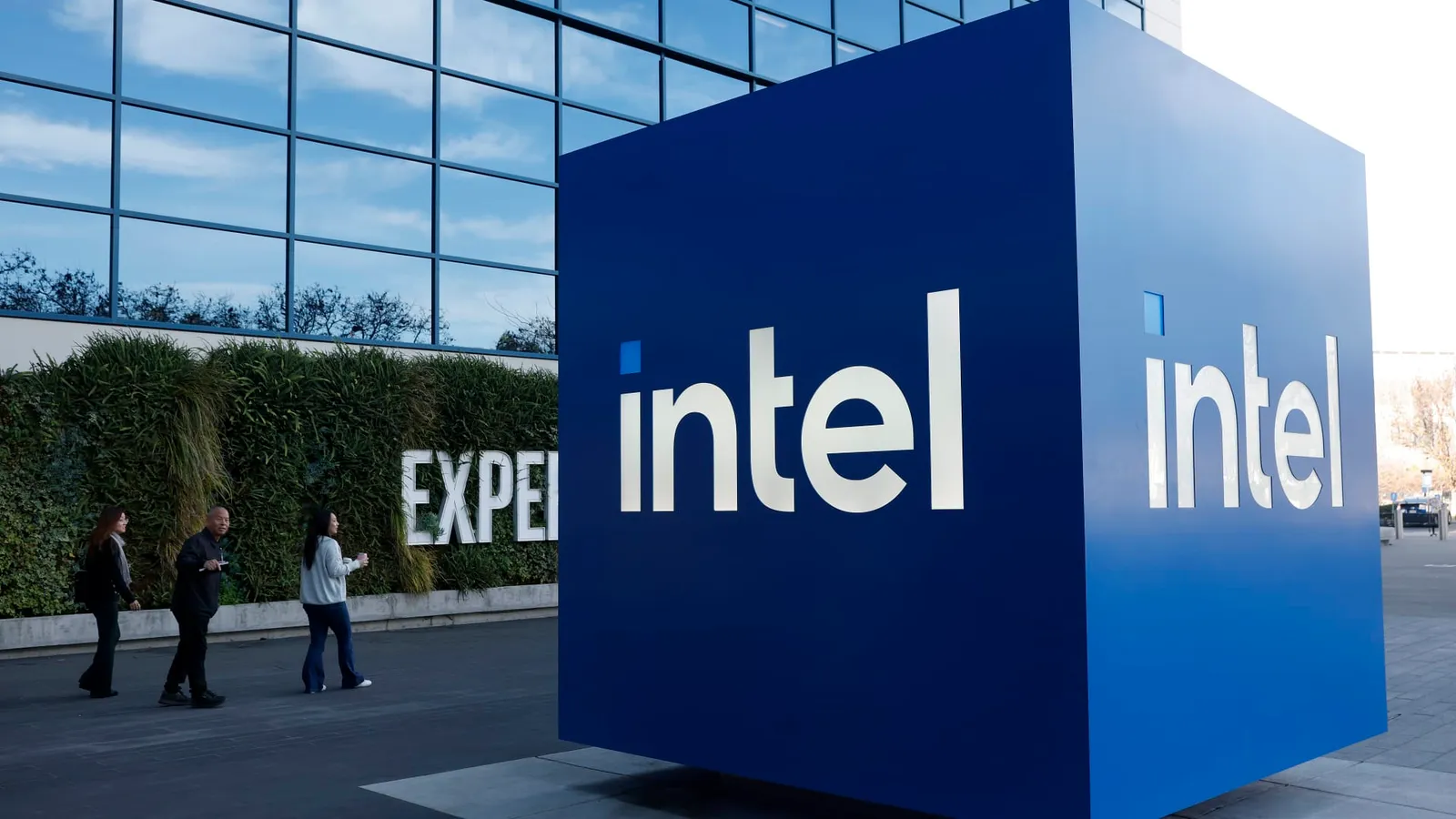
CNBC’s Jim Cramer named Intel as his top stock pick, arguing that investors should focus on the company's future AI opportunities. The implication for decision-makers is a shift from chasing short-term momentum to underwriting long-term AI compute positioning.
CNBC’s Jim Cramer named Intel as his top stock pick, and the case he’s making is unusually clear for a market that loves to overcomplicate everything: investors should focus on Intel’s future AI opportunities. In other words, don’t just react to what the market has already priced in, react to what the company is actually building toward.
That pitch matters because “AI opportunity” is not a vibe. It is a supply-chain, product-roadmap, and capital-allocation question. Intel is being positioned as a company where investors can connect today’s stock performance with what could come next in AI compute demand, instead of treating AI as a purely narrative trade. Cramer’s framing is basically an argument about attention. If you are a decision-maker allocating risk, you have to decide what to weigh more: the near-term tape or the forward capability.
To understand why Cramer’s stance can move people, you have to understand the incentives of the market. When a headline stock gets momentum, the buyer base often shifts toward traders who care about what happens next week, not next quarter. Long-term investors still exist, but their job gets harder if the market is constantly demanding instant proof. That creates a familiar trap: investors overreact to outcomes that may not align with a multi-year product cycle, especially in semiconductors, where “build time” is real time.
This is also why Cramer’s emphasis on Intel’s future AI opportunities is more than just a stock recommendation. It is a signal about how he thinks the market should evaluate semiconductor leadership in the AI era. AI is not limited to models and software. It requires compute, and compute requires chips, platforms, and the ability to scale manufacturing and delivery. In that world, the competitive question is often less about what one quarter of results shows and more about whether the company can turn AI demand into durable revenue streams.
There is another layer that matters for boards and execs: capital markets reward credibility. If investors believe a company is serious about AI, they are more willing to tolerate execution risk along the way. But if the narrative drifts or the roadmap stalls, the same investors quickly swing to a different name, often one that appears more “on schedule.” That means executive teams cannot just announce AI ambition. They have to make investors feel the ambition is getting converted into tangible progress.
Intel’s situation, as presented in this segment, is essentially about prioritization. Cramer is pushing investors to underwrite Intel not for what it has already done in the past, but for what it can do in AI going forward. That is a capital allocation discipline question for anyone making investment decisions or building strategy inside a tech company: do you bankroll what is next, or do you chase what is already moving?
For peers, the second-order implication is uncomfortable but important. When a high-visibility market voice like Cramer elevates Intel on AI opportunity, it can affect how quickly capital rotates inside the semiconductor and infrastructure ecosystem. That can change valuation assumptions across the group, even for companies whose fundamentals have not shifted. In turn, management teams can face more pressure to prove progress, because investor attention becomes a scarce resource.
Ultimately, the strategic stake is straightforward. Semiconductors are a bridge between research and revenue, and AI is accelerating the demand for that bridge. By naming Intel as his top stock pick and directing attention to its future AI opportunities, Cramer is telling investors to look for the next phase of compute growth rather than treating AI as a one-time catalyst. For decision-makers watching Intel or any similar platform company, the lesson is that timing still matters, but so does the discipline to evaluate the future the market claims to want.
This story's Key Insights and Take-aways are locked.
Create a free account to unlock Executive Actions for one credit.
Register to UnlockAlways free for Executives Club members. Join the Club
More in Business

A flaw in PHP just forced governments to pull their own sites offline
European agencies from Belgium to Germany took websites dark to patch a critical weakness in the language behind almost 70% of the web, and the blast radius extends far beyond government portals.

BioWare shuts down, Mass Effect 5 dead after $55B EA buyout
The legendary RPG studio's closure lands months after a $55 billion investment group buyout of EA, raising tough questions for gaming's biggest acquirers.
Musk weighs Tesla-SpaceX mega-merger as boards form review panels
Special committees at both companies will examine a tie-up that could fuse electric vehicles and space launch, forcing a fresh look at governance and valuation.