

Jim Kavanaugh built World Wide Technology on resilience, not talent, then points to Messi
The $20B-a-year tech firm’s co-founder argues setbacks plus leadership beat “natural ability” every time.

Jim Kavanaugh, a former U.S. Olympian and co-founder of World Wide Technology, says resilience and leadership mattered more than raw talent as he built a $20 billion-a-year company. For executives, his argument is a reminder that culture and response to failure are strategic assets, not HR slogans.
Jim Kavanaugh has a simple message for founders: resilience matters more than talent, and he proves it with a sports analogy. The 63-year-old former U.S. national soccer player turned Missouri-based technology entrepreneur co-founded World Wide Technology after representing the United States at the 1984 Summer Olympics. Today, World Wide Technology generates $20 billion in annual revenue as of 2025, and Kavanaugh is a billionaire with a net worth of $7.7 billion. The punchline is not “work harder” in the generic sense. It is that the ability to keep pushing through setbacks is what separates people who advance from people who plateau, whether you are trying to make the national team or scale a multibillion-dollar company.
Kavanaugh's framing ties directly back to his soccer origin story. He told Fortune that when he was younger, he “got cut numerous times,” but he “continued to grind through it” and “get better.” That experience taught him something he now applies to leadership and hiring: people who succeed keep learning and keep moving forward, even when the feedback is uncomfortable. He also contrasts leadership styles through famous team captains, pointing to Lionel Messi as the model. In Kavanaugh's view, Messi “brings the best out of Argentina,” inspiring teammates through actions rather than commanding them. He says Ronaldo does not “do the same for his team and country,” and he uses the comparison to explain why leadership is not one-size-fits-all.
To understand why this matters beyond sports, zoom out to how large technology businesses actually get built. Scaling a firm that produces $20 billion annually is rarely a straight-line process. Even if you are starting with technical skill, you still face cycles of customer demand, supply chain constraints, hiring challenges, and constant competition for talent and deals. In that environment, resilience becomes a repeatable operating system. Kavanaugh’s emphasis on learning and effort is less about motivation posters and more about a practical question he asks young kids: “Are you running towards work, or are you running away from it, and are you trying to avoid it?” He calls the avoidance “a problem.” For executives, that is a cultural tell. It suggests performance management is not only about targets. It is also about how people metabolize pressure when outcomes are uncertain.
The company side of Kavanaugh’s story reinforces the point. World Wide Technology has repeatedly appeared on Fortune’s list of the 100 Best Companies to Work For, which is evidence that the firm’s internal culture is not an afterthought. Kavanaugh also acknowledges the cost of execution. While he believes work-life balance is important to strive for, he describes periods of extended schedules as necessary when opportunities are “there” and might “go away and not come back.” He said building World Wide Technology often meant working 12- to 18-hour days for extended stretches. Translation for decision-makers: resilience is not only what you ask of your teams during setbacks. It is what you plan for when you need to sprint, win the window, and deal with the fatigue that follows.
Kavanaugh’s leadership argument has another layer: AI-driven change. He says that in an era of rapid AI-driven change, having effective leadership, including a team-based culture, is “more important than ever.” That line lands for boards and C-suite leaders because AI adoption is not just about tools. It forces workflows to change, job scopes to evolve, and middle management to translate strategy into day-to-day execution. When change accelerates, the “talent” advantage is often temporary. What lasts is the ability to keep teams aligned through re-orgs, new processes, and competing priorities. Kavanaugh’s claim is that leadership and resilience are what keep the organization learning rather than defending.
There is also a subtle governance implication here. When founders and owners talk about leadership, boards should listen for clarity about values and team orientation. Kavanaugh argues Messi’s success is rooted in team values and orientation, and he generalizes the idea that leaders can lead by example or by being vocal. For executives, that matters because it shapes what “good leadership” looks like when you are selecting managers, setting performance expectations, and deciding how culture gets enforced. In other words, it is not enough for a company to claim it wants resilience. It has to define how resilience shows up in real behavior, from how people respond to being “cut numerous times” to how they handle long work stretches when the opportunity window is short.
Finally, the stakes for peers are straightforward. If your organization treats talent as destiny, you risk building teams that crumble when the next quarter demands something different. Kavanaugh’s story suggests a better question: are you hiring and training for learning under pressure, or for effortless competence? In business, that is often the difference between companies that adapt and companies that stall out. And if World Wide Technology’s $20 billion-a-year scale is any indication, Kavanaugh’s playbook is not theoretical. It is a lived approach that turns rejection and critique into a competitive advantage, then applies the same logic to leadership on and off the field.
This story's Key Insights and Take-aways are locked.
Create a free account to unlock Executive Actions for one credit.
Register to UnlockAlways free for Executives Club members. Join the Club
More in Business

SK Hynix opens at $170, raises $26.5B, and tops foreign IPO records
In Friday's Wall Street debut, SK Hynix turns AI RAM demand into a $26.5B fundraising moment that rewrites comps.
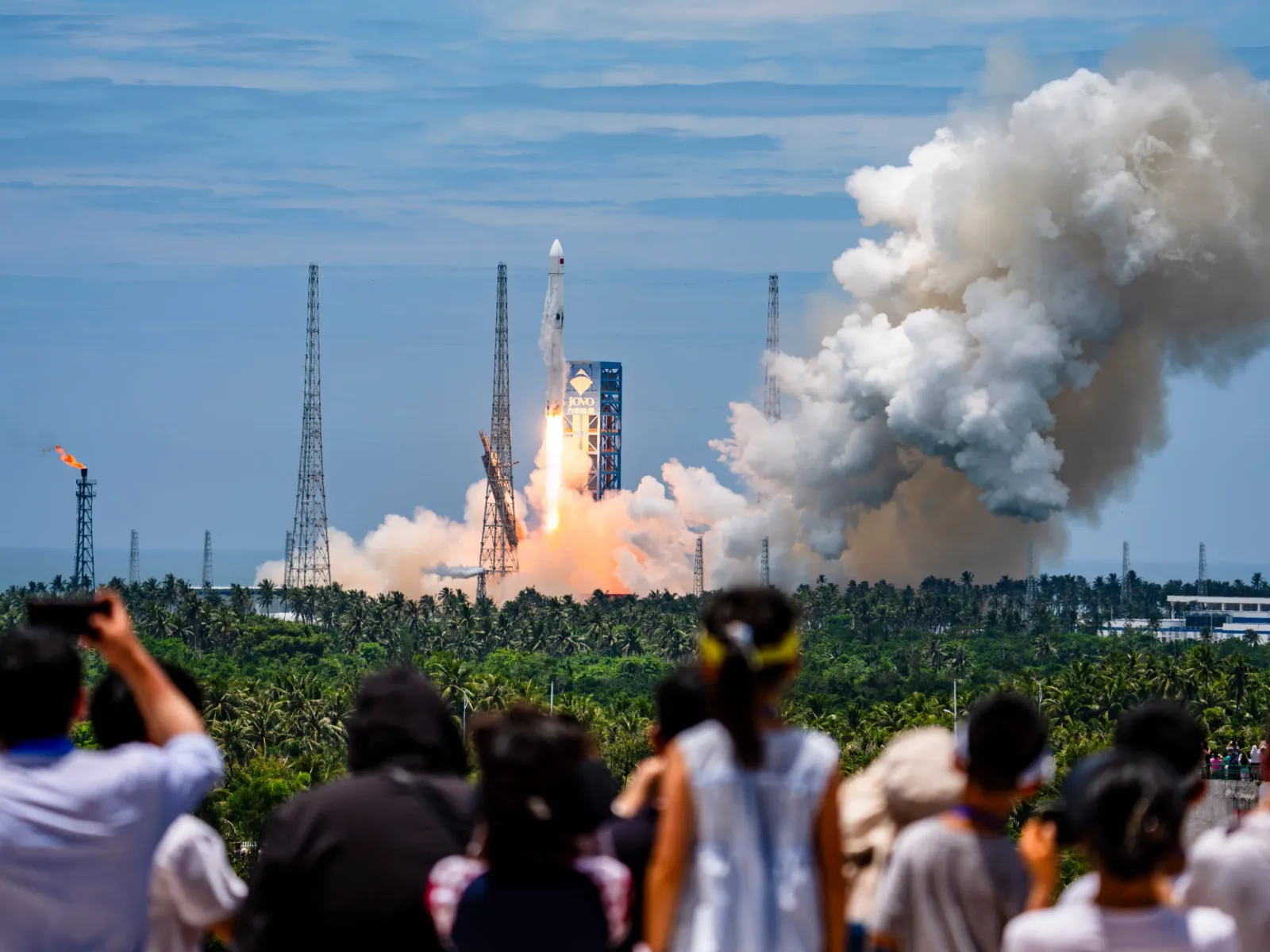
China lands a reusable Long March booster, a first that matches SpaceX and Blue Origin
A barge landing and net-based recovery move China from theory to proof, reshaping the reusability race and satellite ambitions.

AstraZeneca $27B wipeout as Wainua late trial misses cardiovascular target
A failed late-stage heart study triggered a swift market punishment, forcing investors and boards to reset timelines and risk.