
John Oliver calls Gianni Infantino's 'trust us' visa fix a 'No f-king way'
Visa problems for World Cup players and staff are already hitting countries like Iraq, Iran, and Somalia, and Oliver is not buying it.
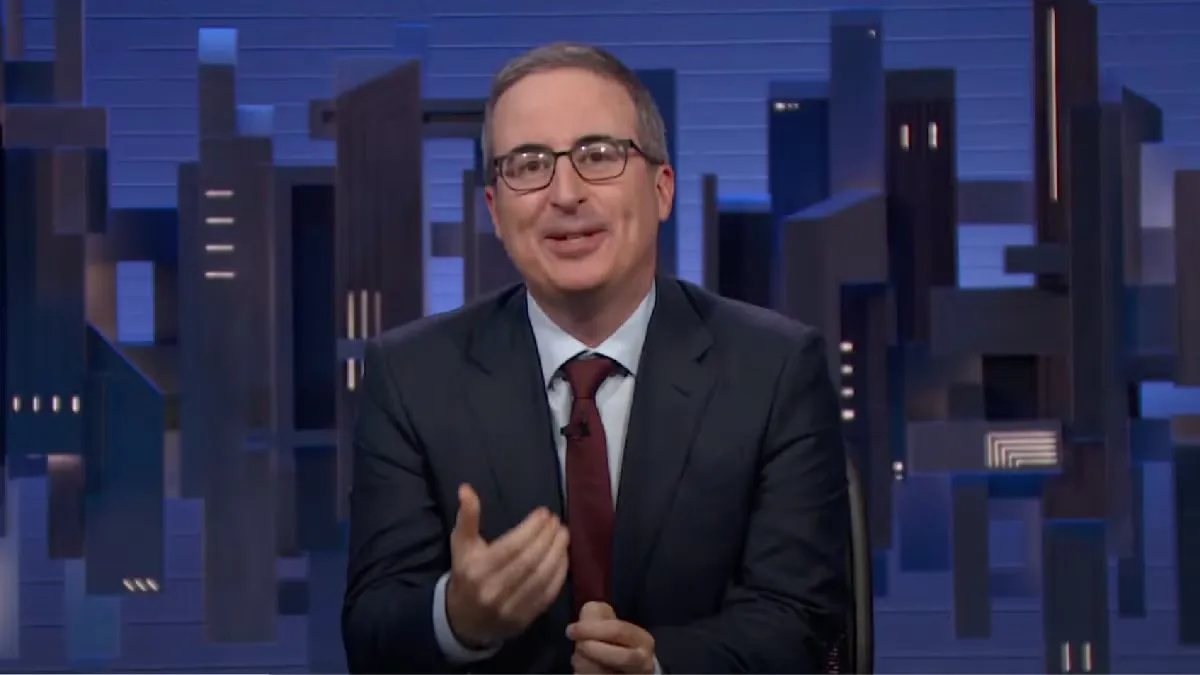
On HBO's Last Week Tonight, John Oliver ripped FIFA President Gianni Infantino after Infantino told fans to 'chill,' 'relax,' and ultimately 'trust us' over World Cup visa issues. The backlash matters because it spotlights how governments, global sports operators, and reputational risk collide when rule enforcement and accountability lag.
Gianni Infantino told people to "chill" and "relax" over World Cup visa issues, and John Oliver's reaction was immediate, blunt, and mostly unprintable. In the latest episode of HBO's Last Week Night, Oliver responded to Infantino's call for fans to "trust us" with just three words: "No f-king way!" The point, according to Oliver, is that the visa troubles are not hypothetical or limited to a handful of edge cases. They are affecting multiple groups trying to enter the U.S. for the World Cup, and Oliver frames FIFA's message as wildly mismatched to what people are experiencing on the ground.
Oliver said fans from more than a quarter of the countries competing in the World Cup are struggling to even get in the country. He also expanded the scope beyond fans. A player from Iraq, Iran's whole national team, and a referee from Somalia all faced issues. Oliver further pointed out that the referee from Somalia, and Iran's national team, actually had to leave the country. That is the crux of why Oliver rejected the "trust" language: visa problems have moved past inconvenience and into disruption and departure.
To understand why that matters, look at how these events are typically orchestrated. For a World Cup, there is a cascading chain of dependencies: team travel plans, official accreditation, match schedules, venue access, and staffing. Visa delays can ripple quickly from individuals to entire organizations, because teams and officials do not travel like tourists. They arrive with tight timing and operational requirements. If visas are not cleared, you do not simply reschedule the individual. You can threaten training, logistics, broadcast plans, and the basic ability to participate.
Infantino, when pressed, reportedly told everyone to "chill" and "relax". He added a clarification that when he said "chill," he did not mean to "chill and do nothing," but rather to "trust us." Oliver seized on that phrasing as the central mismatch between a high-stakes operational crisis and an assurance that, in his view, lacks credibility given what has already gone wrong. In Oliver's framing, FIFA is not just asking people to wait. It is asking them to bet on FIFA's ability to manage a problem that is currently preventing people from entering the U.S. for matches.
Oliver then widened the lens to governance and trust, because confidence is rarely a neutral emotion in global sports. He argued that it is hard to trust FIFA to stand up to President Trump. His claim was connected to FIFA's relationship with Trump and the broader political context Oliver referenced. Oliver said FIFA "invented a peace prize to give to President Trump," and he tied the visa guidance to what he described as a pattern where Trump uses the World Cup as an excuse to punish specific groups of people. In that context, telling people to "chill" is not just tone-deaf. It becomes, in Oliver's view, insufficient against a system where politics and immigration enforcement can intersect.
Oliver also made a point about the credibility gap by listing what he described as FIFA's history of decisions that benefited Trump. He referenced FIFA hiring "the Village People" to perform at the ceremony for the peace prize, and he added more than just pageantry. He claimed Infantino has made more public appearances in the Oval Office during Trump's second term than any world political leader. Whether someone agrees with Oliver's framing or not, the operational implication is clear: when an organization is seen as too cozy with power, its claims of competence during a regulatory crunch get scrutinized harder, not easier.
The deeper business lesson for executives is that visas are regulation, but they are also reputation. When regulatory outcomes break for multiple stakeholders, the question is not only what went wrong. It is who owns the risk, who communicates, and what happens next. Oliver's episode highlights the second-order effects for boards and leadership teams at large global organizations: if you ask customers, fans, and participants to "trust" you during an active failure mode, you may increase backlash even among people who are usually indifferent. In a world where organizations depend on cooperation from governments and authorities, perceived leverage matters. If stakeholders believe you cannot negotiate or escalate effectively, your assurances become liabilities.
For peers running other global leagues, rights holders, tournament organizers, or high-profile events, the strategic stake is straightforward. You can only manage uncertainty through credibility, not slogans. If operational disruptions are already happening, leadership needs communication that matches reality, plus a clear operational plan for what you will do when issues surface. Otherwise, someone like Oliver will do what he did here, reduce the trust request to a soundbite, and remind the world that for the people who cannot get through a border, "trust" is not a strategy.
This story's Key Insights and Take-aways are locked.
Create a free account to unlock Executive Actions for one credit.
Register to UnlockAlways free for Executives Club members. Join the Club
More in Entertainment

Russell Brand's accuser 'bewildered and confused' as he denies 7 sex charges
The criminal case against the comedian is a live test of how media companies manage talent risk when serious allegations go public.

'It's a Magic Trick': Ballet Experts Say Rosalía's SNL Pose Is Impossible
Three ballet experts tell Rolling Stone Rosalía's gravity-defying SNL stillness shouldn't be possible - and why the debate is now part of the show.

Activision CMO: GTA 6 Will Boost Call of Duty, Not Bury It
Activision's top marketer says Rockstar's blockbuster will drive players back to consoles and into Modern Warfare 4, even as the company admits its recent strategy failed.