

Josh Sawyer calls Amazon’s Fallout “one of the best” game adaptations, even with Dinky turned
The New Vegas director praises the show’s fidelity and story choices, then shrugs off the Dinky T-Rex “wrong way” fuss.
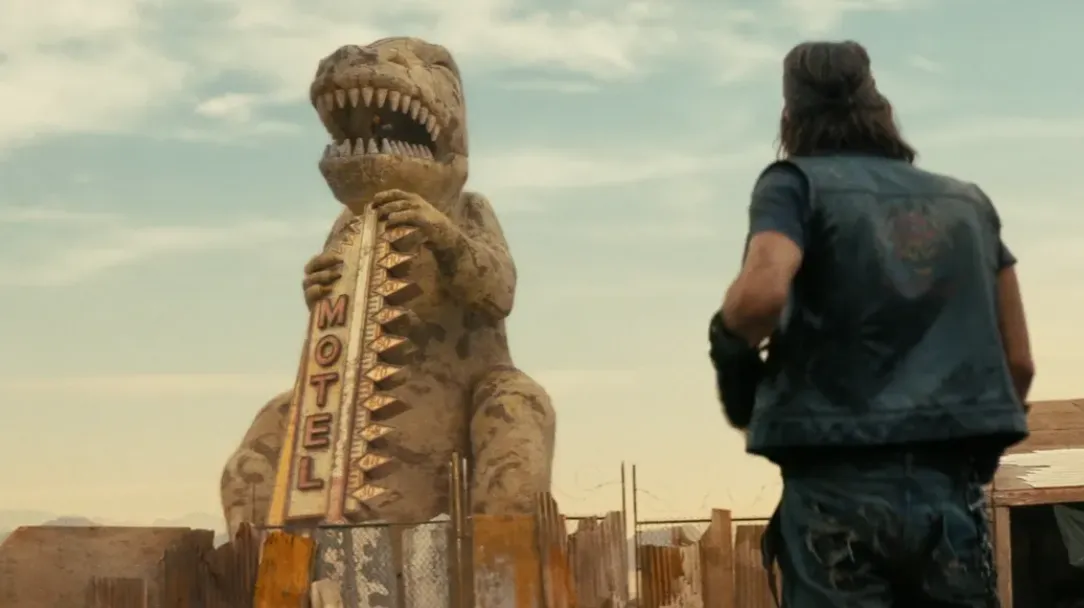
Josh Sawyer, director and designer of Obsidian’s 2010 game Fallout: New Vegas, said Amazon’s Fallout is “one of the best” video game adaptations he has seen. For executives watching Hollywood and gaming converge, the approval matters: it signals what audiences reward, and what they still nitpick.
Josh Sawyer, director and designer on Fallout: New Vegas, gave Amazon’s Fallout show an unambiguous thumbs up. In a new interview, he called it “one of the best” video game adaptations he has seen on TV or film, even while acknowledging there are details he might have handled differently if he were writing. The context matters: Season 2 is set in New Vegas, the same place and title as Obsidian’s much-loved 2010 entry, meaning Sawyer is effectively grading the show with the same yardstick he used to build the original.
So what, specifically, did he praise? Sawyer said he has “got a chance to actually see the set in Season 2,” and that the show’s key environments “look really, really close” to the games. He described seeing the vault and seeing Freeside, plus noting that Novac also matches closely, even if “the layout is not exactly the same.” That distinction is important for decision-makers: it shows the adaptation is not trying to be a frame-for-frame replica, but it is trying to be recognizable to the people who care most. And for anyone making or funding cross-media projects, “recognizable” is the currency.
Now for the controversy the headline probably wants: Dinky the T-Rex. In Fallout: New Vegas, Dinky faces away from the town as a sniper perch. In the Fallout show, Amazon rotated the statue 180 degrees to face toward the motel so Lucy could appear as a sniper and shoot enemies outside the motel in Season 2, Episode 1. Some fans complained that Dinky was, as they put it, facing the wrong way. Sawyer’s response was basically: I understand the complaint, but the scene wouldn’t work otherwise. He said the scene “wouldn’t work at all because it’s about Lucy firing into the thing or whatever,” adding that he “wasn’t personally really bent out of shape about it,” even if he might draw backlash from hardcore fans.
There’s a second-order lesson hiding in that shrug. Adaptations live or die by tradeoffs, and fans often treat those tradeoffs like betrayal. But Sawyer’s take implies Amazon made a deliberate choice to prioritize narrative function in the moment over strict prop continuity. That matters for boards and studio strategists because it points to where audience tolerance seems to land: accuracy where it enhances immersion, deviation where it enables the episode’s action beats. In other words, it’s not “games or film,” it’s “games plus television physics.”
Sawyer also weighed in on how Mr. House was handled. He didn’t write or create Mr. House, he specifically credited lead writer John Gonzalez, and he said he “love[s] Justin Theroux” and thinks Theroux was a great Mr. House “personally.” He also described his broader “critiques” in a way that’s revealing: he compared them to what any writer would do when watching someone else’s script, with examples like “I don't know if I would have taken the plot in that direction” or “I don't know if I would have done that with that character.” That matters because it frames the show’s success as systemic, not accidental. If the core creative leadership can still elicit that kind of respect from someone deeply embedded in the source, it suggests the adaptation is meeting a high bar.
Then the conversation turns to what’s next. Sawyer said something that feels like a roadmap for Season 3: yes, New Vegas is there, “but it wasn't about the plot of New Vegas.” Instead, he emphasized that it’s “their own plot that they're charting,” and that they’re telling a specific story through the areas they visit. Spoilers for the Fallout Season 2 finale follow, and here the show’s trajectory gets interesting for executives: the ending sets up Colorado as the location for Season 3, with The Ghoul, played by Walton Goggins, already on his way. Colorado has not been explored by the mainline Fallout video games, and the source notes it was the setting of a canceled version of Fallout 3, codenamed “Van Buren,” which Sawyer worked on as lead technical designer at Black Isle Studios.
All of that is a big deal because it changes the adaptation’s risk profile. If Season 3 is moving into a territory the games mostly never mapped on-screen, the show can’t lean on the same nostalgia scaffolding that New Vegas provides. But it can do something else: build new canon inside an existing timeline. The source states the Fallout TV show is set after all the games, but “are within the Fallout timeline and are canon,” meaning what happens in the series continues the overarching Fallout storyline. That is exactly the kind of second-order implication studios and licensors care about, because “canon” changes how future game stories and fan expectations get shaped.
Finally, there are production signals. Bethesda chief Todd Howard said pre-production was underway on Season 3, and it “starts shooting this month in Los Angeles.” Amazon has also announced cast additions, including Manny Jacinto from Star Wars show The Acolyte, Thomasin McKenzie from Jojo Rabbit, Emily Mortimer from The Newsroom, and Breaking Bad star Aaron Paul. Howard described Paul as “a Fallout fan from way back.” For executives watching similar deals, this is the playbook in motion: keep the source faithful enough to survive fan scrutiny, use television constraints to choose which details matter, and ramp talent to protect momentum as the show expands beyond familiar geography.
This story's Key Insights and Take-aways are locked.
Create a free account to unlock Executive Actions for one credit.
Register to UnlockAlways free for Executives Club members. Join the Club
More in Entertainment

Russell Brand's accuser 'bewildered and confused' as he denies 7 sex charges
The criminal case against the comedian is a live test of how media companies manage talent risk when serious allegations go public.

'It's a Magic Trick': Ballet Experts Say Rosalía's SNL Pose Is Impossible
Three ballet experts tell Rolling Stone Rosalía's gravity-defying SNL stillness shouldn't be possible - and why the debate is now part of the show.

Activision CMO: GTA 6 Will Boost Call of Duty, Not Bury It
Activision's top marketer says Rockstar's blockbuster will drive players back to consoles and into Modern Warfare 4, even as the company admits its recent strategy failed.