
JPMorgan, Goldman and peers post record profits as trading and deals surge 39%
Big banks reported robust earnings, up 39% year over year, signaling deal and market activity is accelerating again.

JPMorgan, Goldman Sachs, Bank of America, Citigroup, and Wells Fargo all posted robust earnings that rose 39% versus the same period a year earlier. For decision-makers, the jump is a clean read-through that trading and dealmaking momentum is pulling results higher.
The five biggest US banks highlighted by Quartz - JPMorgan, Goldman Sachs, Bank of America, Citigroup, and Wells Fargo - posted robust earnings that marked a 39% increase versus the same period a year earlier. That specific year-over-year leap matters because it is not just one firm outperforming. It is broad-based strength across the landscape of Wall Street: commercial banking giants, investment bank powerhouses, and everyone in between.
The headline logic is also the key: Quartz ties the earnings surge to trading and dealmaking “surged.” In plain English, when financial markets are active and corporate clients are willing to spend on capital markets work, banks get more revenue from multiple engines at once. Trading activity can lift income quickly because it is connected to day-to-day market volumes and client hedging needs. D ealmaking can add a second revenue stream as companies refinance, raise capital, restructure, or pursue mergers and acquisitions. Quartz does not give extra numbers per firm in the excerpt, but it does give the important anchor: the overall group saw earnings up 39% year over year.
For executives and boards, the first second-order takeaway is that this kind of earnings behavior is often an indicator of risk appetite across the system, not only within one bank. Trading desks rarely scale up their activity in a vacuum; they typically respond to how clients behave. If clients are more active, it can reflect improved confidence in market liquidity, less friction in hedging, or simply more issuance and corporate action. At the board level, this matters because it affects how sustainable earnings might be. A record profit quarter can still be cyclical, but a synchronized improvement across multiple major banks usually signals a broader environment shift rather than a one-off event.
There is also a capital and risk-management angle. Big banks sit under intense regulatory scrutiny, and their business models are constrained by rules around capital, liquidity, and stress testing. When earnings rise sharply alongside trading and dealmaking, banks often have more flexibility to invest in talent, technology, and client coverage. That can be good news for long-term competitiveness. But it can also tempt management teams to lean too hard on volatile income streams. The best boards use moments like these to ask the question that matters for next quarter, next year, and next stress test: how much of the gains are tied to activities that naturally fluctuate, and what is bank-wide cost discipline doing to protect margins if activity slows?
It is worth remembering what “robust earnings” typically means in this corner of the market. Large banks have multiple lines of business. Commercial banking can be relatively steadier, while investment banking and trading can swing more with market conditions. When Quartz highlights trading and dealmaking as the driver behind the earnings uplift, it is effectively telling readers that the more cyclical parts of the banks are performing well. That creates a useful portfolio lens for investors, CFOs, and risk committees: even if the headline says “record profits,” the real job is understanding which buckets are doing the heavy lifting.
Second-order, that has implications for how banks compete for deal mandates and trading flow. When one set of banks is showing strength, clients often assume competence, execution quality, and balance sheet readiness. That can make it easier for these banks to win future mandates, reinforcing the cycle. On the flip side, if your bank or your banking partners are not participating in the same momentum, you may see a temporary disadvantage in client relationships. For corporate treasurers and CFOs at non-financial companies, this can translate into more negotiating power and potentially better terms, but only if competition remains high and the market environment holds.
Finally, there is a macro angle that decision-makers cannot ignore. Trading and dealmaking typically track the health of broader financial conditions. If these activities surge, it can indicate that firms feel able to raise money, restructure, acquire, or at least trade more actively. In turn, that can shape credit behavior and capital spending as well, because deals and issuance are often tied to real economic plans. Quartz did not provide deeper macro statistics in the excerpt, but the signal is directionally clear: the banking system’s earnings engine is revving again.
So what should executives do with this information? For boards and senior management teams at peer institutions, the 39% year-over-year earnings increase reported across JPMorgan, Goldman Sachs, Bank of America, Citigroup, and Wells Fargo is both a validation and a prompt. It validates that their client-facing businesses can monetize stronger markets. It also prompts a disciplined follow-through: confirm the drivers behind trading and dealmaking strength, stress-test assumptions about sustainability, and ensure cost and risk controls keep pace as profits rise.
This story's Key Insights and Take-aways are locked.
Create a free account to unlock Executive Actions for one credit.
Register to UnlockAlways free for Executives Club members. Join the Club
More in Business

T. rex sells for $50M, surpassing the stegosaurus Ken Griffin bought for $44.6M
A $50 million T. rex auction record reshuffles the rare-fossil leaderboard and sends a clear wealth signal to high-end bidders.
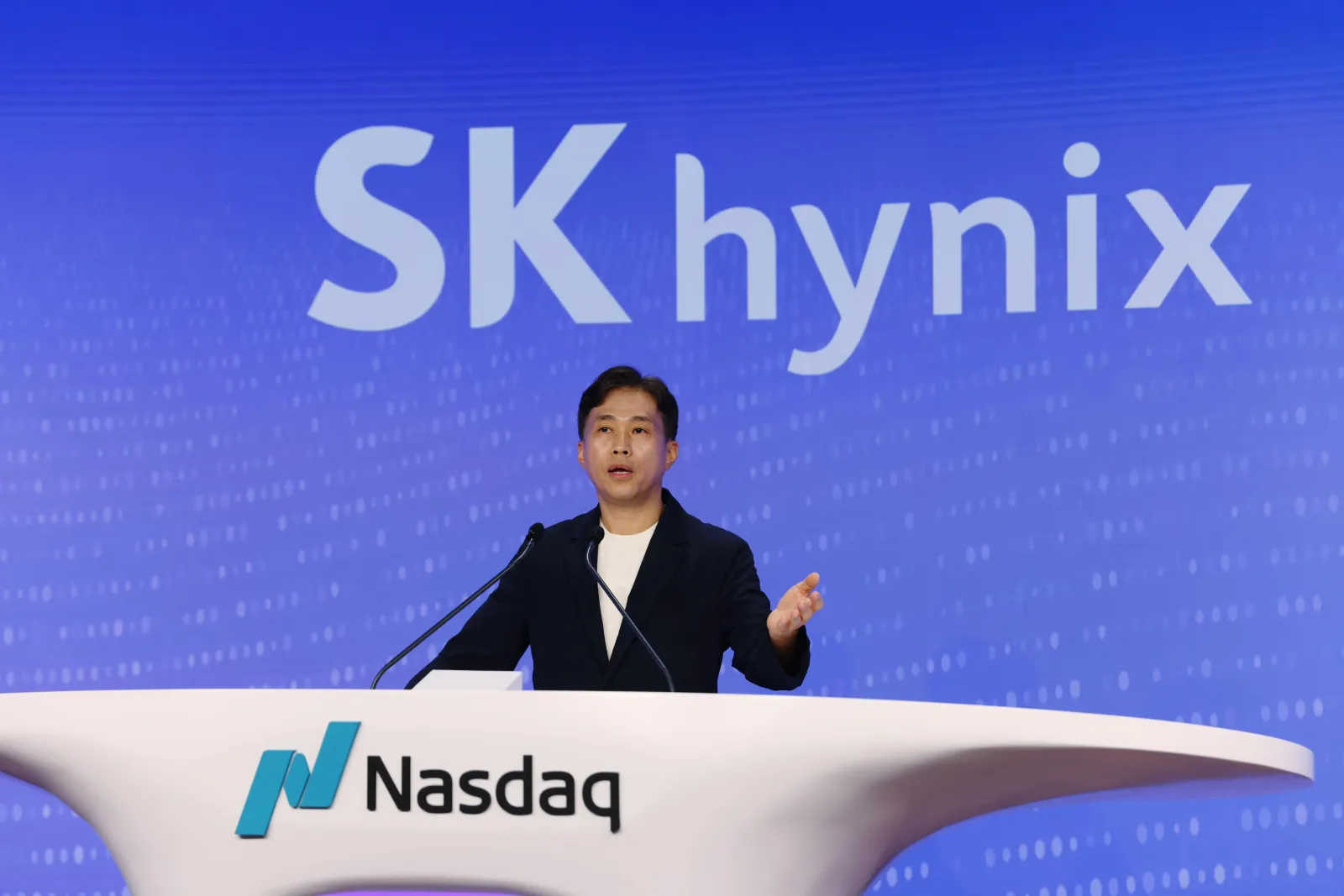
SK Hynix opens at $170, raises $26.5B, and tops foreign IPO records
In Friday's Wall Street debut, SK Hynix turns AI RAM demand into a $26.5B fundraising moment that rewrites comps.

China lands a reusable Long March booster, a first that matches SpaceX and Blue Origin
A barge landing and net-based recovery move China from theory to proof, reshaping the reusability race and satellite ambitions.