
JPMorgan plans faster rollout of more powerful AI agents this year
A signal that security and governance hurdles are finally easing, giving big companies a path to longer-running AI tools.
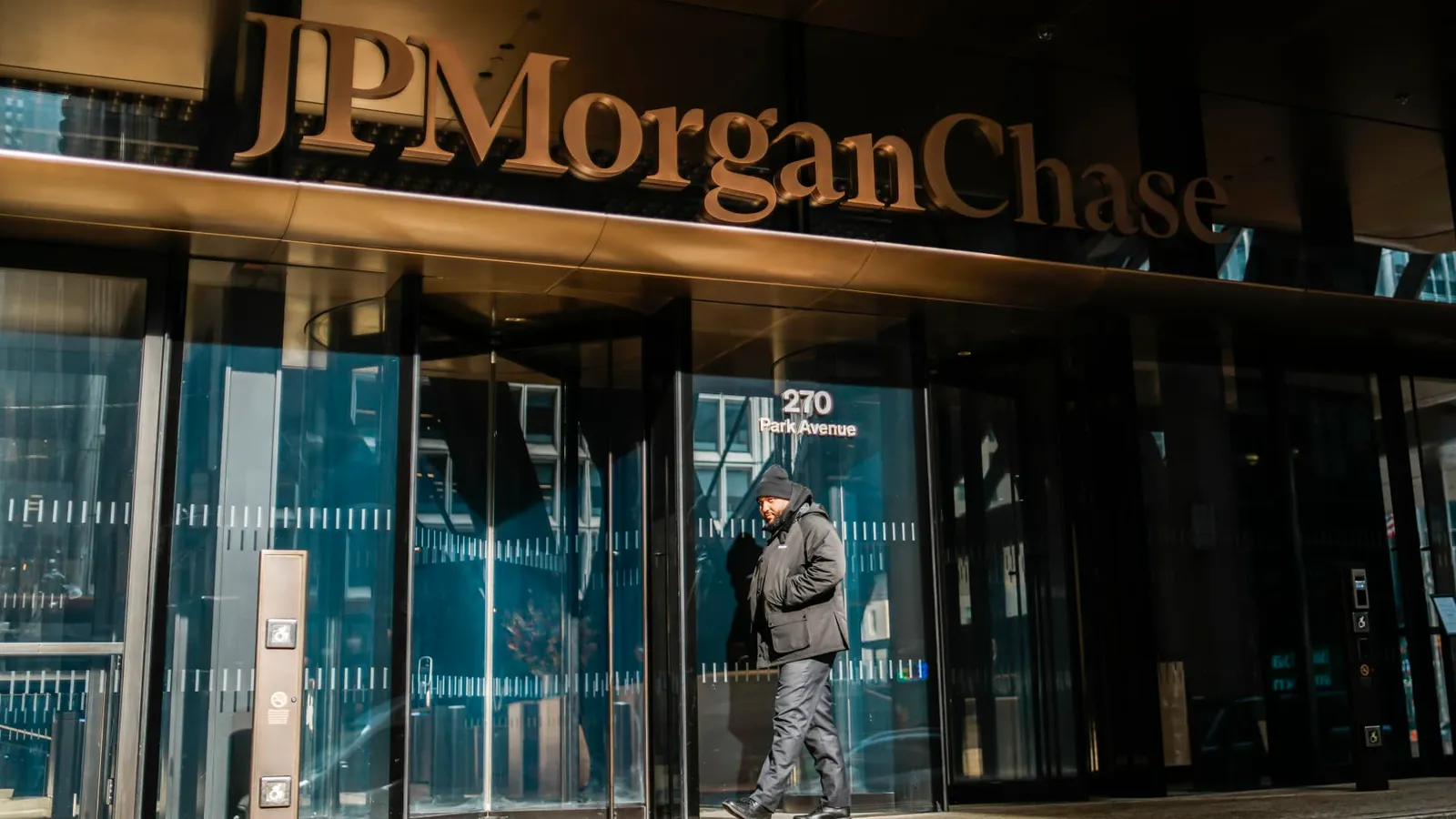
JPMorgan Chase plans to deploy more powerful AI agents this year, pointing to progress on security and governance. For decision-makers, it is a practical read on how quickly large enterprises may move from pilots to real operational use.
JPMorgan Chase is planning to deploy more powerful AI agents this year, and the subtext matters: the bank appears to be getting its internal security and governance house in order. In other words, long-running AI agents are getting closer to passing the gates that have slowed adoption inside big companies.
That matters because “agentic” AI is not just a chatbot with better answers. A long-running AI agent can execute multi-step tasks over time, which means it interacts with systems, data, and workflows in ways that traditional, tightly scripted automation does not. Those are exactly the areas where boards, CIOs, and risk teams tend to go from “cool demo” to “show me the controls.” JPMorgan’s move suggests those controls are no longer the biggest blocker.
To understand why that is consequential, zoom out to how large enterprises usually roll out AI. Most companies start with narrow, low-risk use cases: customer support drafts, internal search assistants, summarization of documents. The moment you expand to tools that can act for you, the security conversation changes. You are no longer just evaluating output quality. You are evaluating permissions, audit trails, data boundaries, and what happens when the agent makes a mistake at step three instead of writing a wrong sentence.
Governance is the other half of the bottleneck. Even if an AI system is “secure,” enterprises have to answer questions like: Who approved this agent? What tasks is it allowed to perform? How do we monitor it? How do we recover if it does something unintended? In practice, those questions turn into product delays, because different groups within a company do not always share the same incentives. Legal wants risk minimized. Compliance wants documentation. Security wants proof. Business teams want speed. Banks, in particular, run on a culture where the risk committee can quietly grind timelines to a halt.
CNBC’s framing is that JPMorgan’s plan suggests long-running AI agents are close to clearing those hurdles. That is a meaningful indicator, even without a long list of details in the excerpt. If a bank of this size is willing to move toward more powerful agents, it implies internal governance is working well enough to support broader deployment. And because JPMorgan is not operating in a vacuum, its action tends to reflect what is happening across enterprise AI: the shift from experiments to systems with guardrails.
For boards and executive teams, the second-order implication is straightforward. If one of the biggest implementers in the corporate world is signaling progress, peer organizations will feel pressure to keep up, not necessarily because the tech got better overnight, but because “adoption readiness” is changing. The competitive dimension is not just faster productivity. It is also faster learning. When agents can run longer and handle more steps, companies can measure real outcomes, identify failure modes, and tighten governance in the loop, instead of resetting everything for each pilot.
There is also a capital and operating-model angle. Longer-running agents can change how work is structured. They can compress cycles for certain processes, such as internal workflows and document handling, but only if the enterprise can trust them enough to give them meaningful permissions. That pushes leaders to think about operational maturity as much as model maturity. The “hard part” becomes process redesign and control design, not just picking a model vendor.
Finally, for decision-makers trying to plan the next 12 months, JPMorgan’s timeline is a real data point. The move suggests that the security and governance hurdles that have slowed adoption inside big companies are not permanently insurmountable. They are being addressed in a way that enables deployment of more powerful agents. For leaders at other financial institutions, enterprises, and large operators, the takeaway is simple: agent rollout is now less about asking whether AI can do the work, and more about proving it can do the work safely, audibly, and under control.
This story's Key Insights and Take-aways are locked.
Create a free account to unlock Executive Actions for one credit.
Register to UnlockAlways free for Executives Club members. Join the Club
More in Business

SpaceX IPO: Wedbush calls a Tesla merger “holy grail,” Morningstar pegs $63 fair value
Trading starts June 12 at $135, but analysts are split over a $72-per-share “option premium” on orbital AI dreams.

10% of large employers will drop obesity drug coverage next year as costs rise
As use surges, a growing share of big employers plan to end coverage, shifting the bill and the politics of benefits.

SpaceX IPO looms as A.I. spending frenzy triggers tougher questions on rocket economics
DealBook frames the go-public moment as scrutiny grows over the sector's spending spree and what it means for investors.