

June marked China’s first 1m monthly car exports, despite a $1tn surplus target
Car exports hit a new monthly peak as total shipments jump 27%, raising tariff risk from the US and EU.

China’s monthly car exports topped 1m for the first time in June, and overall overseas shipments rose 27%, according to official Chinese customs data. The momentum puts China on track to match or beat last year’s record trade surplus of $1tn, with fresh US and EU tariff pressure now more likely.
China’s monthly car exports crossed 1m for the first time in June, a milestone that landed alongside a bigger headline: overall overseas shipments from the world’s second biggest economy rose 27%. Put simply, this is not just a one-off export spike. It is a signal that China’s external trade machine is running hotter than expected, based on official Chinese customs data.
That matters because it feeds directly into the country’s broader trade goal. The same official customs reporting suggests China is on track to match or beat last year’s record trade surplus of $1tn (£748bn). And that surplus came “despite Donald Trump’s curtailed tariff war,” meaning the record was achieved even with tariffs that were supposed to bite. If that pattern repeats, it increases the odds that the US and EU will treat the result as confirmation that tariffs need to ratchet up again, not ease off.
For executives watching this, the immediate question is not just “How many cars did China ship?” It is “Who has the pricing power if supply keeps scaling?” When monthly exports top 1m, scale advantages tend to show up in manufacturing utilization, component bargaining, and the speed with which firms can place products into multiple markets. Even if demand is healthy, the market share fight gets sharper when the export pipeline is that deep and that consistent.
There is also a regulatory and political layer here. The source flags that China faces risk of new tariffs from the US and EU as it looks likely to match or beat last year’s record surplus of $1tn. In other words, the tariff debate is not only about tariffs already in place. It is about how surplus figures are read as evidence of unfair trade, even when companies and supply chains are doing what economics usually rewards: producing at scale and shipping where margins are.
From a boardroom perspective, this creates a double-edged environment. On one side, stronger Chinese export performance can mean more competitive pressure on global automakers, parts suppliers, and logistics providers. On the other side, it can also mean more churn in trade policy, which is the kind of uncertainty that forces companies to redraw their risk models and coverage strategies.
The source specifically points to a key context point: the record surplus was achieved despite Trump’s curtailed tariff war. “Curtailed” is doing a lot of work there. It implies that the earlier escalation did not lock in the outcome policymakers wanted. That is the kind of history that shapes how decision-makers interpret new surplus momentum. If tariff efforts did not prevent a record, policymakers may conclude that the next round needs to be more aggressive, or that exemptions and scope limits were too permissive.
There is a second-order effect for companies that rely on cross-border supply chains: trade data momentum often changes behavior before policy changes do. Buyers can front-load orders to secure pricing and allocation. Sellers can adjust route planning and inventory positioning to reduce exposure to future policy swings. And investors can reprice companies based on the likelihood that tariffs will expand or contract faster than expected. A jump like 27% in overseas shipments is the kind of number that makes those internal scenarios feel less hypothetical.
Finally, the strategic stakes go beyond China’s borders. If China is on track to match or beat a $1tn trade surplus while monthly car exports clear 1m, the pressure will ripple across the competitive landscape. For executives at automakers, component manufacturers, and consumer-lending platforms that depend on auto demand, this is a reminder that export growth and trade policy are linked, even when the product is miles away. And for policy-sensitive sectors, the message is blunt: when export performance hits new peaks, tariff talk stops being background noise and starts becoming a business variable you have to model in real time.
This story's Key Insights and Take-aways are locked.
Create a free account to unlock Executive Actions for one credit.
Register to UnlockAlways free for Executives Club members. Join the Club
More in Business

Epic and Google drop settlement bid, forcing rival Android app stores by July 22
Google told the court it is ready to carry third-party app stores starting Wednesday, July 22.
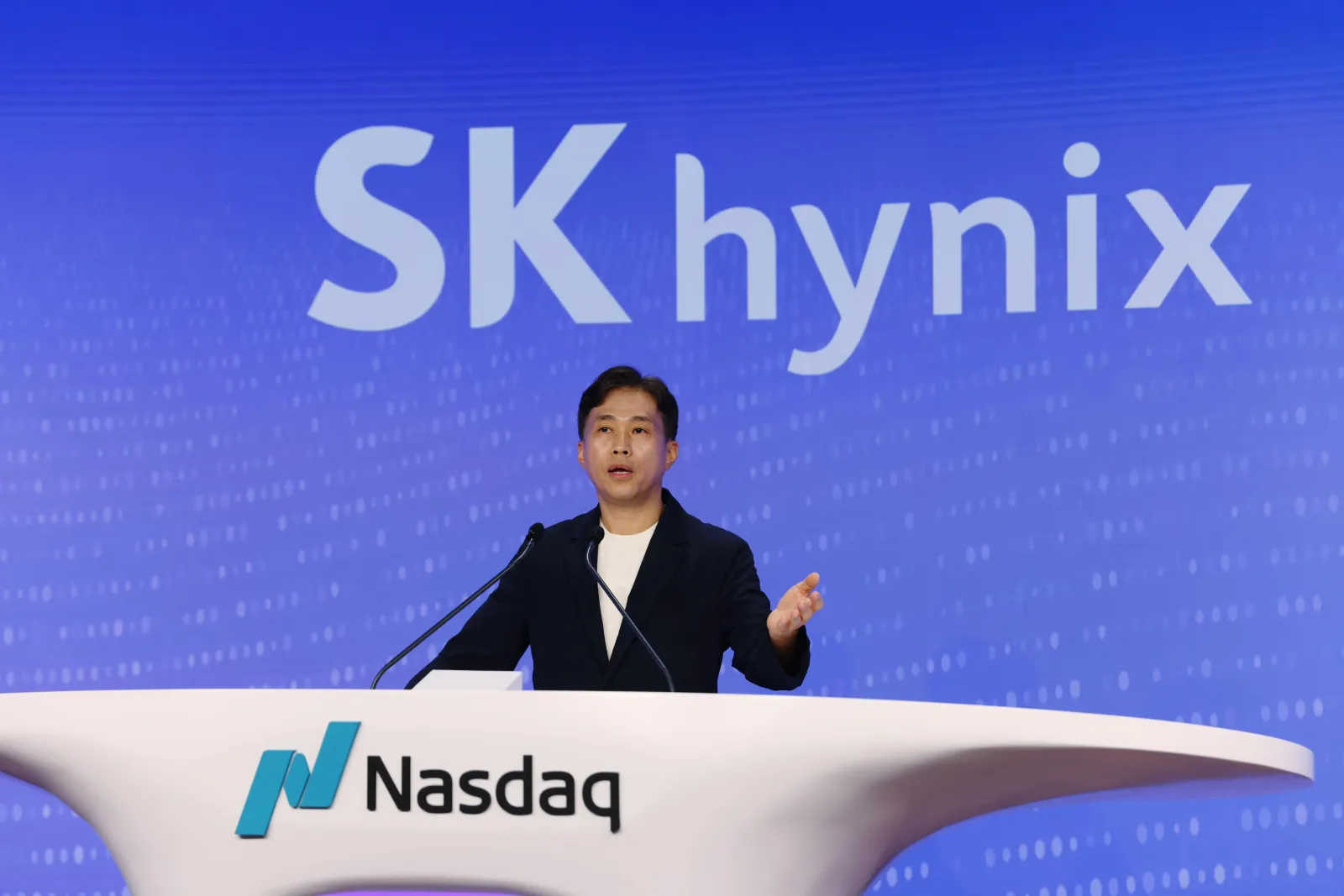
SK Hynix opens at $170, raises $26.5B, and tops foreign IPO records
In Friday's Wall Street debut, SK Hynix turns AI RAM demand into a $26.5B fundraising moment that rewrites comps.

China lands a reusable Long March booster, a first that matches SpaceX and Blue Origin
A barge landing and net-based recovery move China from theory to proof, reshaping the reusability race and satellite ambitions.