
Kansas primaries turn data centers into a Cindy Holscher vs Ty Masterson fight
After 2025’s tax-break law, candidates now argue about moratoriums, “guardrails,” and who benefits from big tech.

Kansas Democratic state Sen. Cindy Holscher and GOP state Sen. Ty Masterson are being attacked over their positions on data center development after a 2025 bill that expanded construction and granted 20-year tax breaks. The fallout could decide the party bases' appetite for AI-era infrastructure before Tuesday’s primaries.
Kansas’ governor’s race is no longer just a politics story. It’s a data center referendum, and the fight has spilled so hard into Tuesday’s primaries that Republicans and Democrats are targeting each other over the same 2025 legislation.
At the center of the storm: Democratic state Sen. Cindy Holscher and GOP state Sen. Ty Masterson. Philip Sarnecki, a Republican businessman, has spent more than $300,000 on ads attacking Masterson for voting for the 2025 bill that expanded data center construction and gave developers 20-year tax breaks, accusing him of being beholden to big tech. Holscher, who also voted for that same bill, has now positioned herself as a populist voice calling for a moratorium on data centers, a move her opponents frame as flip-flopping while her supporters frame it as listening to rising grassroots opposition.
So what changed? In Kansas, nearly 40 data centers already exist, with many pending proposals, and local pushback has been loud enough to reshape politics at ground level. Several towns have moved before the statewide conversation, including Topeka, which chose one-year moratoriums to give leaders more time to study the proposals. City council meetings from Wichita to Kansas City have become battlegrounds, and those meetings show the real issue hiding under the campaign slogans: voters are asking whether the benefits of the industry match the costs, especially as the AI wave turns data center growth into a national inevitability.
The 2025 legislation is the hinge. Data center construction and hostility toward it exploded after the passage of the 2025 law backed by Holscher and Masterson, which had strong bipartisan support and was signed by Gov. Laura Kelly, a pro-business Democrat. That matters because the fight is happening right after the “decision moment” in policy terms. If you voted for the law, you’re now responsible for the consequences in the public’s mind, whether those consequences look like jobs and investment or water and health concerns.
Masterson’s defenders and opponents are both using the same basic frame, just to opposite ends. Masterson has said “folks build here on our terms, or they don’t build here,” emphasizing that local communities should decide whether they want the infrastructure. He supports a Kansas version of the White House’s position on data centers: a voluntary commitment intended to prevent facilities from driving up utility bills. But some Republican challengers in the field have a harder approach, calling for an outright moratorium. Sarnecki’s linked Kansas Comeback PAC has challenged Masterson’s vote for the 2025 bill with a TV ad that argues, “Thousands from big tech. Rewarded them with tax breaks.” Another top-tier Republican candidate, Insurance Commissioner Vicki Schmidt, also calls for a moratorium.
Holscher’s campaign is trying to convert backlash into an electoral advantage by turning “uncertainty” into a moral posture. She says she regrets her vote and argues her new position reflects where people across the state stand: she wants “guardrails in place” and a pause while rules catch up to reality. She’s also making the fight explicitly populist and geographic, saying the issue unites urban and rural voters as well as young and old. Her stance, though, has friction with some county, state, and labor leaders who see a potential economic opportunity in data center development. On one side of that tension, unions backed by candidates who want to keep building argue the state should aim for jobs. On the other, critics worry about human health and environmental harms, including water usage.
Meanwhile, Holscher’s Democratic primary rivals add another layer of party-level strategy. Limited public polling makes it hard to tell who is leading, and the race has been cast by supporters as a choice between a populist fighter and a safe establishment figure. Holscher’s opponents include state Sen. Ethan Corson, whom Gov. Laura Kelly endorsed, and Overland Park Mayor Kurt Skoog. Corson is advocating for construction to continue, but with statewide regulations designed to address energy costs, water usage, and tax burdens on nearby residents. In a statement, Corson emphasized a “local-first” approach: communities decide whether a project fits, and his Department of Commerce would work “side-by-side” when they do, while respecting communities that say no.
This is also a money and machine question, not just an ideas debate. Corson’s position gets a crucial nudge through endorsements, including from former Gov. Kathleen Sebelius and Lt. Gov. David Toland. Kelly also ran a TV ad on Corson’s behalf starting last week in major media markets. On the Republican side, national resources are moving quickly too. The Republican Governors Association has placed a nearly $7 million TV ad reservation in major Kansas media markets starting immediately after the primary, positioning whoever survives the GOP primary to compete with deeper pockets across the general election.
Strategically, Tuesday’s primaries are effectively a stress test for both parties: how much backlash does the AI-era infrastructure wave tolerate in crowded contests, and which governance approach gets rewarded, a leader who freezes growth to study it, or a leader who keeps construction moving with guardrails and local discretion. That’s why political scientists are watching closely. Bob Beatty of Washburn University in Topeka said the shifts show a growing fear around AI and that the issue is “bleeding across both primaries” and blurring traditional party stances.
For executives, board members, and anyone funding or governing infrastructure decisions, Kansas is a real-time case study in the political feedback loop created by permitting, tax policy, and community impacts. When a state signs a law that accelerates a sensitive industry, the election cycle can turn into a referendum on whether the guardrails were built fast enough, and whether the people who feel the costs believe the promised upside is actually landing.
This story's Key Insights and Take-aways are locked.
Create a free account to unlock Executive Actions for one credit.
Register to UnlockAlways free for Executives Club members. Join the Club
More in Politics
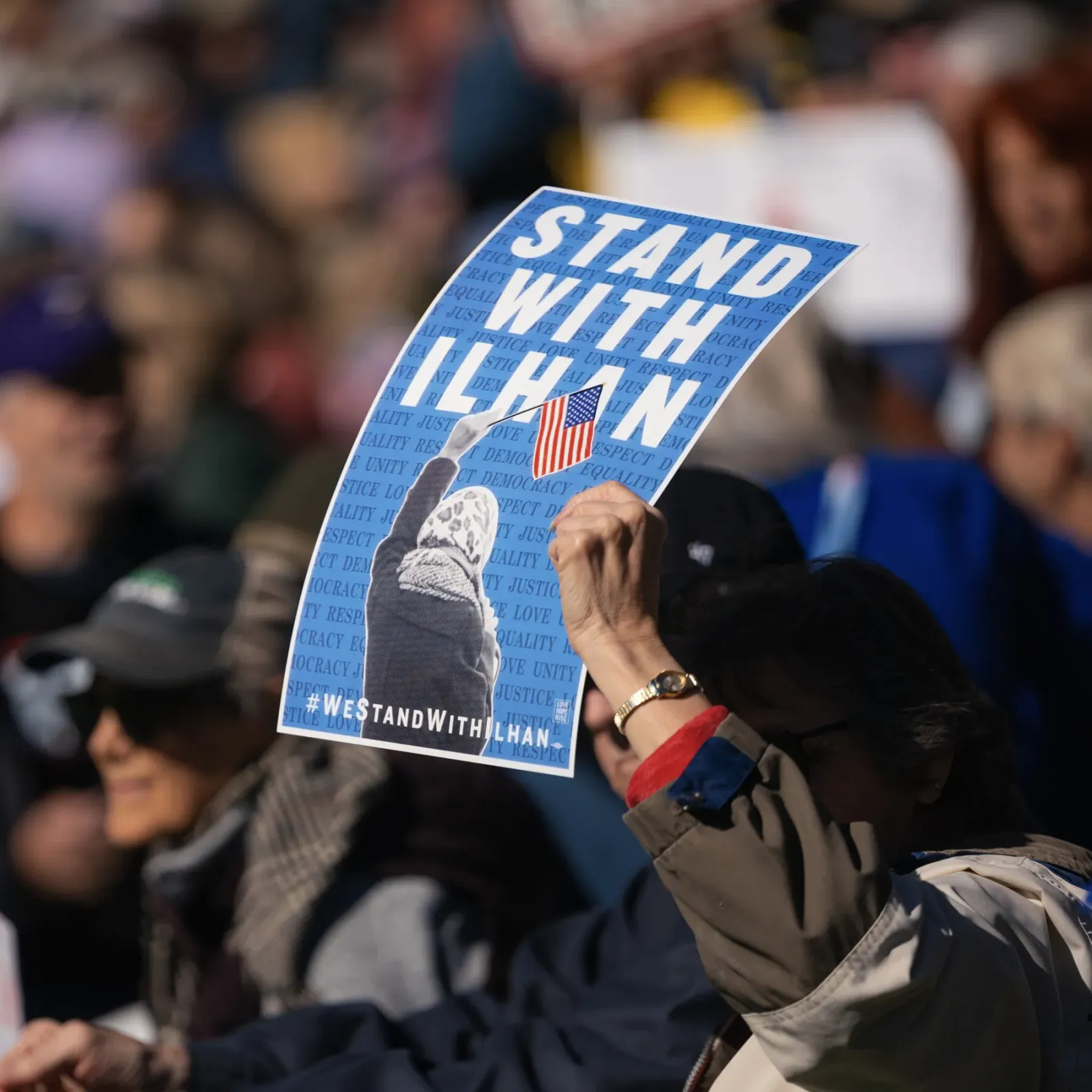
Obama Defends Ilhan Omar After Agents Search Her Home in Trump Inquiry
The former president's intervention raises the stakes in a federal probe into immigration paperwork that has put a prominent progressive lawmaker in the crosshairs.

Blair-era minister: cut welfare to fund youth job support
Alan Milburn's call for welfare cuts to fund employment support opens a Labour fight over benefits and the Neet crisis.
Hot September CPI: energy costs surge, voters feel the squeeze before midterms
The latest inflation print lands as Trump campaigns for GOP control of Congress, putting cost-of-living worries at the center of the midterm fight.