
Ken Miyauchi says Strive 2.0 set a “new standard” by cutting Wild Assault
The producer explains why removing a core mechanic was necessary to keep balance stable for years.
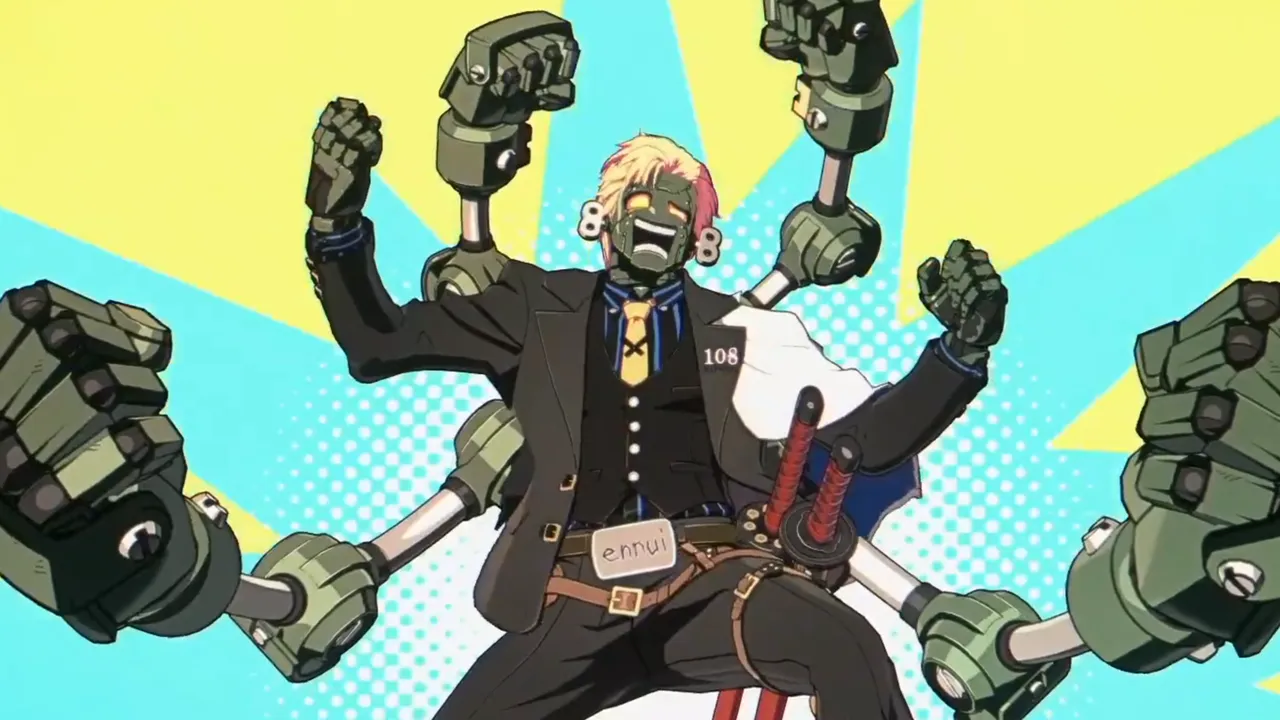
Ken Miyauchi, Guilty Gear Strive producer, says the 2.0 update’s removal of Wild Assault and rosterwide rebalancing was meant to stop balance from “inflating.” For decision-makers, it is a rare, explicit blueprint for sustaining a live game’s meta without turning every patch into a power creep race.
Guilty Gear Strive producer Ken Miyauchi is happy with the 2.0 direction, and his reasoning is unusually concrete for a live game interview: he says the update removed Wild Assault and “reorganized the battle balance as a whole” to create a “new standard” for how the game gets updated going forward.
In his view, the state of Strive before 2.0 had become “inflated,” with “a lot of characters” feeling overpowered balance-wise, and continuing to make all characters stronger would make it “hard for us to continue balancing the game.” That is the core stake: not just whether patches feel good today, but whether the system can keep producing fair matches as the game stretches deeper into its sixth year.
This matters because Strive is not new. Miyauchi frames it directly, saying they “never expected the Guilty Gear Strive to run for over five years,” and that it is now heading into its “sixth year.” He even did internal research on other fighting games over similar time windows, stating that he “find[s] that there aren't” other fighting games lasting that long. Put differently: Strive’s challenge is longevity, not novelty. When a game survives that long, the audience splits. You need to keep returning players engaged while also attracting new ones who do not have nostalgia as a substitute for onboarding.
That is why he characterizes 2.0 as a turning point, not just a balance patch. He says it was “something that's really focused on that element” of bringing in newer players and helping lapsed players “pick up the game again,” and he points to “the recent active player count” as evidence. He also sounds candid about the difficulty: “It’s getting harder and harder as the time goes on,” and he feels “very, very worried,” even while staying motivated by the update results.
The strategy has a clear gameplay governance logic. Miyauchi’s team believed that if they kept adding power to everyone, they would eventually paint themselves into a corner where balance becomes a math problem with no stable equilibrium. Wild Assault is the specific system mechanic he identifies for removal, and it is paired with “roster wide rebalancing.” The practical implication for operators and executives is that sometimes the best way to preserve long-term agility is to take a lever away, then rebuild the ruleset so future tweaks do not cascade uncontrollably.
And the plan is not “2.0 then done.” Miyauchi says their update is “not just 2.0,” and that “there will be more characters.” He also describes an ongoing loop where the team “continuously hear[s] the community feedback about the balance of the game” and keeps refining with the goal of making everyone happy playing their characters. That is live ops as an institution: a cadence, not a one-time fix.
Looking at upcoming content, Miyauchi ties the same philosophy to character additions. He discusses Robo Ky releasing later this week, noting it is the first time Robo Ky is returning since he appeared in the past Guilty Gear series, “Guilty Gear Xrd,” which means “nearly over 10 years.” He emphasizes that Robo Ky brings “a very unique play style,” including “a unique meter and unique mechanics,” and that the team wanted to carry those gameplay vibes into Strive, specifically citing inspiration from “Guilty Gear XX.” He also expects Robo Ky to appeal both to veterans and to new players, pointing to “comical and funny animations” as part of the character’s appeal.
He also explains the design process, and it is more structured than the casual fan version of “someone drew a cool skin.” According to Miyauchi, character designs start from Daisuke Ishiwatari’s rough sketches. The team “do not know how he will look like in Guilty Gear Strive” until the sketch becomes a 3D model workflow, and what they share with Ishiwatari is “very, very simple plot and settings about the character,” plus a format for gameplay. Miyauchi says Ishiwatari then adds details the team does not ask for, “in a positive way,” ensuring the design is not “completely 100% equal to the past design.”
Robo Ky’s look reflects story constraints too: Miyauchi says Robo Ky gets “a new outfit” because “technically his body has blown up in the story,” so he needs “a new body.” He also contrasts that with Jam, who got a “very different kind of outfit” and also has a design rationale tied to her new fit. For Robo Ky, the new outfit still retains “some kind of Ky aesthetic,” while also leaning into “a currently trending style” that Ishiwatari believes is “a cool guy.”
Finally, Miyauchi addresses guest characters and whether there is pressure to match what other franchises are doing. He says there is “not really pressure,” but he acknowledges competitors like Street Fighter 6 having guest characters earlier, and Tekken 8’s broader guest culture has shaped community expectations. He frames their internal constraint as fit, saying simply adding a guest is not “always welcome” because they need to decide which IP to collaborate with and whether it matches the “Guilty Gear design, like the world.” His answer basically maps to product strategy: collaborate only when integration makes sense, not just because competitors did.
For executives watching the fighting game space, this interview reads like a blueprint for surviving longer than your peers without turning your meta into a treadmill. If Strive is indeed entering its sixth year with stable balance goals, it is because Miyauchi’s team treated a system mechanic removal, Wild Assault, as governance. They reduced inflation risk, created a standard, then continued the cadence with new characters like Robo Ky later this week. That is the second-order lesson: in live games, the hardest work is often not adding new stuff. It is preventing the rules from quietly breaking underneath you.
This story's Key Insights and Take-aways are locked.
Create a free account to unlock Executive Actions for one credit.
Register to UnlockAlways free for Executives Club members. Join the Club
More in Entertainment

Russell Brand's accuser 'bewildered and confused' as he denies 7 sex charges
The criminal case against the comedian is a live test of how media companies manage talent risk when serious allegations go public.

'It's a Magic Trick': Ballet Experts Say Rosalía's SNL Pose Is Impossible
Three ballet experts tell Rolling Stone Rosalía's gravity-defying SNL stillness shouldn't be possible - and why the debate is now part of the show.

Activision CMO: GTA 6 Will Boost Call of Duty, Not Bury It
Activision's top marketer says Rockstar's blockbuster will drive players back to consoles and into Modern Warfare 4, even as the company admits its recent strategy failed.