

Kevin O'Leary and Fox News get hit with Utah defamation suits over China agent claims
A Utah federal lawsuit accuses O'Leary of repeating foreign-agent allegations about Stratos critics, plus claims against Fox News.
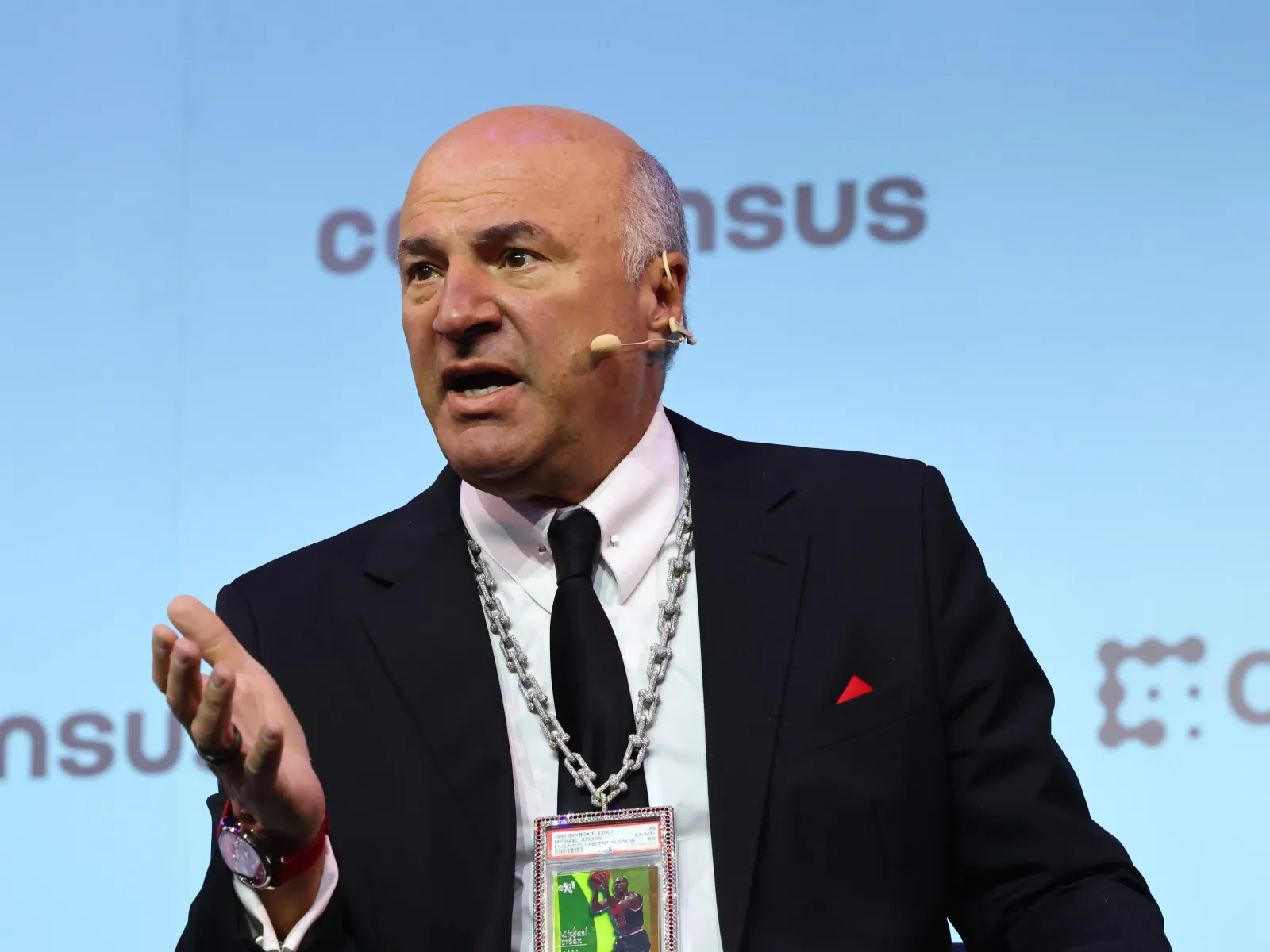
Kevin O'Leary-backed entities are facing defamation lawsuits in Utah federal court after O'Leary appeared on Fox News and other programs, accusing Stratos Project critics of being backed by the Chinese Communist Party. The suits seek monetary and punitive damages and force a high-stakes reckoning for boards and media partners handling national political-risk claims.
Kevin O'Leary is being sued for defamation in Utah federal court, along with Fox News, after the “Shark Tank” star repeated claims that critics of the Stratos data center were foreign agents backed by the Chinese Communist Party. The lawsuit, filed Wednesday, names Alliance for a Better Utah, Elevate Strategies, and two Elevate Strategies founders, and it alleges O'Leary falsely accused them of being foreign operatives. The complaint points to at least 10 media appearances between May 11 and June 3 where O'Leary repeated those accusations.
If this sounds like a straightforward political squabble, the stakes are bigger and more tangible. The plaintiffs say O'Leary’s comments caused “severe reputational damage and significant economic harm,” including the loss of clients and business opportunities, and they seek monetary and punitive damages (a dollar amount was not specified). In one Fox News segment, O'Leary accused cofounders of Elevate Strategies, Gabi Finlayson and Jackie Morgan, of being “proxies for the Chinese Government,” with Finlayson named as one of the plaintiffs.
O'Leary has tried to walk part of that back. After the allegations spread through news appearances, he later said on social media that he had no evidence the critics were funded by China. In a June 25 Instagram post, O'Leary wrote: “Recently I appeared on various news programs and would like to clarify that I have no evidence that Alliance for a Better Utah, Elevate Strategies, Gabrielle Finlayson, Taylor Knuth or Josh Kanter are funded by China or the Chinese Communist Party.” In other words, the lawsuit argues the harm came from a specific accusation. O'Leary’s clarification argues he lacked evidence for that accusation.
The plaintiffs’ theory is that the accusation was not only wrong, but amplified. The complaint includes a separate defamation claim brought by Alliance for a Better Utah and its founder, Joshua Kanter, against Fox News for airing O'Leary’s comments. Fox News Media, for its part, says it will fight. In a statement to Business Insider, a Fox News spokesperson said the network would “vigorously defend” against the lawsuit and that it “publicly corrected the record on every program where on-air guest Kevin O'Leary's comments were made, all of which was extensively publicized.” That is a key battleground in defamation cases: whether corrections were timely and sufficient, and whether the original statements were presented as fact or opinion.
To understand why this matters beyond the courtroom, zoom out to the project at the center: the Stratos Project, a massive hyperscale data center campus near Great Salt Lake in Box Elder County, Utah. According to the article, it was initially approved for 40,000 acres and is expected to require up to 9 gigawatts of power at full buildout. Residents and opponents have raised concerns about water use, air quality, noise, traffic, and the project’s approval process. Those are classic “permission to operate” issues for data centers, the kind that can turn permitting timelines into years and budgets into open-ended negotiations. They also explain why arguments about foreign influence can become combustible fast, especially when a project’s scale can reshape land, utilities, and public participation.
This controversy has already triggered political and regulatory action in Utah. The backlash prompted Gov. Spencer Cox to issue an executive order tightening rules for data center development in the state. The order covers water resources, wildlife protection, utility rates, and public participation. Separate from the defamation litigation, Alliance for a Better Utah and five state residents filed a lawsuit in June seeking to halt Stratos by targeting the approval process behind the project. So even if O'Leary’s defamation case plays out on speech and reputational harm, the operational fight is ongoing through environmental and regulatory channels.
The legal risk is not just about who said what. It is about incentives for coalitions, and the way large capital projects increasingly attract national attention. In a statement to Business Insider, Matthew Platkin, one of the attorneys for the plaintiffs, said the plaintiffs were exercising their right to express opinions about the future of their community. He argued that O'Leary “chose to launch a national smear campaign built on absurd falsehoods” that Fox News “repeatedly affirmed and amplified.” On the defense side, Jeffrey Neiman, an attorney for O'Leary, told Business Insider that the case would be defended and that O'Leary “may bring counterclaims.” Neiman described the lawsuit as a “cash grab” and said the plaintiffs declined an invitation to discuss the project, adding that the plaintiffs “have put their operations, funding, and coordination squarely at issue,” and that the defense looks forward to discovery and uncovering “the facts related to the misinformation campaign.”
For executives, investors, and boards, the second-order implication is blunt: when a company-backed project becomes a national narrative, communications strategy is no longer a PR function. It becomes part of legal exposure, permitting leverage, and counterparty risk with media partners. A single allegation repeated across programs can turn local opposition into a litigation magnet, while corrections and clarifications may not undo the economic consequences alleged in court. In a world where data centers are scaling rapidly and public scrutiny is rising, the Stratos case is a warning shot: treat contested claims with evidence, coordinate carefully, and assume that the “intensity” of a message will be evaluated, later, under oath.
This story's Key Insights and Take-aways are locked.
Create a free account to unlock Executive Actions for one credit.
Register to UnlockAlways free for Executives Club members. Join the Club
More in Business

Epic and Google drop settlement bid, forcing rival Android app stores by July 22
Google told the court it is ready to carry third-party app stores starting Wednesday, July 22.

SK Hynix opens at $170, raises $26.5B, and tops foreign IPO records
In Friday's Wall Street debut, SK Hynix turns AI RAM demand into a $26.5B fundraising moment that rewrites comps.

China lands a reusable Long March booster, a first that matches SpaceX and Blue Origin
A barge landing and net-based recovery move China from theory to proof, reshaping the reusability race and satellite ambitions.