
Kevin Warsh turned “sock puppet” into hawkish policy, and markets punished the Fed
After the Fed’s statement signaled less easing bias, Warsh repeated a hard 2% commitment, and investors re-priced rates fast.
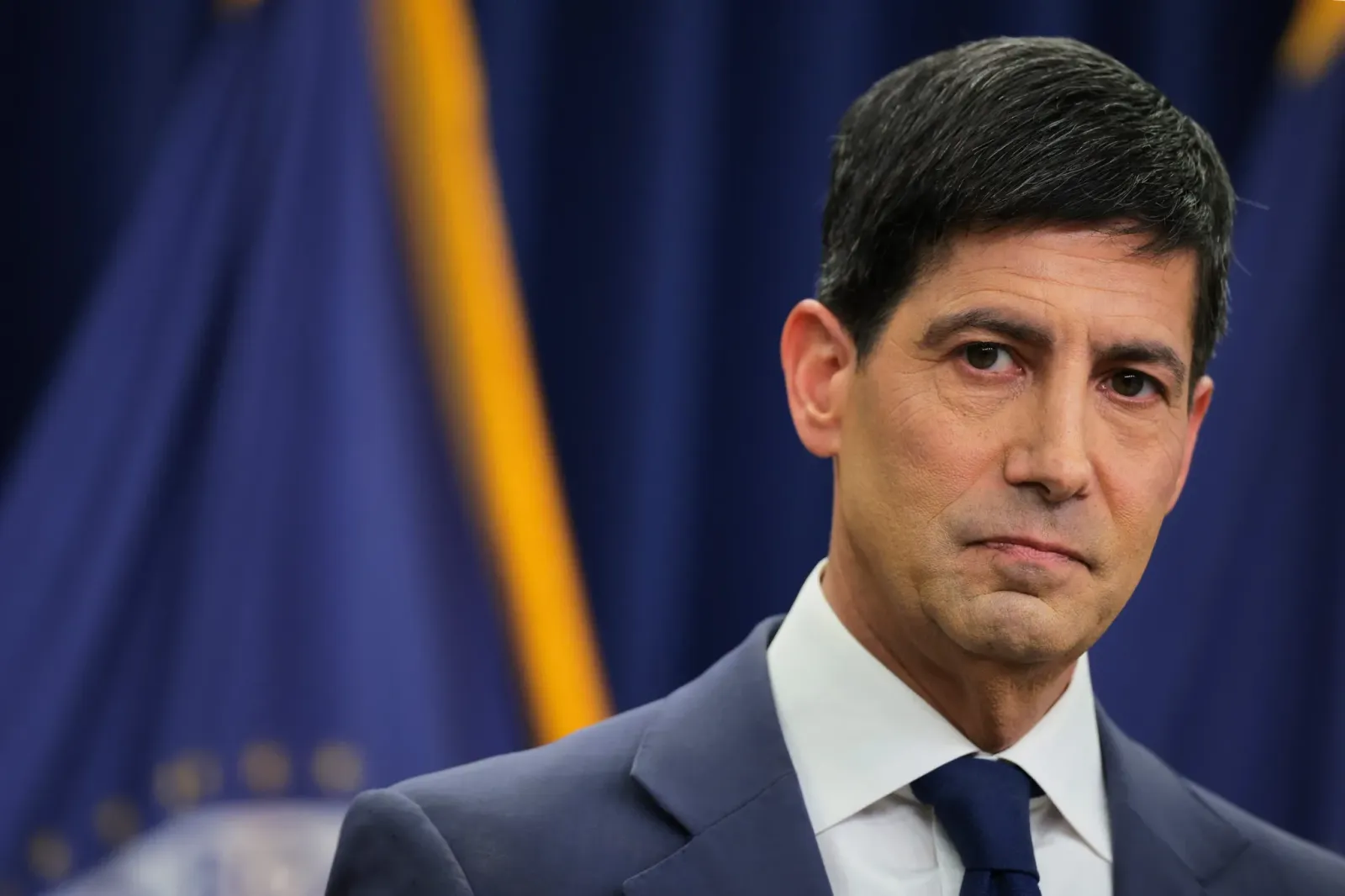
Kevin Warsh, the prospective Fed chair and a former Fed governor, delivered a hawkish first press-conference posture Wednesday by repeatedly emphasizing the Fed’s price stability objective and a return to 2%. The immediate market reaction was a repricing of rate expectations, with equities falling and money markets raising the odds of hikes this year.
Before Kevin Warsh stepped up to the podium Wednesday afternoon, there was no shared agreement on what kind of Fed chair he would be. In 2011, Warsh quit as a Fed governor after the financial crisis, protesting the Fed’s bond-buying and earning a hawkish reputation. But in recent months, as he became favored to take over former Fed Chair Jerome Powell’s place, he took on a more dovish coloring, arguing that AI was disinflationary, that growth was not to be feared, and that the economy could sustain some lower rates.
That uncertainty ended Wednesday at 2 p.m., when the Federal Reserve released its policy statement and Warsh repeated the line that settled the debate for many investors: “We will meet our price stability objective.” He then said the same thing again and again at the press conference. The practical point was not subtle. Inflation has been running above the Fed’s 2% target for five years, and Warsh called that unacceptable. He used an almost punchline-ready way to say the same message: “The ‘two’ is the left of the decimal point,” he told reporters. “For now, ‘zero’ is to the right.” If you had been betting on a more forgiving approach, that was a pivot worth repricing immediately.
The political backdrop matters because markets hate ambiguity, and Warsh had been caught in a partisan crossfire. At his confirmation hearing, he criticized Jerome Powell’s Fed, saying the rate hikes of 2021-22 had contributed to the worst inflation in 45 years. His confirmation ended up the most politically divided in recent history; Sen. Elizabeth Warren accused him of acting as President Trump’s “sock puppet.” Warsh laughed off those complaints, but the question investors kept asking was more blunt: would the Fed sound like Trump on rates, or like the hawks who prioritize the 2% mandate no matter what?
According to Jon Hilsenrath, the former Wall Street Journal reporter long known as “the Fed whisperer,” Warsh made the hawkish case. Hilsenrath said that once Warsh repeated the price-stability line, and when the committee wrote it into the statement, “that was hawkish Kevin talking.” Then markets agreed and “threw a little fit,” because the rest of the Fed’s messaging shifted in a way that changed rate probabilities, even though the benchmark rate itself stayed put.
The Fed held its benchmark rate at 3.5% to 3.75%, as expected. But the statement moved the goalposts for how likely further tightening might be. Nine out of 18 officials now pencil in at least one hike this year, and the statement stripped out the old easing bias. This is where the second-order market impact shows up: even without an immediate hike, removing “easing bias” signals that the Fed is less interested in leaning into cuts unless it sees enough progress on inflation. That is exactly what investors price. The Dow fell 507 points after touching a record intraday high. The S&P 500 lost 1.2%, the Nasdaq 1.3%, with communications services the worst-hit sector and tech bellwethers leading the way down. Two-year Treasury yields, which track rate expectations most closely, jumped about 16 basis points to 4.21%. By the close, money markets had moved an October hike to slightly better than a coin flip, when before almost nobody would’ve bet on it.
To Hilsenrath, the message was also about more than rates. He suggested it may be what Warsh wanted in the moment: “It’s probably in everyone’s interest in the long run if we put some speed bumps on this boom,” he said, pointing to the bombastic SpaceX IPO and the “animal spirits” coursing through equities. This is the uncomfortable truth for boards and CFOs: if the economy looks overheated to the central bank, the transmission mechanism is not just about consumer prices, it is also about the cost of capital. Higher expected rates typically hit valuation multiples, credit spreads, and funding costs. That’s why tech and communications often feel the first-order pain when expectations shift, even if the policy rate did not change today.
Warsh also managed the content of his hawkishness with an eye on both policy and narrative. In last November’s, more dovish framing, he had written in the Wall Street Journal that the Fed should not fear that kind of boom, arguing that inflation is caused when the government spends too much and prints too much. But during the press conference, there was no equivalent hedge on inflation. The commitment to getting back to 2% was “strong, unanimous, and unambiguous,” described as “an important message we’ve missed for five years,” and something he vowed to fix.
He did deflect some questions about whether AI productivity gains still give the Fed room to cut, pointing to one of his new task forces. On inflation, he did not. He also blamed rising prices in the statement squarely on the conflict in the Middle East, giving the impression that some of the inflation story is external rather than solely domestic demand. Beyond the hawkishness, Warsh signaled the Fed may change how it talks. He declined to submit his own dot to the Fed’s rate-projection plot, though he encouraged colleagues to keep theirs. He scrapped forward guidance, saying, “I can’t give you any guidance on what we’re going to do next,” on the idea that markets work best if they read the data rather than guess at the Fed. And he announced five task forces to reexamine communications, the balance sheet, data sources, the labor-market effects of AI, and its inflation framework, all due by year-end.
From a policymaker’s vantage point, those task forces can look like bureaucracy or like leverage, depending on how you read them. Hilsenrath viewed them as a potential stall tactic, a way to answer hard questions with, “we’ve got a task force for that,” while buying time. But the key point for executives is simpler: when July rolls around, none of the task-force framing substitutes for the decision itself. Warsh’s worldview has a long throughline, as Hilsenrath described: a 15-year argument built on one premise, that inflation is a choice and the Fed forfeited credibility by pretending otherwise. Now it was “his choice,” and “he’s the guy in charge.”
For leaders outside the Fed, the message is unignorable. If the next chair combines an explicit “meet our price stability objective” posture with a plan to change communications, the market will still do what markets do: translate words into rate expectations, then price risk accordingly. In the near term, that means funding costs and valuation assumptions can move faster than your internal planning cycles. In the medium term, it means CFOs and boards should treat the Fed’s tone, not just its rate decision, as a core macro input. Warsh did not just take a side in a political fight. He forced a repricing of the future, and he did it with a few sentences that were repeated until investors could not reasonably pretend they meant something else.
This story's Key Insights and Take-aways are locked.
Create a free account to unlock Executive Actions for one credit.
Register to UnlockAlways free for Executives Club members. Join the Club
More in Business

A flaw in PHP just forced governments to pull their own sites offline
European agencies from Belgium to Germany took websites dark to patch a critical weakness in the language behind almost 70% of the web, and the blast radius extends far beyond government portals.

BioWare shuts down, Mass Effect 5 dead after $55B EA buyout
The legendary RPG studio's closure lands months after a $55 billion investment group buyout of EA, raising tough questions for gaming's biggest acquirers.
Musk weighs Tesla-SpaceX mega-merger as boards form review panels
Special committees at both companies will examine a tie-up that could fuse electric vehicles and space launch, forcing a fresh look at governance and valuation.