

Komodo dragons hunted dwarf elephants, while Hobbits only scavenged, study finds
New evidence from Flores flips the story of Homo floresiensis from hunter to opportunistic cleanup crew.
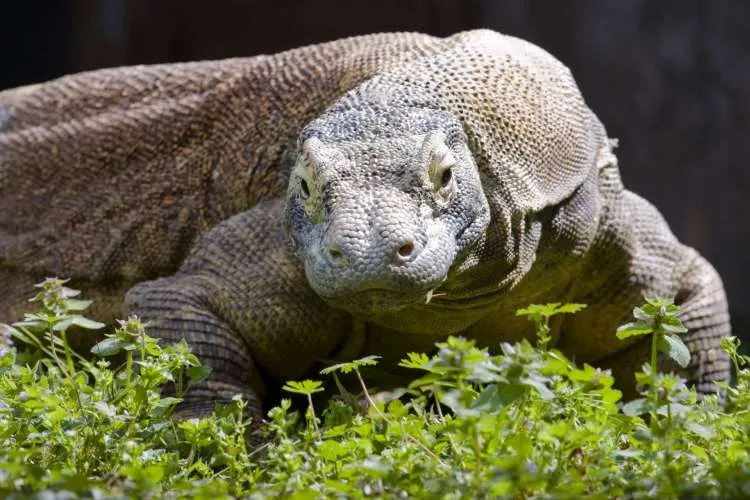
University of Tübingen anthropologist Elizabeth Veatch and colleagues argue Komodo dragons were the hunters of pygmy elephants on Flores, while Homo floresiensis only scavenged. If correct, the findings could reshape assumptions about how Homo floresiensis survived and which hominin species first expanded beyond Africa.
Until about 60,000 years ago, diminutive hominin cousins of ours, Homo floresiensis, shared the island of Flores with Komodo dragons, pygmy elephants, and giant rats. These hominins are often nicknamed “Hobbits,” and the nickname comes with expectations: in earlier interpretations, their presence alongside dwarf elephant bones looked like evidence of small hunters doing big-game work. The original narrative was bold. In the cave sediment layers, archaeologists found hominin and pygmy elephant bones together, which made it seem like the Hobbits hunted and butchered the dwarf elephants.
But Veatch and her colleagues, according to Ars Technica’s account, say the evidence can support a different assignment of labor. In their view, it was the Komodo dragons that did the hunting, while the Hobbits arrived later to scavenge what the dragons left behind. That single shift, from “we killed it” to “we found it,” is the whole pivot of the story. It changes what Homo floresiensis likely had to do for survival on Flores, and it changes what researchers might infer about their skills and ecological strategy.
Why should decision-makers care about a debate that sounds like it belongs in a museum gift shop? Because this is exactly how scientific claims work, and exactly how they get used downstream. Early interpretations of fossil bone associations often get turned into broader evolutionary narratives. If a species is framed as a hunter that could butcher dwarf elephants, that supports assumptions about its tool use, coordination, and willingness to engage large prey. If instead it was scavenging after Komodo dragons, then the “hunting” storyline weakens, and the argument moves toward opportunism, timing, and how different species partitioned the island’s food chain.
The study’s logic is grounded in the same cave sediment layers that first sparked the “hunted and butchered” interpretation. The layers contained hominin bones and pygmy elephant bones, and that proximity originally pointed to cooperation or conflict between small hominins and large prey. Veatch and colleagues challenge the causal direction. In their framing, the dragons were the effective predators, and the Hobbits became the beneficiaries of a predator’s work. In other words, the association in the strata does not automatically answer the question of who killed what.
This kind of inference has ripple effects for evolutionary theory beyond the island itself. Ars Technica notes that if Veatch and her colleagues are right, their findings may challenge assumptions we’ve made about Homo floresiensis, and about which hominin species was the first to venture into the wider world beyond Africa. That matters because the question of “first” is where timelines get tight and evidence has to carry extra weight. If Homo floresiensis fits differently into the story, then models of dispersal, adaptation, and ecological success can shift, and with them, which candidates look most plausible for early expansion.
There is also a broader lesson embedded in the method: when evidence is fragmentary, the same data can be read multiple ways depending on the assumed behavior of the actors. Here, the actors include Homo floresiensis, Komodo dragons, and the prey community of pygmy elephants and other animals present on Flores. When you reassign one actor’s role from “victim context” to “active driver,” the behavioral narrative can flip without any new fossils being required. That is not just an academic nuance. It is a reminder that conclusions can be sensitive to baseline assumptions about power dynamics in an ecosystem.
For executives and board members who track research, policy, or technology decisions, the second-order implication is familiar: incentive structures and prior beliefs shape what people consider “most likely.” In science, prestige and expectations can push interpretations toward dramatic claims. In companies, product narratives can do the same. The Hobbits case is a clean, real example of how a credible alternate hypothesis can win attention when it fits the evidence in a more conservative, causal way. If Homo floresiensis was not a fire-using hunter, as the original summary puts it, then the origin story for how it survived on Flores could be different than researchers previously assumed.
Strategically, the stake is clarity. Evolutionary researchers need robust behavioral interpretations because those interpretations are the scaffolding for bigger models about adaptation and dispersal. And for peers working on adjacent questions, the message is that “presence in the same layer” is not the same thing as “proof of the action you want to claim.” If Veatch and colleagues’ reassignment holds up, it will tighten how we talk about Homo floresiensis on Flores, and it may force a rethink of the early chapters of hominin movement beyond Africa.
This story's Key Insights and Take-aways are locked.
Create a free account to unlock Executive Actions for one credit.
Register to UnlockAlways free for Executives Club members. Join the Club
More in Technology

Google quietly links your phone number to every Android account on your SIM
Adding a SIM now ties your phone number to all Google accounts - and future accounts inherit it. Here's the security and privacy stakes.

Hijacker AI 'Skynet mode' runs 100,000 attack steps against exposed models
Symantec caught a criminal AI agent that borrows other models, steals data, and mines crypto; the only relief is no confirmed victims yet.

Nvidia's AI-financier shift faces its first big test as neoclouds stumble
A rout in neocloud stocks is forcing investors to weigh Nvidia's hidden exposure as both supplier and lender to the AI buildout.