

Krithi Karanth built a lifelong jungle commitment by age one
From childhood trips to the Centre for Wildlife Studies CEO role, she shows how conservation becomes a career, not a hobby.
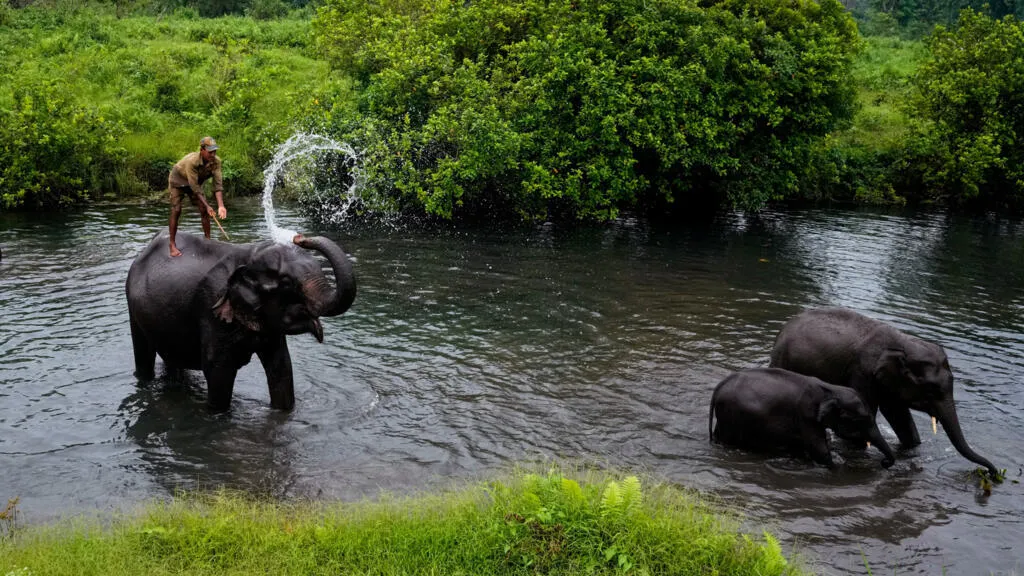
Krithi Karanth, a conservation biologist and CEO of the Centre for Wildlife Studies in India, told FRANCE 24 how her father nurtured her love of nature over 17 years, starting with jungle visits from age one. The consequence for decision-makers is clear: long-term conservation leadership is built through early immersion, institutional continuity, and disciplined work across species and habitats.
Krithi Karanth did not fall into wildlife conservation as an adult when the mood struck. She told FRANCE 24 that her father nurtured her love of nature over 17 years, taking her into the jungle from the age of just one. That early, hands-on exposure is the origin story behind what she is today: a conservation biologist and CEO of the Centre for Wildlife Studies in India.
In the interview, Karanth explains that the work is not symbolic. Her team protects a wide range of species, including Asian elephants and tigers, but also honey bees. That spread matters because it forces an organizational focus on ecosystems, not single-species headlines. When you are responsible for both apex predators like tigers and pollinators like honey bees, you learn quickly that conservation outcomes depend on habitat quality, land use decisions, and the downstream effects of human activity.
The headline of her story is “a childhood passion became a lifelong commitment.” The managerial subtext is more interesting: how do you turn a personal drive into an institution that can deliver across years, seasons, and stakeholder pressures? Karanth’s answer is basically continuity. Her father’s 17 years of nurturing did not just spark curiosity. It shaped her relationship to nature early enough that it could withstand the usual reasons people drift away from long-term work. In conservation, where the timeline from intervention to results can be slow, that kind of durability is a competitive advantage.
From a leadership and governance perspective, the Centre for Wildlife Studies is positioned as an organization with a specific mission: protecting multiple species with different ecological roles. That means the organization likely has to coordinate science, field operations, and partnerships, because elephants, tigers, and honey bees are not managed with one-size-fits-all playbooks. Even without getting into technical details, the logic is straightforward. Conservation is systems work. If habitat is degraded, predators lose prey dynamics. If agricultural practices reduce pollinator health, plant reproduction changes. The story signals that Karanth’s leadership lives at the intersection of these dependencies.
There is also a broader context worth noting for executives and board members watching sustainability agendas. Conservation is increasingly tied to regulation and accountability, even when the primary language is “environment” rather than “compliance.” Governments and regulators often treat wildlife protection and habitat preservation as matters of public interest, which can translate into enforcement pressure, reporting expectations, or restrictions on land use. Organizations like the Centre for Wildlife Studies that focus on species protection may find themselves operating in environments where scientific credibility and operational consistency determine whether stakeholders listen, fund, or collaborate.
The second-order implication is that multi-species conservation creates a stronger platform for engaging diverse stakeholders. Asian elephants and tigers tend to bring urgency and emotional resonance, but honey bees add a different kind of credibility: they connect conservation to food systems and agricultural productivity. That duality can help an organization translate its mission across sectors. For decision-makers in NGOs, philanthropies, and mission-driven enterprises, the lesson is that mission breadth can reduce the risk of becoming a one-issue organization. It can also widen the funding and partnership pool, because different industries and policymakers care about different pieces of the ecological puzzle.
Karanth’s career framing also highlights the “pipeline” problem that many organizations quietly suffer from: where do future leaders come from? Her story suggests one path. The love did not start as a distant appreciation. It began with immersion from age one and grew through structured exposure over 17 years. In other words, she did not just learn facts about nature. She learned how to be in nature, which is a different skill set. For boards evaluating talent strategies, that is a reminder that leadership development can be designed, not only hired.
So what should executives take away from this FRANCE 24 Perspective conversation? The stakes are bigger than one person’s childhood. Wildlife conservation leadership is ultimately about building institutions that can persist long enough for ecosystems to respond. Karanth is the example presented here: conservation biologist, CEO, and leader of a team working to protect Asian elephants, tigers, and honey bees. Her story argues that when commitment is rooted early and sustained through an organization’s ongoing work, it becomes less like a passion and more like an operating system.
This story's Key Insights and Take-aways are locked.
Create a free account to unlock Executive Actions for one credit.
Register to UnlockAlways free for Executives Club members. Join the Club
More in Science

Alaska's 1,580-foot tsunami had warning signs. Scientists just found them.
Rapid glacier retreat, heavy rainfall, and thousands of tiny tremors preceded Alaska's 1,580-foot tsunami, a warning for every coastal community in a warming world.

The rare mutation that lets high-risk brains dodge Alzheimer's
Scientists found a natural defense against protein buildup, opening a new path to preventive treatments.

3,000 steps a day may halve Alzheimer's decline, study finds
New research links a modest daily walk to less tau buildup and nearly half the cognitive and functional decline, even for those with early signs.