
Kyiv missile strike kills at least 9, wounds 28 after Russia’s overnight ballistic salvo
A night of long-range fire leaves civilians dead and injured, underscoring how fast the Ukraine-Russia escalation curve is rising.
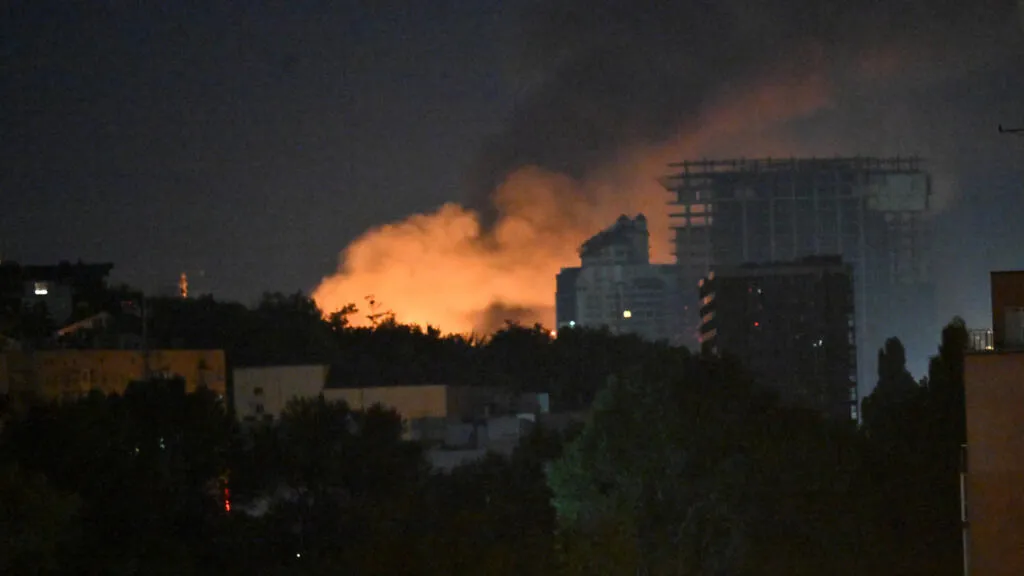
Russia launched a series of ballistic missiles overnight Saturday targeting Kyiv, according to authorities reported by France 24. At least nine people were killed and 28 others were wounded, as Moscow continues increasing long-range strikes on towns and cities across Ukraine.
Russia’s overnight ballistic missile attack on Kyiv killed at least nine people and wounded 28 others, according to authorities cited by France 24. The strike came as part of a broader pattern: both Russia and Ukraine have ramped up attacks in recent months, with Moscow increasing its long-range strikes on towns and cities across Ukraine.
For decision-makers, the first order of business is brutally simple. This is not a distant geopolitical abstraction. Kyiv is a capital, and casualties are mounting quickly enough to keep humanitarian response, infrastructure planning, insurance risk, and supply chain continuity in constant “on” mode. When a series of ballistic missiles hits a major city, the downstream effects hit far beyond the immediate emergency services. Medical capacity, municipal power and communications, public transportation, and residential readiness all take a hit, while businesses face interruptions that are difficult to quantify in real time.
Zoom out one layer and you see why this kind of escalation matters strategically. France 24 reports that Moscow has increased its long-range strikes across Ukraine, and that the overall tempo of attacks between Russia and Ukraine has accelerated in recent months. In conflicts like this, long-range attacks are often the lever that changes the risk profile for the entire country, not just the front lines. Even if the target is civilian or urban, the operational message is aimed at the national system: it pressures logistics, stretches response capacity, and forces continuous adaptation.
This is also where “capital” becomes more than symbolism. Kyiv is a governance center, and strikes on a capital tend to reshape how governments and large employers think about continuity. Contingency planning, emergency communications, shelter capacity, and redundancies in critical services move from “good practice” to daily requirements. For organizations with staff in the region, the second-order question becomes less about whether operations can resume, and more about how quickly, under what constraints, and at what cost.
There is a market angle too, even though the source is reporting a civilian casualty figure. In any environment where long-range strikes become more frequent, insurers and risk managers reprice exposure to the basics: property, business interruption, and liability. Supply chains also get stress-tested. Companies often treat disruptions as temporary until they see a sustained pattern, and France 24’s framing suggests that the pattern has been strengthening. Once that happens, contracts, warranties, force majeure clauses, and subcontractor arrangements become more than legal footnotes. They become the difference between absorbing losses and shifting them.
Regulatory and policy considerations typically follow the same logic. Governments respond to elevated strike risk with updated civil defense guidance, emergency procurement, and coordination among municipal and national agencies. International actors may also adjust sanctions enforcement or humanitarian carve-outs, but even that tends to depend on the security situation on the ground. When authorities report multiple fatalities and dozens of injuries from an overnight missile series, the implied operational reality is that response and reconstruction will face persistent strain.
Second-order implications show up in less visible places: workforce retention, relocation decisions, and the resilience of public services that employers depend on. If attacks continue, the “human layer” of risk becomes harder to manage, which then spills into hiring, training, and retention. Boards that oversee risk typically ask how fast an organization can flex. In a higher-tempo conflict setting, that flexibility must cover not only physical safety, but also staffing availability and the administrative load of ongoing emergencies.
Strategically, the stake for peers in similar roles is straightforward. France 24’s report of at least nine deaths and 28 injuries in Kyiv is evidence that escalation is not slowing, and that Russia’s long-range strikes are part of a broader increased-attack environment. For executives and boards anywhere near a high-risk operating theater, the lesson is not just to track headline casualty counts. It is to treat them as signals that the entire risk system is being stressed: operational continuity, insurance pricing assumptions, regulatory capacity, and the practical ability to plan beyond the next disruption window.
This story's Key Insights and Take-aways are locked.
Create a free account to unlock Executive Actions for one credit.
Register to UnlockAlways free for Executives Club members. Join the Club
More in Politics
Obama Defends Ilhan Omar After Agents Search Her Home in Trump Inquiry
The former president's intervention raises the stakes in a federal probe into immigration paperwork that has put a prominent progressive lawmaker in the crosshairs.

Blair-era minister: cut welfare to fund youth job support
Alan Milburn's call for welfare cuts to fund employment support opens a Labour fight over benefits and the Neet crisis.

Hot September CPI: energy costs surge, voters feel the squeeze before midterms
The latest inflation print lands as Trump campaigns for GOP control of Congress, putting cost-of-living worries at the center of the midterm fight.