

Lambrini Girls and Music Declares Emergency sell “Hot Girls F*ck The System” merch, fund climate action
All profits from a new merch collection back Music Declares Emergency’s UK “No Music On A Dead Planet” campaign.
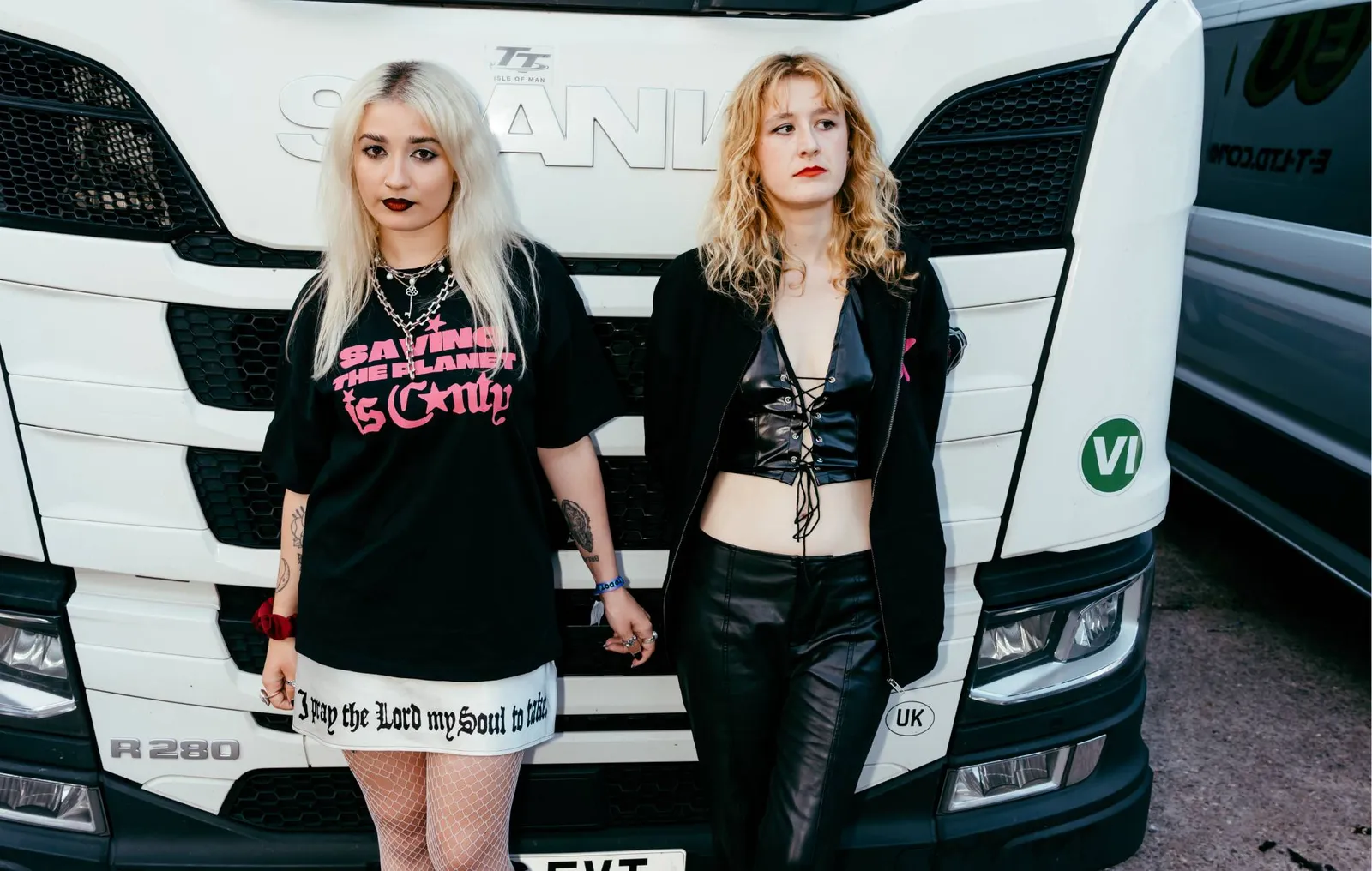
Lambrini Girls have teamed up with Music Declares Emergency for a “Hot Girls F*ck The System” merch line, with profits donated to climate action. For decision-makers, the partnership is a sharp example of music brands tying fan demand directly to on-the-ground campaign infrastructure.
Lambrini Girls are teaming up with Music Declares Emergency for a merch line built around the slogan “Hot Girls F*ck The System,” and the money is not going to the usual places. The t-shirts, hoodies, joggers, and caps will have all profits donated to support action in the face of the climate emergency.
That donation piece matters because Music Declares Emergency is not just asking people to care online. The charity is preparing to launch its “No Music On A Dead Planet” action hubs around the UK, bringing representatives into towns and cities to “supercharge climate action” and “create communities of real change on the ground.” In other words, this merch is a funding lever for local organizing, not a feel-good headline.
The merch range is designed with two eye-catching slogans: “Saving the Planet is Cnty” and “Hot Girls Fck The System.” The items are available to browse and purchase now on Music Declares Emergency’s site, and the whole setup follows a clear pattern the charity has used before. Last year, Music Declares Emergency launched another merch range called “Hope Over Fear,” collaborating with artists including IDLES, Yard Act, Enter Shikari, Maisie Peters, jasmine 4.t, and many more.
This is where executive-level relevance kicks in. In most industries, brand partnerships can be measured as awareness. Here, the brand partnership is designed to flow into an operational pipeline: merch sales generate funds, and those funds support campaign activities that show up as physical hubs. Music Declares Emergency’s CEO Lewis Jamieson framed it as part of a core thesis: their founding principle is that music can change the world, and when artists mobilize fans, those communities can act together to create change. For boards and leadership teams, the subtext is that stakeholder engagement is being treated as a distribution channel for impact work.
Lambrini Girls singer Phoebe Lunny’s comments point to the urgency behind the move. She said, “We’re in a climate emergency and the world’s on fire. Mobilising is more important now than it has ever been and we need to put pressure on those guilty of destroying the planet.” That’s not a vague mission statement, it is a positioning choice: they are aligning their public identity with pressure politics, and putting the spotlight on the responsibility of decision-makers, not just the anxiety of audiences.
Music Declares Emergency co-founder and Savages drummer Fay Milton has also previously spoken out about the need for the industry as a whole to change its habits to help beat climate change. The campaign infrastructure they are building, “No Music On A Dead Planet,” has already involved other major-name initiatives and collaborations, including shirts designed by Thom Yorke, Joy Division artist Peter Saville, and others. Foals have also been involved. This matters because it signals that the charity is trying to standardize a repeatable model across the music ecosystem, rather than relying on one-off moments.
For Lambrini Girls, this merch news lands alongside real world activity, not just PR. Earlier this year, the Brighton punk duo pulled out of Coachella and rescheduled their North American tour after Lunny sustained a neck fracture and an “acute brain injury” while touring in Australia. They shared rescheduled dates and locations for any remaining tickets. The duo also released a tongue-in-cheek new single called “Cult Of Celebrity” at the start of the year, taking aim at corruption among the elite. Their debut album “Who Let The Dogs Out” followed last year, and NME praised it with a five-star review calling it “loud, raw, and impossible to ignore,” and noting the band’s approach to amplifying chaos and calling out societal wrongs.
So what should executives and operators extract from this beyond “cool merch”? First, there is a business model logic: a fan-facing product line becomes a funding stream for a defined campaign, with a geographic execution plan via UK action hubs. Second, there is an industry signaling effect: if high-profile artists back a charity with operational next steps, the culture is likely to treat climate action as something that can be organized, staffed, and scaled, not just donated. And third, there is a reputational governance angle: when a brand claims urgency, it raises the bar for follow-through, especially when slogans and messaging are as direct as “Saving the Planet is Cnty” and “Hot Girls Fck The System.”
For peers considering similar partnerships, the strategic stakes are simple: if you want attention, you can buy it. If you want action, you have to route resources into execution. This collaboration is doing exactly that, with the added pressure that the band and the charity are both publicly tying their identity to the climate emergency and to communities of real change on the ground.
This story's Key Insights and Take-aways are locked.
Create a free account to unlock Executive Actions for one credit.
Register to UnlockAlways free for Executives Club members. Join the Club
More in Entertainment

Russell Brand's accuser 'bewildered and confused' as he denies 7 sex charges
The criminal case against the comedian is a live test of how media companies manage talent risk when serious allegations go public.

'It's a Magic Trick': Ballet Experts Say Rosalía's SNL Pose Is Impossible
Three ballet experts tell Rolling Stone Rosalía's gravity-defying SNL stillness shouldn't be possible - and why the debate is now part of the show.

Activision CMO: GTA 6 Will Boost Call of Duty, Not Bury It
Activision's top marketer says Rockstar's blockbuster will drive players back to consoles and into Modern Warfare 4, even as the company admits its recent strategy failed.