

Latto's 'Big Mama' turns motherhood into a flex, not a reinvention
Latto's fourth album shows how a star can absorb motherhood, heartbreak and family baggage without losing the swagger that built the brand.
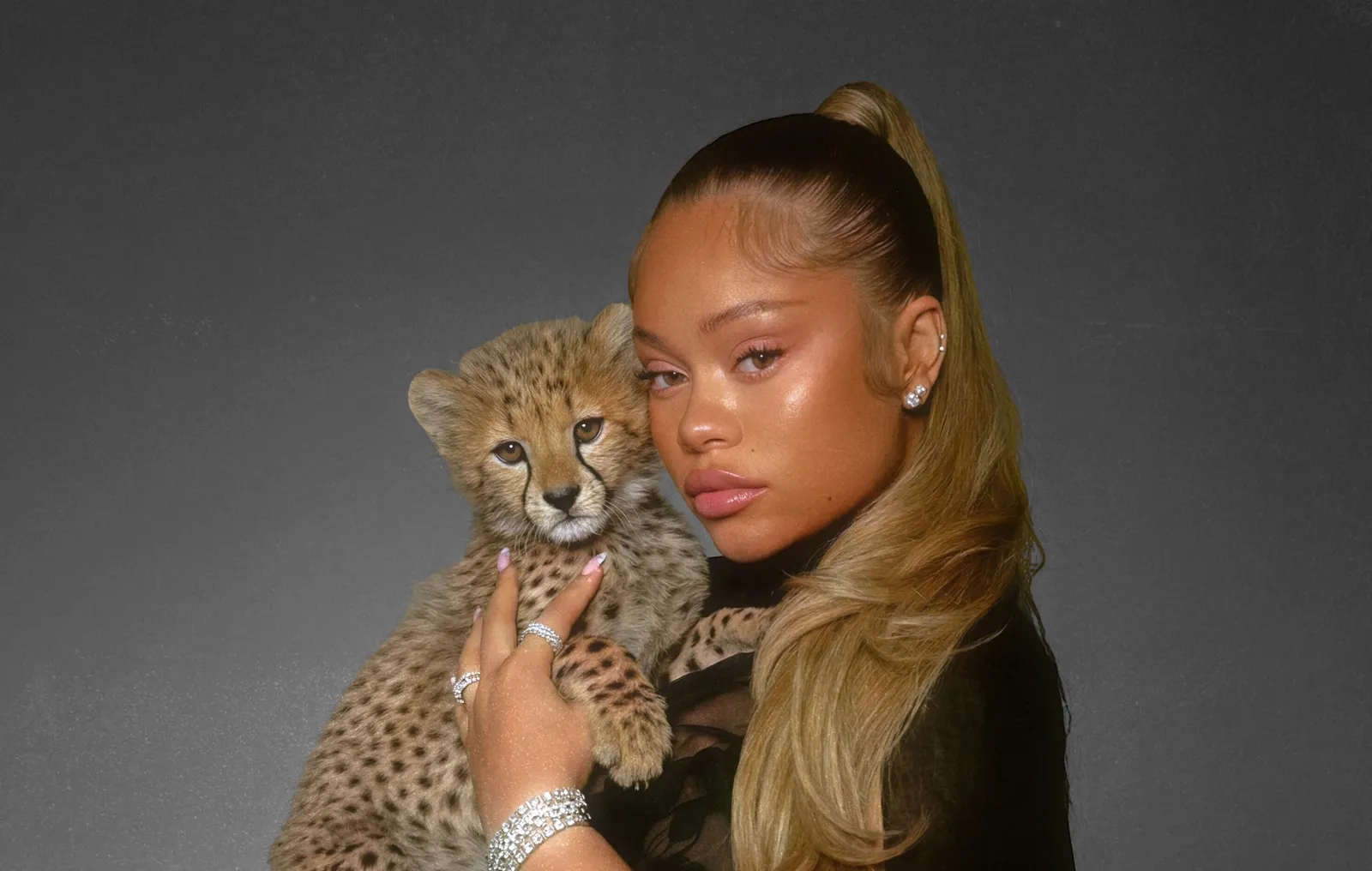
Latto's fourth studio album, 'Big Mama', arrives after she welcomed her first child with 21 Savage last month, turning a title that once signaled dominance into a literal new stage of life. For artists, labels and managers, the album is a case study in how to evolve publicly without flattening the identity that made the audience care in the first place.
Latto's new album, 'Big Mama', lands with a built-in headline: the rapper welcomed her first child with 21 Savage last month, and a title that once worked as a metaphor for dominance is now literal. That matters because this is not a soft reset or a brand pivot. It's Latto, now 27, releasing her fourth studio album while trying to keep the same thing intact that turned her from a teen competition winner into a mainstream fixture: swagger, sharp writing and a voice that can talk money, sex, family and survival in the same breath.
The opening stretch makes that point fast. 'GOMF' with GloRilla is described as pure shit-talking excellence, while 'Get Money Girl' leans hard into the hustler mentality that carried Latto from underground upstart to commercial player. Even pregnancy gets folded into the luxury-flex lane on 'Chrome Heart Diaper Bag', where she refuses to dial down her confidence, boasting about beating the odds and living lavishly over a cinematic beat. The line, “Since sixteen, I been the one to beat / This shit was a dream, now I can't stop smilin',” does a lot of work in a small space: it reminds you she has been building this career in public since adolescence, and it frames motherhood not as an interruption to the brand but as another chapter in it. For artists trying to expand their audience without losing core fans, that is the balancing act.
Latto's rise gives 'Big Mama' extra weight. The world has watched her grow up from winning The Rap Game at 16 as Miss Mulatto, where she turned down Jermaine Dupri's record deal to stay independent, into what the review calls the gritty Southern heir to Gangsta Boo and Trina. That history matters because it explains the tension inside the album. She can still sound like a young artist who learned early that a quotable bar is a form of currency. The writing has echoes of the old Young Money school, with rapid-fire punchlines and lines engineered to travel. But the record suggests something bigger than retro-pop rap polish. Latto is now forcing the audience to see her as a woman who can be commercially glossy and emotionally direct at the same time.
She also seems aware of the noise around her. On the album, she addresses the rumors that “Crodie” Drake writes her bars and takes it as “a compliment”. That single move is useful context for understanding how modern pop-rap stardom works. A rumor can trail an artist for years, especially when they are visibly successful, and the response often says as much about confidence as the allegation itself. Latto does not appear to be interested in giving the chatter more oxygen. Instead, she keeps the focus on the writing and on songs like 'Hostage', which the review calls one of her most creative offerings. Her flow there is toyetic and dexterous, proof that technical skill still matters in an era when personality can sometimes outrun craft.
Not everything lands with equal force, and that unevenness is part of the story too. The review says the album's momentum sometimes stalls when it reaches too aggressively for pop crossover territory or uses guests that do not mesh well with the Queen Of Da Souf. On 'Anxious', Wizkid and Odeal glide across a breezy Afro-R&B groove while Latto sounds like she is chasing the beat rather than commanding it. The synthetically sweet 'Fallin'' fares worse, borrowing from the glossy pop-R&B playbook that Doja Cat, who features and “shows how it’s done” on the catchy, cinematic 'Okayyy', has mastered without Latto having the same vocal elasticity to sell the tender tone. For executives watching the music business, that tension is familiar: expansion can open new lanes, but if the fit is wrong, the song reads like strategy instead of instinct.
The album's most important turn comes on 'Daddy’s Girl'. Over stripped-back production, Latto confronts her relationship with her estranged father with a level of honesty largely absent from her earlier work. “My protector left me with no protection,” she admits, unpacking years of disappointment and unresolved hurt from him abusing his power as her former manager before delivering the album's most devastating line: “I got my own on the way now, and I can't wait to teach her.” That is the emotional center of 'Big Mama'. It is not just about motherhood. It is about inheritance, betrayal, and the decision to break a cycle in public. In a culture that often rewards women in rap for either hardness or vulnerability, Latto is trying to hold both at once.
That is why 'Big Mama' lands as more than a celebrity life-update. It shows how a rapper can mature without turning into a different person for the algorithm, the label, or the casual listener. Latto can still be hypersexual and crass, but she is also increasingly comfortable showing nuance around love, family and heartbreak. She does not abandon the swagger that made her a star. She widens it. For peers in music, media and any business built on identity, the lesson is simple: growth does not have to mean brand amnesia. The strongest evolution is often the one that keeps the core intact while letting the audience see the full person underneath.
This story's Key Insights and Take-aways are locked.
Create a free account to unlock Executive Actions for one credit.
Register to UnlockAlways free for Executives Club members. Join the Club
More in Entertainment

Christopher Nolan’s “The Odyssey” posts his biggest Tuesday haul, surpassing “The Dark Knight’s” record
The film’s Tuesday breakout reframes Nolan’s box-office ceiling and forces competitors to rethink timing, budgets, and release strategy.

Kacey Musgraves cancels Aug. 20, 29, Sept. 2 Middle of Nowhere shows
Ticketmaster emails are telling fans refunds are coming, while the tour still starts Aug. 21 in Chicago.

Billie Joe Armstrong launches Epiphone Les Paul Junior and Marshall 1959BJA signature gear
Two limited releases turn decades of Green Day’s tone into branded hardware, including Marshall’s first artist amp in 14 years.