
Lebanon’s Joseph Aoun faces Trump as Israeli withdrawal talks hinge on Hezbollah disarmament
Aoun’s White House meeting lands amid US-mediated negotiations on a Lebanon-Israel framework agreement.
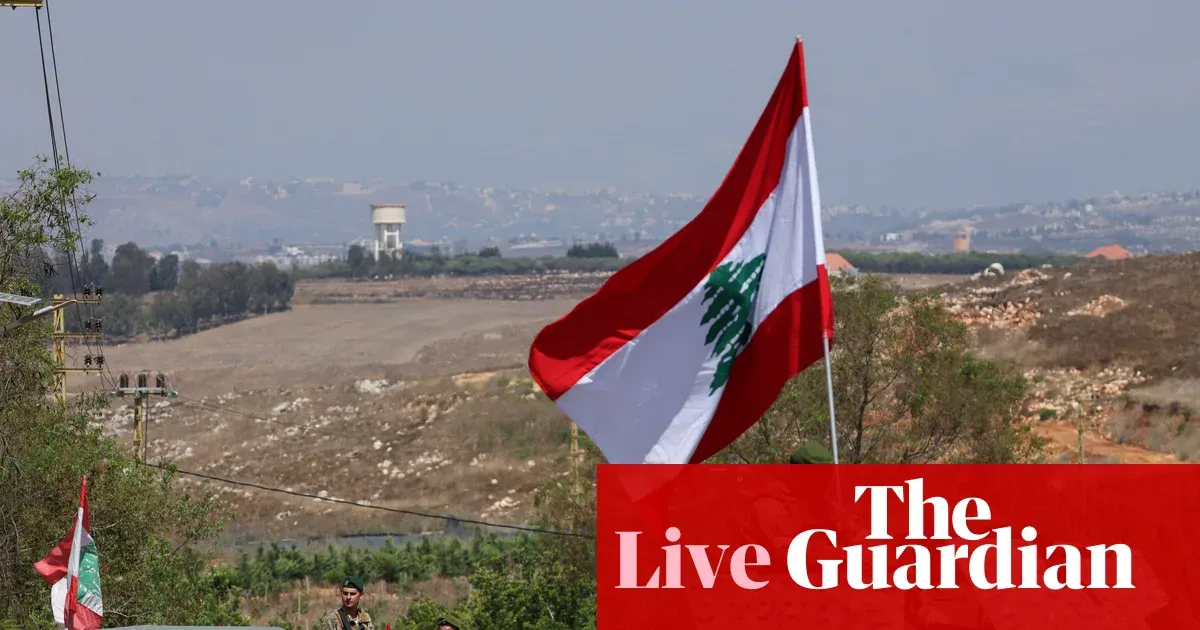
Lebanon’s President Joseph Aoun is due to meet Donald Trump for the first time today, during a four-day visit to Washington. The meeting coincides with US-mediated talks between Lebanon and Israel tied to a “framework agreement” announced on 26 June.
Lebanon’s President Joseph Aoun is heading into his first meeting with Donald Trump today at the White House, wrapping up a four-day visit to Washington. The timing is not window dressing. It lands directly on top of US-mediated negotiations between Lebanon and Israel, where both sides have already staked out key terms in a “framework agreement” announced on 26 June.
That framework, according to the source, stipulates two politically loaded outcomes: withdrawal of Israeli forces from southern Lebanon and disarmament of Hezbollah. So the Aoun-Trump rendezvous is essentially arriving at the moment the talks are trying to convert battlefield realities into a negotiated template. In other words, the president is not just shaking hands. He is stepping into a process where the stated endgame is the movement of Israeli troops and the reduction of Hezbollah’s weapons role.
Meanwhile, the security backdrop is actively moving. The source reports that soldiers were operating in a “pilot zone” in southern Lebanon. That detail matters for executives and policymakers alike because “pilot zone” activity signals a controlled, limited operational area, often used to manage risk, test procedures, or establish a de facto boundary while larger talks proceed. When armed activity runs alongside diplomacy, the margin for miscalculation gets smaller. A flare-up does not just harm civilians or personnel. It can harden negotiating positions, reduce flexibility, and turn a framework agreement into a battlefield story.
And this is where the credibility of any framework becomes the central issue. If the talks are built around Israeli withdrawal and Hezbollah disarmament, then even minor incidents can reshape how each side interprets the other’s willingness or capacity to follow through. That is exactly the kind of situation where a meeting with an external power like the United States becomes more important than normal diplomatic theater. It can translate political commitments into sustained pressure, monitoring, and sequencing. It can also become a spotlight: if parties believe enforcement will be weak, incentives change fast.
For Aoun, meeting Trump today is also a political timing problem, not just a diplomatic one. The source frames his Washington visit as four days, and the meeting is described as his first with Trump. That makes the moment a potential inflection point, even if the substance still depends on what the US-mediated process yields in the next steps. Presidents typically use these windows to lock in frameworks, secure commitments, and align messaging. When the framework agreement already includes troop withdrawal and disarmament language, the pressure is to ensure that the negotiation does not drift into vague intentions.
There is also the strategic second-order effect for everyone watching: the “framework agreement” creates expectations that are now hard to walk back. Once public terms are on the record, every follow-up meeting carries the weight of implementation. If Israeli withdrawal and Hezbollah disarmament are the headline items, then the operational question becomes sequencing. Does withdrawal happen before disarmament steps, after, or alongside? The source does not provide those mechanics, but the fact that negotiations are ongoing means the parties are still working through the practical architecture.
And then there is the broader capital-market logic, even if this is not a financial headline. Markets tend to treat sustained geopolitical risk as a slow-moving discount rate. When diplomacy is tied to concrete security outcomes, investors and other decision-makers look for whether the situation is stabilizing or fragmenting. A “framework agreement” announced on 26 June gives negotiators a reference point, but ongoing incidents and troop movements in southern Lebanon can keep risk premium elevated until implementation details become clearer and verifiable.
For other executives and boards tracking policy risk, the actionable takeaway is that the biggest moments in crisis diplomacy often occur at the intersection of public frameworks and live security operations. A headline meeting can signal momentum, but the operational reality on the ground, such as activity in a “pilot zone” and any reported tensions near troops, can still determine whether the framework survives contact with events. Today’s Aoun-Trump meeting is therefore a high-stakes coordination moment within a US-mediated process whose declared end state is Israeli withdrawal from southern Lebanon and Hezbollah disarmament.
This story's Key Insights and Take-aways are locked.
Create a free account to unlock Executive Actions for one credit.
Register to UnlockAlways free for Executives Club members. Join the Club
More in Politics

LA County: DOJ's 20,000 'noncitizen' voter list is 'unreliable,' includes U.S.-born
Preliminary review by Los Angeles County election officials finds errors in the federal list, raising the stakes for voter roll integrity ahead of November.

Trump's $1.5B Pentagon chip investment lands in North Carolina
A $1.5 billion defense infusion for North Carolina chipmaking signals a new era of Pentagon-backed reshoring - here's what it means for the industry.

Nigeria confirms first Ebola case in Abuja, a woman just off a Uganda flight
Health Minister Muhammad Ali Pate says the patient flew in from Uganda, putting Africa's latest outbreak on Nigeria's doorstep.