

Lonnie Bunch fires back at White House report, calling it “not a fair characterization.”
After a negative White House assessment, the Smithsonian chief tells staff the National Museum of American History was misrepresented.
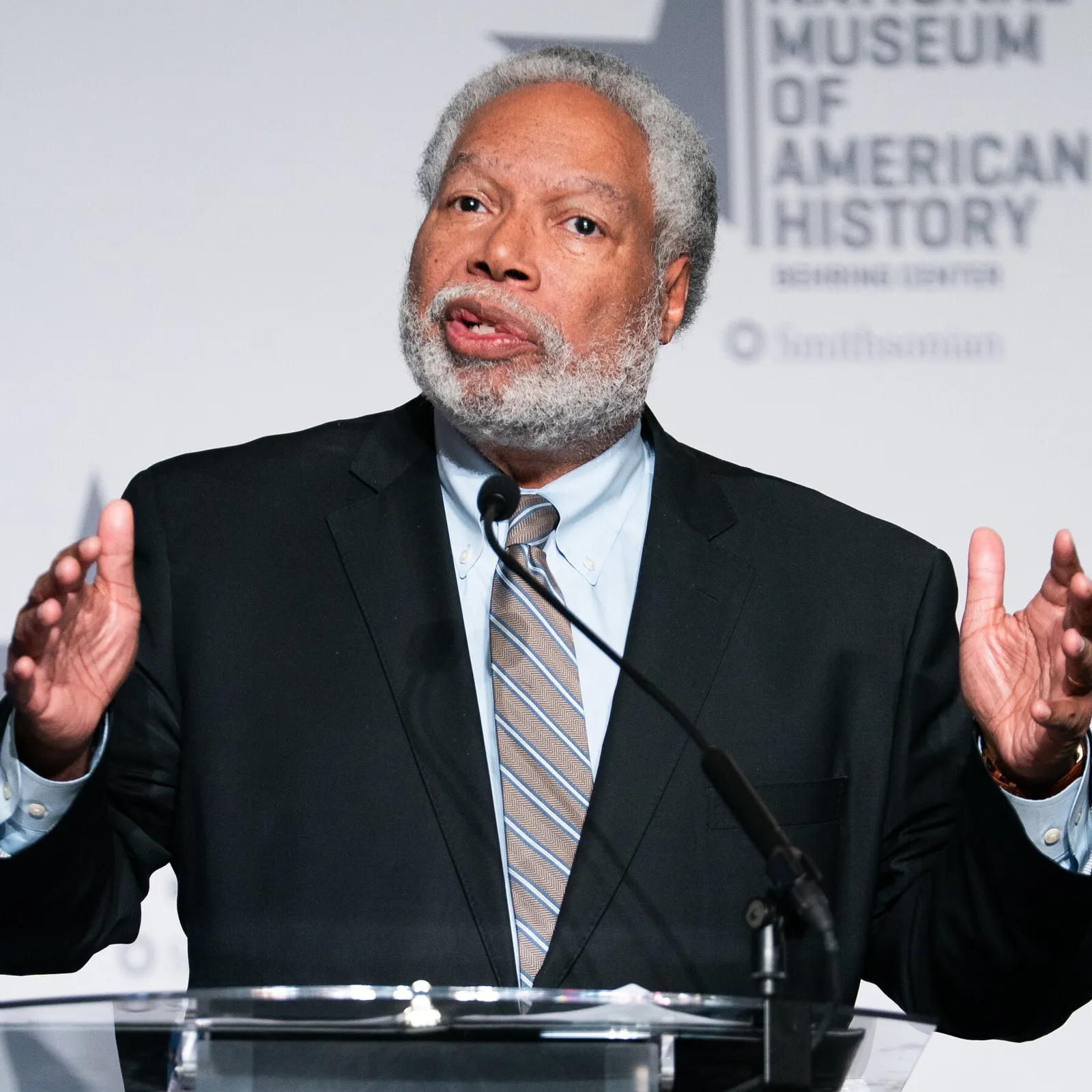
Lonnie G. Bunch III, head of the Smithsonian, addressed staff in a letter defending the National Museum of American History against a negative White House report. The dispute signals mounting political scrutiny that could shape how major public institutions frame programming and research.
Lonnie G. Bunch III, the Smithsonian’s leader, responded to a negative White House report by telling staff that it was “not a fair characterization of the work and totality of the National Museum of American History.” That single sentence does heavy lifting. It is both a rebuttal and a warning: the museum’s leadership believes the public record being shaped by federal power does not match what the institution says it is actually doing.
In the same letter, Bunch’s defense centers on the museum’s overall body of work, not a single exhibition or program. That matters because the White House report, as described in the coverage, created a framing problem. When an influential government document defines what an institution does well or badly, the effect often spreads far beyond the report itself. Donors, partners, visiting scholars, and even internal stakeholders can start treating the official characterization as the starting point for every conversation.
To understand why this kind of fight hits so hard, you have to look at how public-facing institutions operate in a politicized environment. Major museums and historical organizations rely on a mix of public support, reputational capital, and networks that include universities, foundations, corporate sponsors, and government agencies. In practice, that means leadership teams manage two parallel realities. There is the reality of scholarship, curation, and educational impact. And there is the reality of incentives, where public narratives influence access to programs, policy priorities, and the willingness of external partners to align.
A White House report is not just commentary. Even when it is not a binding regulation, it can function like a signal. Agencies and reviewers downstream often pay attention to what a higher political authority is emphasizing. That can reshape grant discussions, influence the tone of oversight, and tighten the space for institutions to experiment with controversial themes. For a museum that touches history, culture, and identity, the risk is not merely reputational. It is about the boundaries of what is considered acceptable to fund, feature, or publicly defend.
This is also where governance dynamics come into play. Museum leaders usually answer to boards and oversight structures that must balance mission with risk management. When the head of a major institution publicly disputes the accuracy or fairness of an official assessment, it puts board and staff leadership into a clearer posture: defend the mission with evidence and narrative discipline. The internal audience matters because staff are the ones who translate strategy into programming. If employees feel their leadership is abandoning the institution’s point of view, morale and retention can suffer. If they feel leadership is standing firm, it can stabilize execution even when external scrutiny intensifies.
Second-order implications show up in the institution’s operational choices, especially communications and documentation. After negative assessments surface, organizations tend to audit what they can substantiate quickly: exhibit impact metrics, publication records, educational outcomes, and explanations of how curatorial decisions were made. They also need a consistent story for why their “totality of work” deserves evaluation beyond a headline summary. That is what Bunch is asserting in the quote: the report may have selected particular elements, but he is arguing that it fails to reflect the full institutional picture.
There is another angle for executives and decision-makers outside museums. Many leaders today manage organizations that live at the intersection of public value and political controversy. The museum example underscores a general governance lesson: when official narratives turn negative, the most important work may happen off-stage, in the letters, memos, and internal alignment that determine how a team responds quickly and coherently. External stakeholders watch those signals too. When an executive like Bunch challenges an assessment as “not a fair characterization,” it suggests the institution may pursue clarification, additional context, and a stronger evidence-based rebuttal.
For peers running comparable public or quasi-public organizations, the strategic stake is straightforward. If you do not control the narrative, someone else will control it for you. And once the characterization hardens, correcting it can be slow, because institutional trust takes time to rebuild. Bunch’s letter to staff is a first move in that long game. It tells the internal organization to anchor itself in its mission and total body of work, rather than letting a negative White House report define the institution in narrow terms.
This story's Key Insights and Take-aways are locked.
Create a free account to unlock Executive Actions for one credit.
Register to UnlockAlways free for Executives Club members. Join the Club
More in Politics
Trump fires the last Election Assistance Commission members months before midterms
The bipartisan Election Assistance Commission loses its remaining members, and voting-rights advocates call it a reckoning with consequences.

US strikes Iran again Thursday; Tehran’s missiles hit Bahrain, Qatar, Kuwait, Jordan
Airstrikes and retaliatory missile fire threaten a fragile interim Middle East ceasefire, with explosions reported near Iran’s nuclear power plant.

The Daily Show blamed Graham Platner’s headhunters after Maine exit over rape allegations
Ronny Chieng roasted consultants Daniel Moraff and Leanne Fan for helping elevate a candidate who later unraveled.