

Luxshare seeks $3bn in Hong Kong while Lingyi lands $1.1bn for robot pivot
Apple’s supply chain bankrolls an AI and humanoid-robot shift, turning capital markets into a quiet strategy battleground.
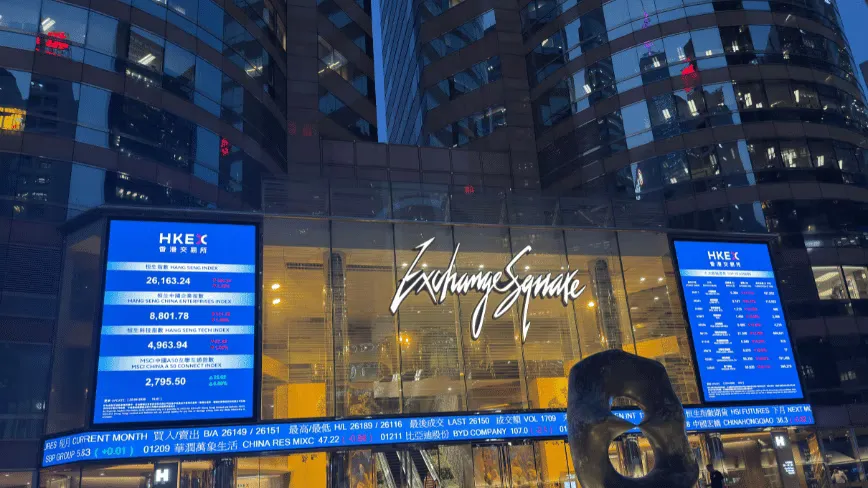
Luxshare is seeking about $3bn in Hong Kong, while Lingyi just banked $1.1bn. Both firms plan to use the money to pivot from smartphone parts toward AI hardware and humanoid robots.
Two of Apple’s biggest Chinese suppliers are moving on the same timetable and, crucially, in the same place: Hong Kong. Luxshare is reportedly seeking about $3bn, while Lingyi has just banked $1.1bn, and the shared theme is a pivot away from pure smartphone-component dependence. Instead, both are using the cash to fund a shift toward AI hardware and humanoid robots.
If you build or finance the ecosystem around consumer devices, this is the kind of signal that matters fast. Your suppliers are not just “investing in the future.” They are raising real money at a scale that suggests they are retooling operations, paying for engineering and supply-chain changes, and buying time in categories that are still being defined. The article also frames it more sharply by noting that the companies behind your AirPods are “quietly raising a fortune” this week, which reinforces the idea that multiple parts of Apple’s hardware ecosystem are concurrently sprinting into robotics-adjacent compute and automation.
Zoom out one layer and you see why Hong Kong is the obvious stage for this kind of scramble. For many China-linked companies, Hong Kong functions as a capital markets gateway that can support large financings and investor visibility. When a supplier is raising billions, it is usually because it needs to fund capex-heavy transitions, recruit specialized talent, and secure manufacturing readiness. Even if the end products are not shipping in mass yet, the upstream investments start earlier. In other words, the money is how you turn a roadmap into factory reality.
The specific choice to pivot “from smartphone parts to AI hardware and humanoid robots” is the strategic heart of the story. Smartphone supply chains are highly optimized for volume, packaging, and component cycles. AI hardware and robotics are different beasts. They tend to require deeper integration across compute, sensors, and systems engineering, plus new manufacturing processes and testing regimes. Robotics also carries a harsher timeline and higher technical risk: you can prototype quickly, but scaling reliably takes iterations, supplier alignment, and in many cases, new partnerships. A multi-billion fundraising effort is one way to de-risk that journey with enough runway to survive the iterations.
There is also a regulatory and market-structure subtext. AI and robotics investments are increasingly tied to national industrial priorities and broader geopolitics, and that makes capital allocation more sensitive. Investors want clarity on where the technology fits, who the customer is, and how quickly manufacturing can ramp. Meanwhile, companies want to signal commitment. In this context, Hong Kong financings can be a way to convert strategic intent into market credibility, showing that leadership is not just talking about AI. It is underwriting the pivot with large-scale capital.
Second-order effects ripple beyond the two named suppliers. Apple’s product franchises are mature, but the supply chain is still where the next growth curves are negotiated. If Luxshare and Lingyi are successfully mobilizing billions for AI hardware and humanoid robots, other suppliers that feed Apple-adjacent categories may face a board-level question: do we match the investment pace, or do we risk losing future sourcing opportunities? Even companies that are not pivoting their entire portfolio will likely need to redirect R&D budgets and manufacturing capacity to stay relevant.
And for decision-makers inside the ecosystem, the “quietly raising a fortune” note is the warning label. When multiple suppliers move at once, it is harder to assume this is one-off. It looks more like coordinated industry momentum, where the winners will be those who can deliver components, subsystems, or assembly capabilities for AI and robotics programs. That shifts how executives should interpret capital market headlines. These are not just finance stories. They are early indicators of where industrial capacity is being written into the future.
So the stakes for executives in adjacent roles are straightforward: supply chain investment cycles are now tightly coupled with AI and robotics bets. If you are sitting on a board, running procurement, building a partnership strategy, or managing investor expectations, you should treat these Hong Kong fundraising pushes as a real-time map of competitive priorities. Luxshare’s about $3bn push and Lingyi’s $1.1bn landing tell you that the pivot is not theoretical. It is funded.
This story's Key Insights and Take-aways are locked.
Create a free account to unlock Executive Actions for one credit.
Register to UnlockAlways free for Executives Club members. Join the Club
More in Technology

Nvidia's $89B data center quarter: the 9 companies cashing in
The AI buildout is minting fortunes beyond GPUs, and memory, cloud, and cooling suppliers are riding the same wave.

Google quietly links your phone number to every Android account on your SIM
Adding a SIM now ties your phone number to all Google accounts - and future accounts inherit it. Here's the security and privacy stakes.

Hijacker AI 'Skynet mode' runs 100,000 attack steps against exposed models
Symantec caught a criminal AI agent that borrows other models, steals data, and mines crypto; the only relief is no confirmed victims yet.