
Maine Democrats nominate Troy Jackson to replace scandal-plagued Graham Platner vs Susan Collins
Jackson steps in as Democrats reset after Platner's scandal, pitching a similar economic populist message.
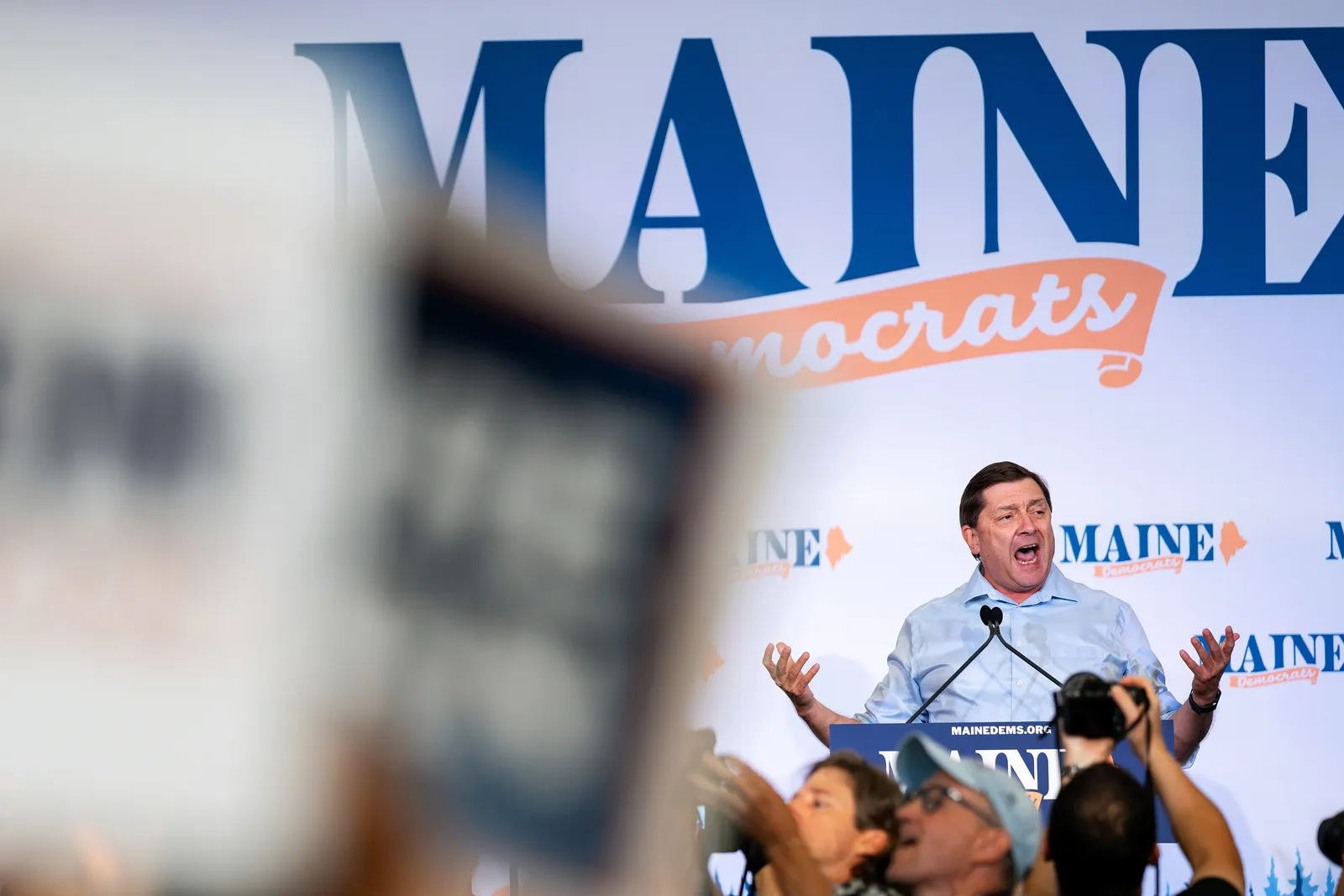
Democrats in Maine formally nominated Troy Jackson as their new U.S. Senate candidate, aiming to unseat incumbent Susan Collins. The choice is designed to move past Graham Platner's scandal-plagued campaign, while retaining a similar economic populist message.
Democrats in Maine have formally nominated Troy Jackson as their new U.S. Senate candidate, betting they can turn the page on Graham Platner's scandal-plagued campaign. The immediate target is incumbent U.S. Senator Susan Collins, a race where momentum and message discipline matter as much as policy detail. Jackson is not being presented as a total reinvention. Instead, the party chose him with a similar economic populist message as Platner, signaling a deliberate continuity plan: keep the economic pitch, change the candidate, and try to stop the story from being about scandal.
For decision-makers and political strategists, that continuity is the point. In a competitive Senate contest, the campaign that controls the narrative often controls the resources. A scandal can drain attention, complicate fundraising, and force the opposition to stay defensive while the election clock accelerates. By nominating Jackson, Democrats are essentially saying the emotional cost of the Platner episode will not be the defining variable. They will try to refocus voters on economic populism, using Jackson as the vessel for the same broad appeal.
While this is politics, the playbook rhymes with how markets respond to brand and governance shocks. When an organization is consumed by internal controversy, the first task is stabilization. A new nominee functions like a rebrand that still preserves the core thesis. The party is taking a reputational hit and trying to neutralize it quickly, rather than letting it compound. That matters in Senate races because turnout is highly sensitive to clarity. Voters need to know what the campaign stands for and what it is willing to spend political capital on.
So what does “economic populist message” practically mean in a campaign like this? At a high level, it suggests an emphasis on everyday economic pressures and a willingness to frame policy outcomes in terms of fairness, pricing power, wages, and the distribution of benefits. NPR’s description of Jackson as having a similar economic populist message as Platner tells us the Democrats are not trying to pivot toward a technocratic, incremental lane. They are trying to keep the message ecosystem intact: same lane, fresher driver.
Incentives also drive the timing of this kind of nomination. Parties typically want to avoid being stuck in an endless loop of damage control, because the opposition is not standing still. Susan Collins, as the incumbent, can afford to wait for Democrats to settle into their final form, and incumbents often benefit from stability and name recognition. When a campaign is scandal-plagued, it can miss windows for persuasive outreach and early persuasion. Formalizing the nomination for Jackson is a way to compress that lost time, moving the focus from the past controversy to the contest ahead.
There is also a boardroom-style logic to how campaigns manage “risk.” In corporate governance, when an organization faces reputational exposure, leaders often face a tradeoff between changing leadership and maintaining strategic continuity. Too much change can look like uncertainty. Too little change can look like stubbornness in the face of obvious problems. By selecting Jackson with the same populist economic message as Platner, Maine Democrats appear to be striking a middle path. They remove the scandal-associated candidate from the top of the ticket, but they preserve the messaging framework that likely built support in the first place.
The second-order implication is how this nomination shapes what both sides can credibly argue about “competence” and “attention.” In a race against a long-standing incumbent like Susan Collins, opponents will try to define Democrats as reactive or unstable if the party seems to be improvising. Democrats, by contrast, want the nomination of Jackson to read as a structured reset. They are trying to convert a scandal-plagued chapter into a resolved problem and then move on.
For executives, operators, and investors who track how narratives move money and votes, the lesson is familiar: legitimacy is a production system. Once trust is damaged, you do not just repair it with statements. You replace the visible anchor and you return to the value proposition that supporters already recognize. In this case, the anchor is Troy Jackson, and the value proposition is the economic populist message described as similar to Platner’s. The goal is to unseat Susan Collins without letting the Platner scandal remain the gravitational center of the campaign.
Now the strategic stakes sharpen. Democrats cannot afford a slow pivot, because every week that voters spend parsing scandal is a week they are not hearing the economic contrast Democrats want to emphasize. Jackson’s nomination is designed to prevent that drift, to keep the election focused on economic issues, and to position Democrats to compete for attention in a race where incumbency and consistency are powerful advantages.
This story's Key Insights and Take-aways are locked.
Create a free account to unlock Executive Actions for one credit.
Register to UnlockAlways free for Executives Club members. Join the Club
More in Politics

Obama Defends Ilhan Omar After Agents Search Her Home in Trump Inquiry
The former president's intervention raises the stakes in a federal probe into immigration paperwork that has put a prominent progressive lawmaker in the crosshairs.

Blair-era minister: cut welfare to fund youth job support
Alan Milburn's call for welfare cuts to fund employment support opens a Labour fight over benefits and the Neet crisis.
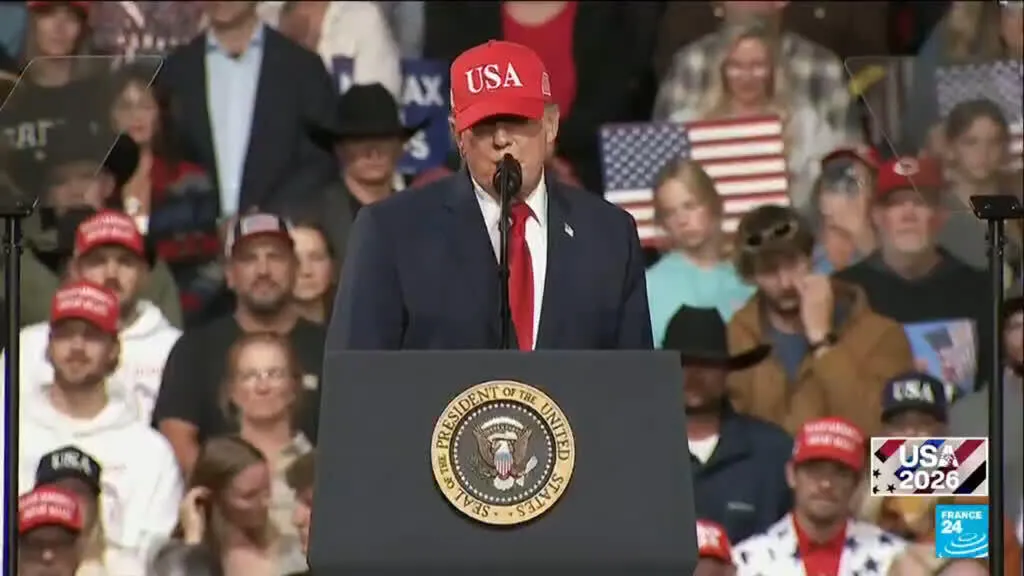
Hot September CPI: energy costs surge, voters feel the squeeze before midterms
The latest inflation print lands as Trump campaigns for GOP control of Congress, putting cost-of-living worries at the center of the midterm fight.