

Maine Democrats replace Graham Platner via a July 25 convention after a rape accusation
York County’s caucus-style delegate vote happened anyway, amid accusations of “undemocratic” insider selection.
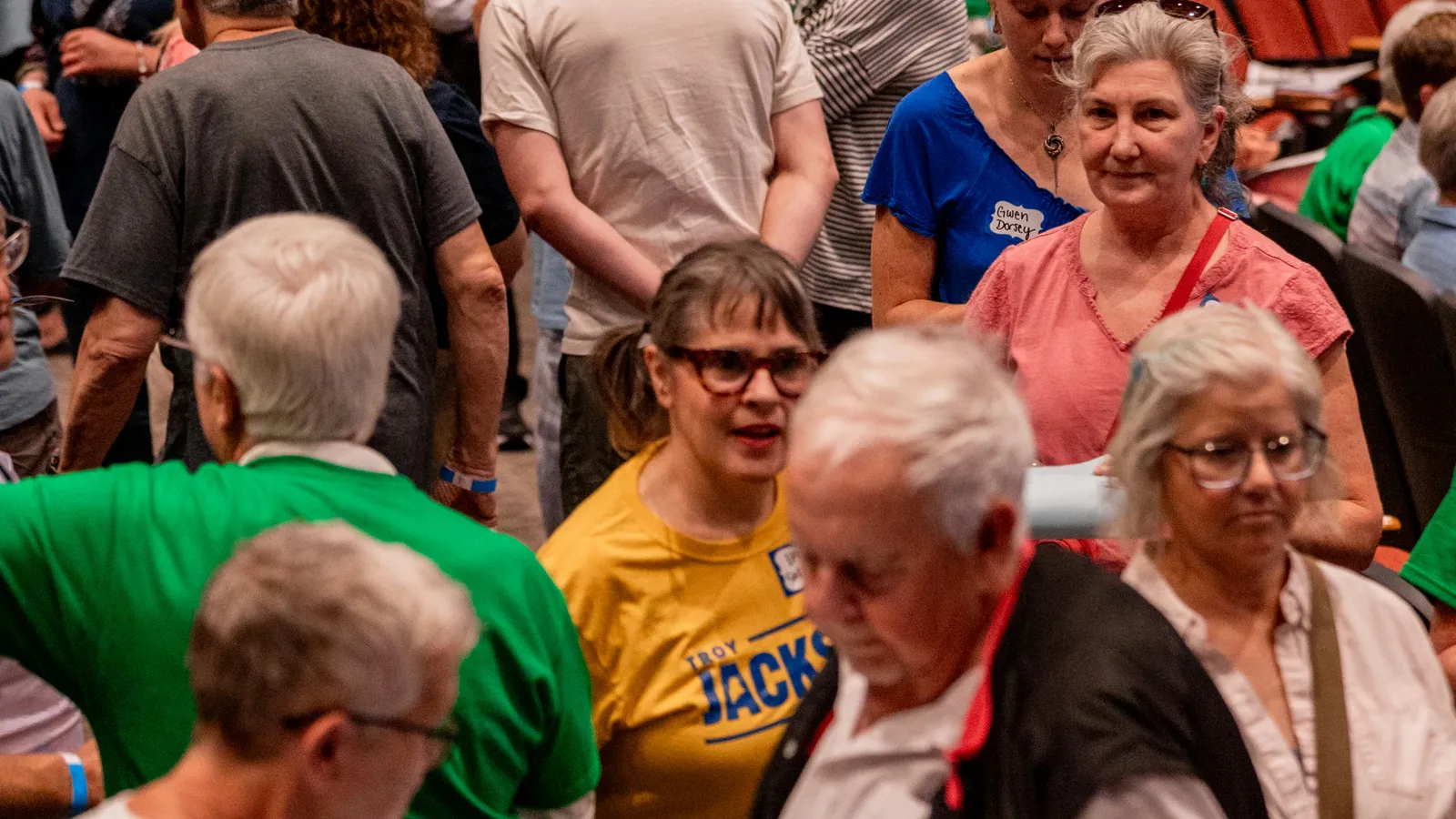
Graham Platner dropped out of the Maine Senate race after an accusation of rape, forcing Maine Democrats to replace him without time for another primary. They chose a compromise: county delegate elections feeding into a July 25 convention, and in York County, delegate totals were reached quickly despite chaos.
Photographs by Cassandra Klos. Cassandra Klos for The Atlantic.
Kathie Purdy does not mind the phone calls. She minded, a lot, the insinuation from other Democrats, media members, and online trolls that replacing Graham Platner was somehow undemocratic. As chair of the York County Democratic Committee, Purdy spent nearly two weeks since Platner announced that he would drop out of the Maine Senate race fielding a sustained buzzing from her iPhone, to the point that at one moment the device grew so hot she had to take it out of its case to let it breathe. Yet the bigger heat was political. On Sunday, Purdy showed the reporter a text from a voter asking whom “leadership had picked” for the nomination.
The answer was already happening, in real time. In Sanford, Maine, Purdy sat on stage beside the democratic process in action. She explained that what participants were doing that day was essentially a caucus-type meeting: they were voting for a group of delegates who would later vote for the Senate candidate. It was not tidy, or especially calm. The room in the Sanford Performing Arts Center packed in crowd after crowd despite the state party urging people to consider voting from home. Mainers who wanted to be delegates and Mainers who came to meet delegate candidates and campaign volunteers weaving lists of allied delegates were all circulating and jostling in red-upholstered chairs. Some struggled with the Wi-Fi. Occasionally, Purdy took the stage to make practical announcements, including a “We found a pair of car keys” plea for whoever they belonged to to come forward.
Zoomed out, the setup looks like controlled chaos, because it is. Maine Democrats had nominated Platner despite a bouquet of red flags, including a Nazi tattoo and allegations of volatile behavior from past girlfriends. Now that an accusation of rape toppled Platner’s candidacy, Democrats who selected him were scrambling to pick up the pieces in a race that many saw as their party’s best shot to take back the Senate. That urgency matters, because Maine Democrats have failed to unseat Susan Collins for nearly three decades, and there was plenty of reason to believe they could come up short again in three months.
So, after Platner dropped out, the party faced a classic legitimacy dilemma. They would not have time to conduct another primary. If state Democratic leaders simply chose a new nominee on their own, voters might feel indignant, especially because much of Platner’s support had come from people exhausted with the so-called establishment. The compromise was an attempt to split the difference: Maine Democrats would hold a convention on July 25, where 601 delegates would choose Platner’s replacement. Before that, each county would have an election to choose its portion of delegates.
That compromise also sharpened the critique. Independent Mainers, who could participate in the June primary, were not allowed into the replacement process this time. Only registered Democrats could select the replacement nominee. On the York County Democratic Committee Facebook page, one commenter wrote that “As an independent you’re saying my vote doesn’t count now,” which captured the anger that formed around the boundary lines of who was considered to have a stake. Another self-proclaimed former Democrat weighed in: “If you believe primary voters should choose nominees, not party insiders, consider whether your party registration still reflects your values.” The county committee chairs who would run these events were volunteers who were paid precisely zero dollars, and they were under stress from every side: voters, activists, and social media sparring.
Purdy, for her part, was begging for basic decency. “I would really appreciate some respect,” she wrote on Facebook. “Please stop the snark.” Meanwhile, Joseph Zamboni, chair of the Cumberland County Democratic Committee, sounded close to tears when he spoke about where and when the nominating meeting would take place. In a lengthy social-media update, Zamboni referenced Nobel Prize-winning scholar Herbert Simon, arguing that people rarely make perfectly informed or “optimal” decisions because none of us has unlimited time, information, or mental capacity.
By 9 a.m. on Sunday in Sanford, the chaos had a familiar shape: volunteers, planning, and relentless recruitment. Purdy arrived to find a dozen volunteers and a box of donut holes, and outside the auditorium, supporters held a rally for Troy Jackson. Inside, dozens of people circulated early, and one county committee chair told the reporter that when the committee holds a convention, they usually have to go “begging” for delegates, but “Right now we’re fighting ’em off.” In York County, more than 400 people had applied to fill 101 positions, a number that shows how badly the electorate wanted a say, even if the mechanism was messy.
For two hours before voting began, people made the case for their candidates, but not by voting directly for the replacement nominee. The county committee chose delegates. Campaigns had already built lists of allied delegates ahead of time and passed them out. Delegate selection became, in effect, a proxy election. Jackson’s supporters said his positions were most closely aligned with those of Platner, and that he could more easily inherit Platner’s movement. Reed Gordon, a 29-year-old delegate candidate, said the Democrats had lost a lot of momentum and Jackson had the best chance of keeping them engaged. Shah’s supporters argued that Nirav Shah, the former leader of the Maine CDC who had since dropped out, was slightly more moderate and therefore might be easier to sell for independent and moderate Mainers. Paula Busby, a 62-year-old from Lebanon, told the reporter that Platner was too aggressive and that Democrats needed to stand up against President Trump but “have to be measured.”
Even with the arguments, there was a moment of resolution. The predictable conclusion-that Democrats were once again in disarray-could not be drawn, at least not fully. After hours of hemming and hawing, people in York County sat down and voted. Totals were reached surprisingly quickly. Purdy read out the names of the 84 delegates and 17 alternates who would go to the party’s nominating convention in Bangor. Plenty of people were frustrated with the results, which, across Maine, were very good for Troy Jackson, a progressive former state legislator. Others had issues with the process itself. But Purdy’s line cut through: “that’s democracy.”
For executives, investors, and board members watching from the outside, this is a reminder that legitimacy is not just a legal structure, it is an experience. When a high-profile candidacy collapses after a new allegation, parties do not merely swap a nominee. They redesign consent in public, under time pressure, with imperfect incentives and loud intermediaries. The July 25 convention with 601 delegates is the formal step, but the delegate elections are where trust is won or lost. In a world where every stakeholder segment wants its influence recognized, the second-order risk is not only tactical outcomes, like who inherits momentum. It is whether the machinery of replacement convinces enough of the coalition that the institution still deserves to exist.
This story's Key Insights and Take-aways are locked.
Create a free account to unlock Executive Actions for one credit.
Register to UnlockAlways free for Executives Club members. Join the Club
More in Politics
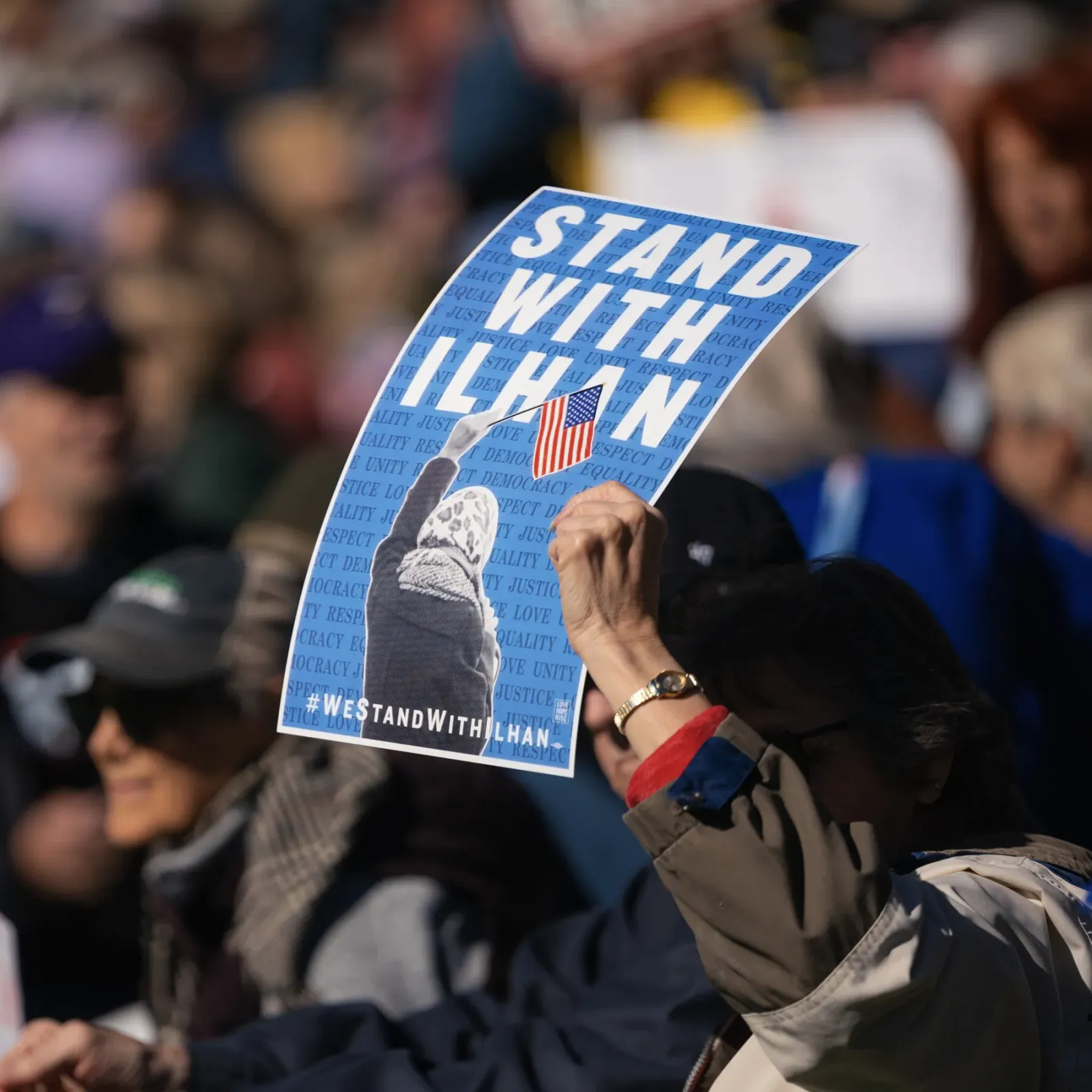
Obama Defends Ilhan Omar After Agents Search Her Home in Trump Inquiry
The former president's intervention raises the stakes in a federal probe into immigration paperwork that has put a prominent progressive lawmaker in the crosshairs.

Blair-era minister: cut welfare to fund youth job support
Alan Milburn's call for welfare cuts to fund employment support opens a Labour fight over benefits and the Neet crisis.

Hot September CPI: energy costs surge, voters feel the squeeze before midterms
The latest inflation print lands as Trump campaigns for GOP control of Congress, putting cost-of-living worries at the center of the midterm fight.