

Marcos Ortega pays £586,000 for Wimbledon Centre Court debenture tickets
A ballot longshot turns into a six-figure reality, revealing how debenture pricing can bypass ordinary fans entirely.
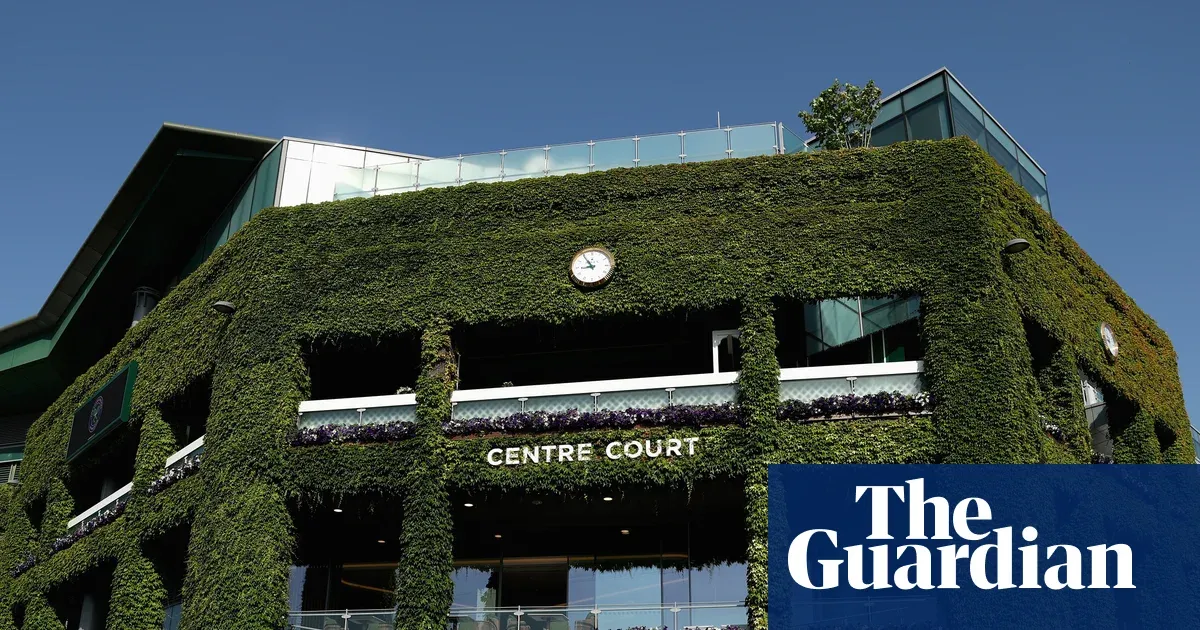
Marcos Ortega, a long-time Wimbledon public ballot participant, bought a pair of Wimbledon Centre Court debenture tickets this week after years without success. The purchase cleared for £586,000 total, turning Centre Court access into a price point far beyond typical tennis fans.
A pair of Wimbledon Centre Court debenture tickets changed hands this week for £586,000, and the buyer was not a corporate hospitality buyer or a lifetime patron. It was Marcos Ortega, the kind of fan who puts his name into the Wimbledon public ticket ballot every year in the hope of seeing some championship tennis.
Ortega tried for seven straight years and, in the report, never got lucky. When he learned there was a way to secure a ticket for every game played on Centre Court, he was delighted at first. That excitement flipped quickly when he discovered the cost: £293,000 for each ticket, or £586,000 for the pair. The story is basically a stress test of what “access” means when the official channels still have scarcity but the secondary market has a ladder.
Wimbledon is one of those rare global events where the demand story is obvious even if you never buy a ticket. Centre Court is the centerpiece. The public ballot is designed to allocate limited seats across a broad set of fans. But even when a ballot exists, it does not solve the underlying math: there are more people who want those seats than seats available. In that environment, anything that promises guaranteed access becomes extremely valuable, especially if it covers every game on the main stage.
Debenture tickets are often discussed as a special category of access rather than a normal retail purchase. In practice, they can behave more like a quasi-financial instrument than a simple event pass, because they can be bought, sold, and priced based on scarcity and certainty. Here, the source describes a pair of debenture tickets changing hands for a sum far beyond the means of ordinary tennis fans, which is the key point for decision-makers watching the intersection of sports events, consumer access, and high-value hospitality.
What Ortega’s experience highlights is the incentive structure. The ballot gives ordinary fans a chance, but it is lottery-based and therefore inherently uncertain. A debenture arrangement, by contrast, offers the promise of access across every Centre Court match, which converts uncertainty into certainty. When you reduce uncertainty, you are often paying a premium that has little to do with the emotional value of tennis tickets and everything to do with the economic value of certainty.
The second-order impact is what this does to expectations and market behavior. When enough people learn that the “guarantee” pathway costs hundreds of thousands of pounds, it can shift demand from the ballot to the secondary market or to anyone capable of underwriting that level of spend. That can leave regular fans feeling like the official system is mostly a symbolic gesture, while high-value buyers capture the practical reality of access. Even if the ballot continues to run, the availability of debenture tickets priced at £293,000 each changes the perceived fairness of the whole ecosystem.
There is also a reputational and governance angle that matters to boards and event operators. Sports organizers rely on public goodwill for long-term brand strength. If a subset of fans sees a path to Centre Court that is effectively out of reach, trust can erode even if the process is technically available to everyone. From a strategic perspective, the question becomes how the event communicates the different ticket pathways and whether it recognizes the equity perception problem when secondary pricing runs ahead of ordinary purchasing power.
For executives in ticketing, hospitality, and consumer-facing marketplaces, the practical lesson is straightforward: pricing mechanisms create winners and losers, and they do it fast. Here, the report gives you the concrete numbers. Ortega’s hopeful delight turns to anger once he finds the cost. That emotional arc is not just a personal reaction; it is a signal of how pricing transparency and access design interact. If you run an auction, a ballot, or a marketplace, you are not only selling seats. You are shaping who believes the system works, who feels excluded, and how quickly frustration turns into cynicism.
And for peers who oversee high-demand events, this is the stakes-loud takeaway. When a pair of Centre Court debenture tickets clears for £586,000, you are looking at a market that values certainty above all else. The strategic question is whether the event ecosystem can manage that reality without damaging trust, and whether the institution treats fairness perceptions as a brand KPI, not an afterthought.
This story's Key Insights and Take-aways are locked.
Create a free account to unlock Executive Actions for one credit.
Register to UnlockAlways free for Executives Club members. Join the Club
More in Business

A flaw in PHP just forced governments to pull their own sites offline
European agencies from Belgium to Germany took websites dark to patch a critical weakness in the language behind almost 70% of the web, and the blast radius extends far beyond government portals.

BioWare shuts down, Mass Effect 5 dead after $55B EA buyout
The legendary RPG studio's closure lands months after a $55 billion investment group buyout of EA, raising tough questions for gaming's biggest acquirers.

Musk barred from the room as Tesla, SpaceX boards weigh $3.5 trillion merger
The CEO of both companies is a 'conflicted party' watching independent directors negotiate a tie-up that would create a $3.5 trillion giant he would own about a third of.