

Markwayne Mullin halts ICE traffic stops, then Trump reverses it overnight
A one-day emergency order collapses into a public reset, exposing how DHS enforcement rides politics and loyalty.

Markwayne Mullin, the Secretary of Homeland Security, ordered an emergency halt to most ICE traffic stops after two ICE shootings, then Trump reversed the order in a social-media post the next morning. The reversal undercuts Mullin’s authority and raises the question of how far loyalty to Trump can stretch inside DHS.
Markwayne Mullin’s biggest early DHS policy move lasted barely a day. After two ICE officers killed civilians while searching for different suspects, Mullin ordered an emergency halt to most traffic stops. Then, the next morning, President Trump reversed the order in a social-media post. Mullin was not fired, but his authority was undercut, and it immediately became fuel for the MAGA hard-liners who had been hammering him as insufficiently tough.
The killings Mullin responded to were specific and brutal: in Texas, a Mexican construction worker with three American sons was killed, and in Maine, a Colombian delivery driver was killed while his 3-year-old daughter watched him lying dead in the street. DHS officials claimed the officers fired defensively during chaotic vehicle stops, but they provided no body-camera footage to back the claims. After phone calls with Maine’s senators, including Susan Collins, the secretary issued the emergency halt. The decision, according to the reporting, surprised many inside the White House, including Trump himself, and the reversal happened publicly, not quietly, through social media.
This is the central tension of Mullin’s tenure: he is running one of the most consequential immigration enforcement levers in the government, while simultaneously being managed by a political reality that does not fully care about the operational details. Trump seeks the removal of millions of immigrants from U.S. cities and communities, and Mullin was brought in to do it more quietly and cheerfully than his predecessor. The prior top DHS enforcement figure, Kristi Noem, was ousted after killings of two U.S. citizens protesting ICE in Minneapolis. Mullin started in March, but he is already getting squeezed by the same push and pull that removed Noem in the first place.
Supporters of Trump want the record-breaking deportation campaign promised during the earlier phase of his political push. But there is a predictable backlash when DHS increases ICE enforcement intensity and violence becomes part of the story. In that environment, Mullin is not just making policy. He is navigating a feedback loop between street-level operations, public perception, and internal party discipline. When DHS dials up the pressure, the broader public recoils from the human cost. When Mullin appears uneasy about that cost, right-wing critics pounce, taunting him with nicknames like “Markwayne Muslim” and “the Kung Fu Plumber.” Those barbs are less about procedure and more about signaling: they test whether the secretary will align fully with the hard-line enforcement style.
Part of why this story is so explosive is who Mullin is, and who he is not. He is not from a border state. He did not arrive with deep immigration-policy expertise, and he has no military or law enforcement background. He never worked on the congressional committees that directly oversee DHS and immigration. Before politics, he was a former wrestler and mixed-martial-arts fighter, known for organizing vigorous bipartisan workout sessions on the Hill during his decade in the House and three years in the Senate. Even his professional career leaned toward owning and running businesses rather than following command structures. In other words, he did not come up through the enforcement pipeline.
The reporting frames his appointment as “an improbable choice” made for one dominant reason: Trump’s preference for temperament and loyalty. As the source puts it, Mullin was not brought in because he mastered CBP and ICE issues. Instead, some DHS officials who generally support him say he was brought in “to restore normalcy.” But normalcy is not what MAGA hard-liners want. They want speed, scale, and a clear willingness to absorb the political heat from aggressive operations. Mullin’s defining asset in the administration is loyalty to Trump, described as “imperturbable.” The hanging question is whether that loyalty has limits when operational realities collide with the demand to ramp up deportations.
That question becomes more personal when you look at the story Mullin tells about why he follows Trump into high-risk situations. The reporting recounts his son Jim’s brain injury in 2020 after a wrestling match, when Jim’s pulse dropped and his lips turned blue, and he woke up 26 hours later with memory loss and motor skills of a toddler. Mullin says Trump was “delighted” when he heard Jim’s condition, offered his plane to fly Jim to a rehab clinic in California, visited him, and called weekly for a year and a half, which Mullin credits with helping Jim reclaim memories and stay motivated. Mullin then describes a bond of sorts, saying that they were “acquaintances before that” and became “friends ever since.” He also adopted Trump’s contested claims about the 2020 election being stolen, persisting in that position even after he confronted rioters on January 6 as they tried to break into the House chamber.
For executives and board members watching this unfold from the outside, the strategic point is not just personal loyalty. It is organizational control during policy execution. DHS is created after September 11 and is described as buttoned-up, with leaders usually projecting steady resolve. But the department has become more partisan under Trump, and Mullin has not shown boundaries. Two days after the vehicle stop reversal, Mullin held a media briefing next door to the White House to press Trump’s favorite issue, while issuing threats to state officials who refuse to hand over voter data, according to the legal analysis cited in the reporting. When a reporter asked whether Trump knew in advance about the vehicle stop halt, Mullin answered with a claim of “no daylight” between them. When pressed about what it meant to “turn down the temperature of the stove,” Mullin clarified that he wanted less intense media coverage, not less aggressive ICE operations, and said, “We’re turning up the heat on the streets.”
So what does this mean for the people who manage risk for a living, whether you call it regulatory strategy, government relations, compliance, or capital planning? It means enforcement posture can change overnight, not because of new evidence from the field, but because the political center chooses a different public line. That increases uncertainty for anyone exposed to immigration enforcement impacts, and it raises second-order risk inside institutions that must operate with credibility: when authority is reversed quickly, teams learn that outcomes depend on messaging as much as procedure. In that setting, Mullin’s story is a preview of how DHS may behave as pressure builds: not just tougher enforcement, but tighter coupling between law enforcement operations and political survival.
This story's Key Insights and Take-aways are locked.
Create a free account to unlock Executive Actions for one credit.
Register to UnlockAlways free for Executives Club members. Join the Club
More in Politics
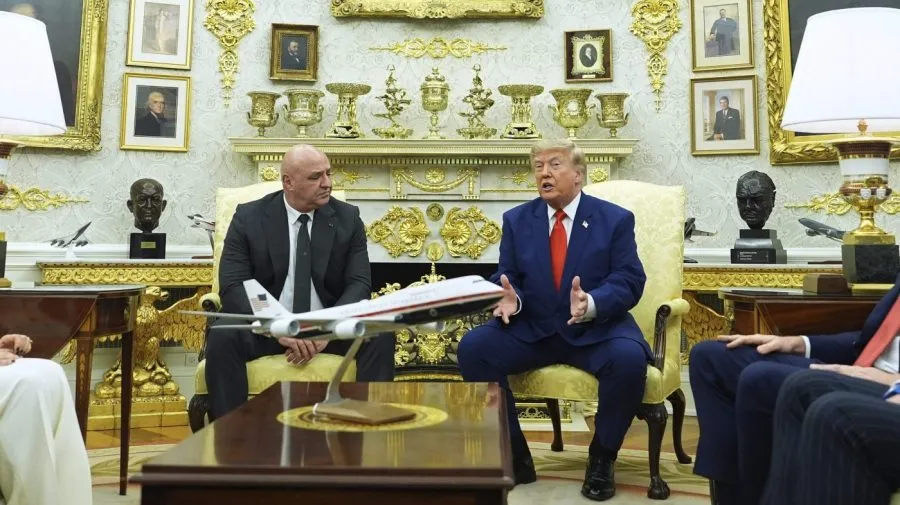
Trump tells Lebanon it’s first White House visit since 2009 as Iran tensions intensify
Joseph Aoun’s Oval Office meeting lands as the U.S. and Iran escalate within a 10-day window.
Trump puts Canada on notice, hints it should pay U.S. wildfire smoke damages
A presidential message turns cross-border wildfire smoke into an accountability fight, with big implications for diplomacy and risk planning.

Burnham faces ‘retribution’ backlash after demoting 50%+ of Starmer cabinet
Andy Burnham pledged to stop factional infighting, but allies say his first reshuffle looked anything but.