

Trump puts Canada on notice, hints it should pay U.S. wildfire smoke damages
A presidential message turns cross-border wildfire smoke into an accountability fight, with big implications for diplomacy and risk planning.
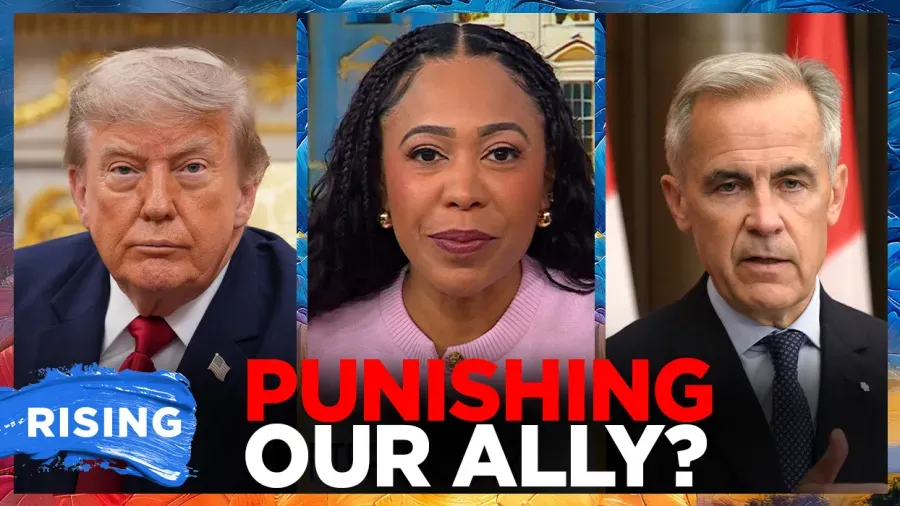
The president has officially put Canada on notice over the wildfires and suggested Canada should pay the U.S. damages tied to smoke drifting across the border. For decision-makers, the key risk is that wildfire response becomes a policy and legal exposure question, not just an emergency management one.
The president has officially put Canada on notice over the wildfires and suggested Canada should pay the U.S. damages over the smoke drifting across the border. In plain terms: what used to be a shared atmospheric problem is being framed as an obligation with a potential price tag.
This is not just political theater. When a U.S. president signals that an ally could owe damages for cross-border fallout, it changes how governments, insurers, businesses, and boards think about wildfire risk. Smoke does not respect borders, but politics loves borders. Once the question shifts from “how do we respond” to “who should pay,” the entire workflow gets more adversarial, slower, and more expensive, because it pulls in legal and budget processes that emergency plans are not built to handle.
Wildfire smoke already creates real operational impacts across industries: health advisories, port disruptions, school closures, and transportation slowdowns can follow when visibility drops and air quality worsens. In many cases, companies treat those disruptions as a mix of public health and contingency planning. But the presidential framing matters because it can encourage a different classification. If policymakers start discussing “damages” across borders, organizations may begin to ask whether smoke-related losses could be argued as compensable harms, who the “responsible” party would be, and whether documentation will be scrutinized later.
There is also a regulatory and governance angle. Disaster response typically sits within a web of authorities involving emergency management, environmental protection, health agencies, and cross-border coordination. That coordination relies on trust and on shared technical assessments, like air monitoring data and fire behavior reports. When leaders publicly put another country “on notice,” the coordination channel does not disappear, but it can get colder. Agencies still need data. Yet the political signal can influence how aggressively parties cooperate, what they emphasize, and how quickly they commit to shared frameworks.
For boards and C-suite teams, this is where the second-order effects start to matter. If cross-border wildfire smoke becomes a recurring “liability” narrative, it can affect contracting and risk transfer decisions. Companies with supply chain exposure near borders or that depend on predictable air and transportation conditions may review insurance claims processes and documentation standards. They may also revisit how they communicate about disruptions. Even when no litigation lands, the mere possibility of claims can reshape how aggressively organizations collect evidence, quantify losses, and preserve internal records.
There is another layer: diplomacy and trading relationships. The president’s message is about wildfires and smoke, but it lands inside a broader context of how the U.S. manages alliances. When leaders argue that allies should “pay” for harms, even hypothetical ones, it can spill into other negotiations, including trade, border policy, and environmental cooperation. Decision-makers should assume that hardening positions in one domain can reduce flexibility in others. That matters for executives because it increases uncertainty. And uncertainty is the enemy of planning, whether you are forecasting demand, budgeting for capital projects, or setting risk appetite.
If you are an executive in transportation, logistics, manufacturing, retail, or any sector sensitive to air quality and transit disruptions, this is your practical takeaway: risk is no longer only operational. It can become political and legal. Even if the underlying science stays the same, the policy interpretation can change what counts as a claimable loss, how governments allocate responsibility, and how quickly cross-border coordination happens when the next wildfire season hits.
So the stakes are clear. The president has put Canada on notice over the wildfires and suggested it should pay the U.S. damages from smoke drifting across the border. That framing turns a shared hazard into an accountability contest, which can slow cooperation, raise the odds of claims behavior, and make wildfire season planning more complicated for everyone operating across the region.
This story's Key Insights and Take-aways are locked.
Create a free account to unlock Executive Actions for one credit.
Register to UnlockAlways free for Executives Club members. Join the Club
More in Politics

LA County: DOJ's 20,000 'noncitizen' voter list is 'unreliable,' includes U.S.-born
Preliminary review by Los Angeles County election officials finds errors in the federal list, raising the stakes for voter roll integrity ahead of November.

Trump's $1.5B Pentagon chip investment lands in North Carolina
A $1.5 billion defense infusion for North Carolina chipmaking signals a new era of Pentagon-backed reshoring - here's what it means for the industry.

Nigeria confirms first Ebola case in Abuja, a woman just off a Uganda flight
Health Minister Muhammad Ali Pate says the patient flew in from Uganda, putting Africa's latest outbreak on Nigeria's doorstep.