
Metallica Scholars Initiative pledges $3.3 million for 93 schools in eight-year high
A $3.3 million grant expands Metallica's workforce education footprint, pushing support for trade school students to 93 schools.
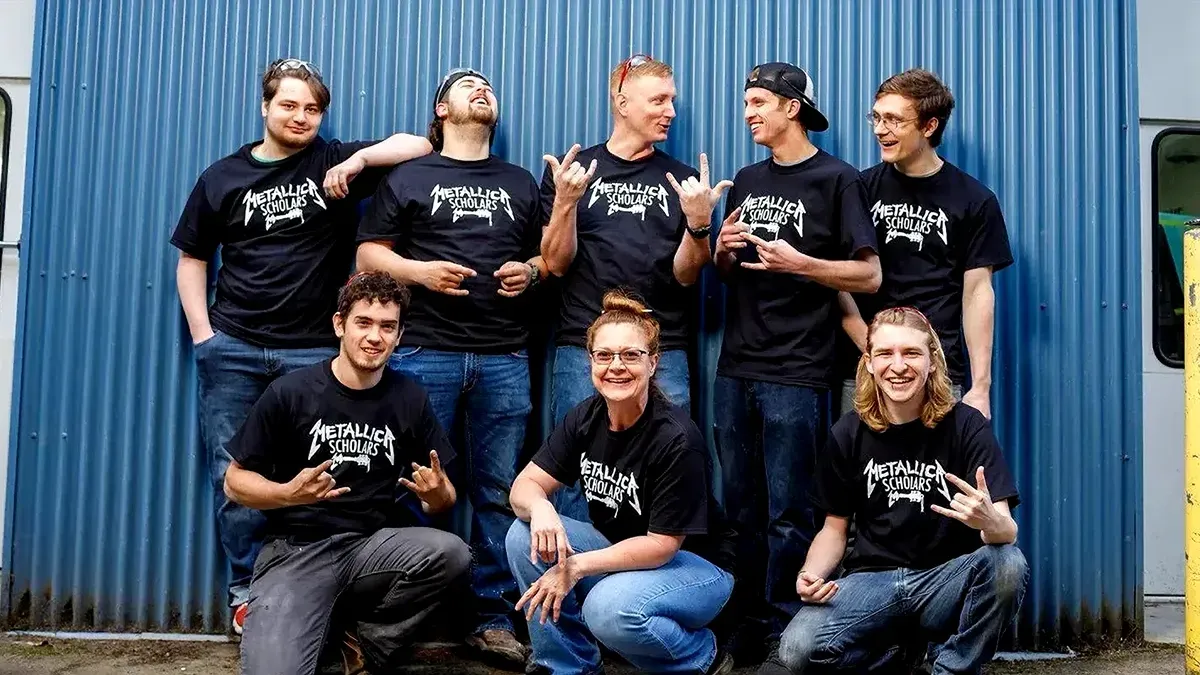
Metallica's workforce education program, the Metallica Scholars Initiative, expands to 93 schools with a $3.3 million grant, its largest in eight years. For decision-makers, it signals growing private-sector pressure to fund career and technical education at scale.
Metallica’s workforce education program is stepping up its footprint with a $3.3 million pledge that expands to 93 schools in the United States. It is the largest grant in the initiative’s eight-year history. In plain terms: more campuses, more trade school students supported, and more momentum behind career and technical education.
This year alone, the Metallica Scholars Initiative has supported over 90 schools and is set to aid roughly 5,000 students this year, on top of having helped more than 13,000 students over eight years. That matters because it shows the program is not just a one-off campaign. It is scaling, and it is scaling in a category that businesses and policymakers increasingly care about: pipeline development for skilled work.
To understand the significance, it helps to zoom out on what “workforce education” usually means in practice. Programs like this typically focus on career and technical education, which is the route that leads students toward job-relevant skills rather than only traditional academic paths. The Metallica Scholars Initiative benefits trade school students by supporting career and technical education via the band’s All Within My Hands initiative. When a program like this grows to 93 schools, it is effectively spreading a consistent model across multiple local systems, where school capacity and employer needs can differ.
The headline number, $3.3 million, is also a useful signal for decision-makers. Larger-than-before grants usually reflect either expanded fundraising, deeper partner commitments, or a shift in strategy toward breadth rather than depth. In this case, the initiative is explicitly described as its largest in eight years, which suggests the organization decided the best way to increase impact this year was to reach more institutions. For boards, executives, and operators watching impact programs, that is a reminder that scale is a strategic choice, not an accident.
There is also an incentive story underneath the surface. Employers often want reliable talent pipelines, while students and families want education that translates into outcomes. When an arts-founded initiative becomes a repeat player in workforce development, it can bridge stakeholder groups that normally operate in separate lanes. Trade schools sit at the intersection of education policy and labor market needs. A grant that expands across 93 schools is a bet that local programs can absorb additional support and convert it into more student participation in career and technical education.
Second-order implications are where executives should pay attention. First, scaling programs can change competitive dynamics for other education funders and philanthropies. If one initiative demonstrably grows, it can raise expectations for what “meaningful” support looks like in the workforce space. Second, school leaders may adjust planning when they see funding increases tied to a multi-year initiative. More partner schools can mean more coordination work, but it can also mean more predictable resources for program delivery.
Finally, there is a “capital and credibility” angle. The initiative’s track record, with over 13,000 students supported across eight years and roughly 5,000 expected this year, creates an evidence base that other donors and institutional partners may lean on. Even if the funding is private, it often influences public conversations about career readiness. When private programs expand to dozens of schools, they can reinforce the idea that career and technical education deserves more sustained investment.
If you run an organization that funds education, manages a board, or builds employer partnerships, this is the strategic takeaway. The Metallica Scholars Initiative is not only expanding; it is doing so at a reported high-water mark of funding within its eight-year history, now reaching 93 schools. That combination of scale and momentum is exactly what attracts attention from other stakeholders, and it sets a bar for impact in the workforce education category.
This story's Key Insights and Take-aways are locked.
Create a free account to unlock Executive Actions for one credit.
Register to UnlockAlways free for Executives Club members. Join the Club
More in Business

Comcast shares jump 25% as it plans to split NBCUniversal and Sky
The tax-free spin-off could reshape focus, funding, and competition across media and tech for years.

Bungie cuts most Destiny 2 staff as Sony says Marathon still matters
Herman Hulst confirms layoffs affecting most Destiny and some Marathon teams after Bungie admits Destiny fell short.

SK Hynix jumps 11% after seeking up to $29.4B in Nasdaq listing
The chip giant filed for a Nasdaq listing plan that could raise $29.4 billion, instantly reshaping investor expectations.