
Miami family turned 1 Turo Nissan into 63 cars and $500k in 2025
Gerardo Aletti and Sofia Escarra scaled a low-risk side gig into a full-time, Turo-only rental business powered by logistics and Spanish.
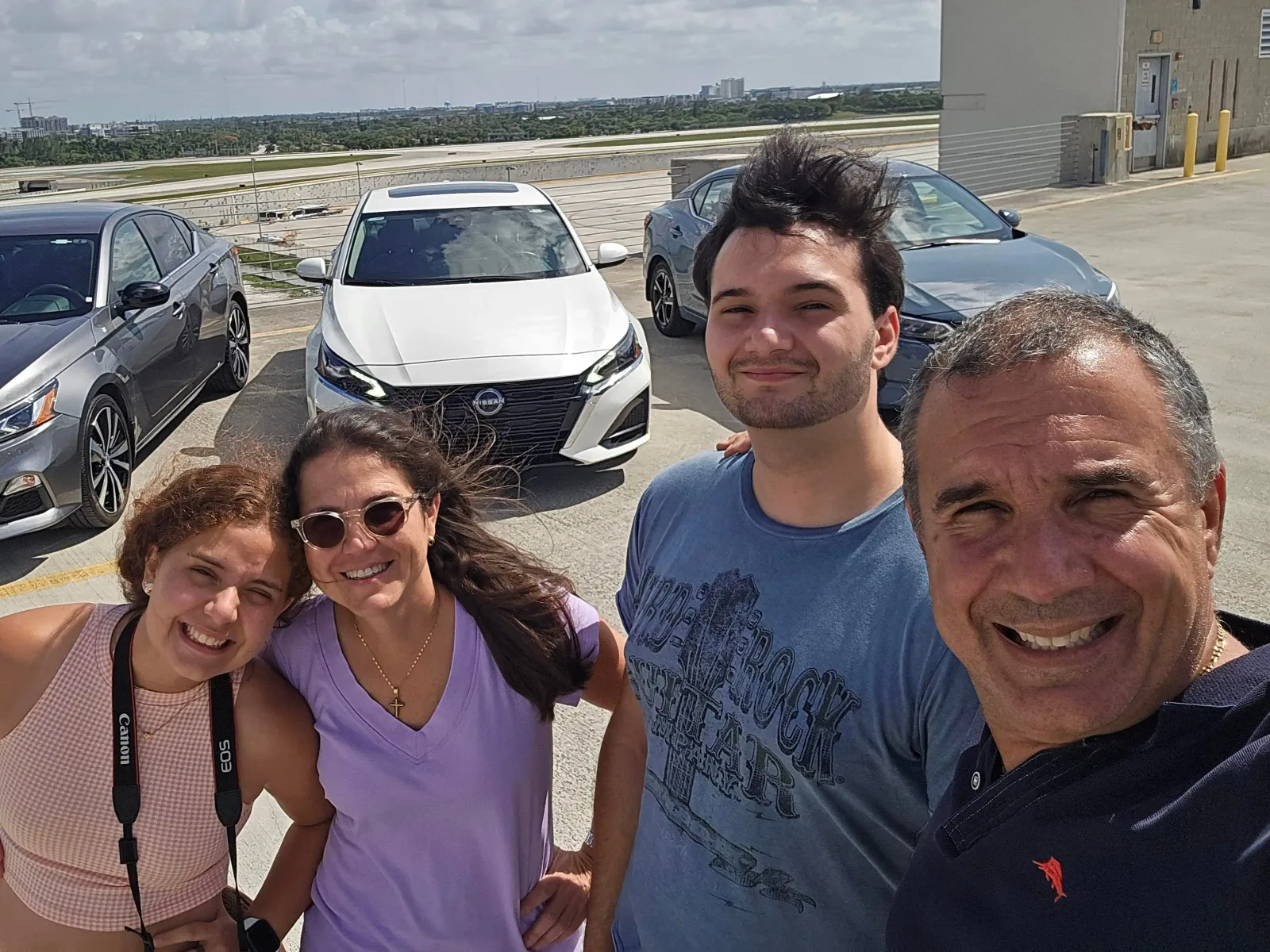
Gerardo Aletti and Sofia Escarra, a married couple based in Miami, grew a car-rental experiment from one Nissan Infiniti bought in 2020 into 63 cars rented exclusively on Turo. Their fleet earned them half a million dollars in 2025, helped by Spanish-speaking demand and booking spikes tied to the 2026 FIFA World Cup in Miami.
The Miami couple behind a car rental empire started with one car, one platform, and a very simple bet: try it, and if it did not work, sell it. Gerardo Aletti and his wife, Sofia Escarra, bought a Nissan Infiniti in 2020 to rent it out on Turo. Six years later, that “side gig” has become a full-time, family-run business with 63 cars and earnings of about $500,000 in 2025.
Here is the part that matters for decision-makers: they did not just “scale.” They built an operating system. They rent exclusively on Turo, reinvest in the fleet based on demand, and recruit multiple family members to handle different parts of the business. When you are watching the boundary between consumer marketplaces and small-business operations blur, this is a case study in how quickly it can happen.
Their growth trajectory is the headline in numbers, but it is also the story in steps. After the first rental experience worked out, they bought another car and then another. By 2023, they had 15 cars, and they added real-world infrastructure, including a place to park and store the vehicles, plus an office. By 2024, Turo became their primary source of income, which tells you something about unit economics and repeat demand. In their words, the original appeal of Turo was relatively low risk, and the experiment turned into a compounding machine.
Why Miami and why their specific angle? Aletti and Escarra said their background in transportation and their ability to speak Spanish helped them grow in the region. Operating in Miami, they leaned on Spanish to communicate with travelers from Latin America, who they say make up 30% of their business. That is not a marketing slogan. They described Spanish as useful for practical moments like airport pickup instructions and restaurant recommendations. In marketplace businesses, those small frictions are what separate a smooth trip from a refund request.
Their market timing may also matter more than it looks. The 2026 FIFA World Cup has seven matches in Miami, and they said those games have brought a surge in bookings in recent weeks. They also pointed to Turo making Spanish available in its app earlier this year, which made it easier for Spanish-speaking travelers to find them. In other words, the demand was external (sports tourism), but the discovery and conversion loop improved through product localization. That is a second-order lesson: platform features can quietly change who shows up and how quickly.
Internally, the business runs like a small operations team, not a single-person hustle. Aletti said he used his industry background to evaluate which cars might be in demand in the markets they targeted, including the Miami and Fort Lauderdale airports. After the luxury Infiniti, he tested smaller, fuel-efficient cars, then sedans and SUVs. When something worked, he bought more, and he consistently reinvested in the fleet. Each family member handles different aspects, from tracking expenses and buying new cars to marketing and customer service. They also described a division of labor for logistics, where managing the “dozens of cars” and keeping track of which ones are at the airport, at the office, or need maintenance is handled by the younger members.
For executives watching this space, the most revealing line is how customer acquisition actually works here. Fabrizio Aletti said that while the family does some marketing on their own, the vast majority of their business comes from people finding their cars in the Turo app. He added that even if they stopped marketing, they would still probably get a really good amount of business. That suggests the platform is doing the heavy lifting on search and demand aggregation, while the family provides supply, reliability, and service quality. It is a modern supply-side play: match cars to demand, keep them operational, and treat customers well.
Of course, scaling a fleet does not eliminate risk. Over thousands of trips, they mostly described positive experiences, but things occasionally go wrong. Aletti recounted one incident: they rented a Nissan Altima to two older men, and when he opened the door afterward, the car reeked of marijuana. Situations like that underline why operational discipline matters as volume increases. And Aletti framed success as a combination of car knowledge and people knowledge, saying, “You have to know how to treat people.”
If you are an investor, operator, or board member trying to understand where “gig” businesses turn into real companies, this story is a blueprint for the pathway. It shows how a marketplace can become the primary channel for income, how demand spikes from tourism can create outsized short-term momentum, and how language and service can convert attention into bookings. It also shows the hard truth behind scale: managing dozens of vehicles is logistics, not just inventory. For anyone building in consumer marketplaces or location-driven services, the question is no longer whether side hustles can become full businesses. It is whether your operating model, platform alignment, and customer experience can handle growth without breaking.
This story's Key Insights and Take-aways are locked.
Create a free account to unlock Executive Actions for one credit.
Register to UnlockAlways free for Executives Club members. Join the Club
More in Business

A flaw in PHP just forced governments to pull their own sites offline
European agencies from Belgium to Germany took websites dark to patch a critical weakness in the language behind almost 70% of the web, and the blast radius extends far beyond government portals.

BioWare shuts down, Mass Effect 5 dead after $55B EA buyout
The legendary RPG studio's closure lands months after a $55 billion investment group buyout of EA, raising tough questions for gaming's biggest acquirers.
Musk weighs Tesla-SpaceX mega-merger as boards form review panels
Special committees at both companies will examine a tie-up that could fuse electric vehicles and space launch, forcing a fresh look at governance and valuation.