
Microsoft killed Odyssey, Everwild, Perfect Dark, Contraband, and Project Blackbird in 2024-2025
Asha Sharma’s Xbox reset follows years of studio shutdowns, leaving some “promising” games dead mid-flight.
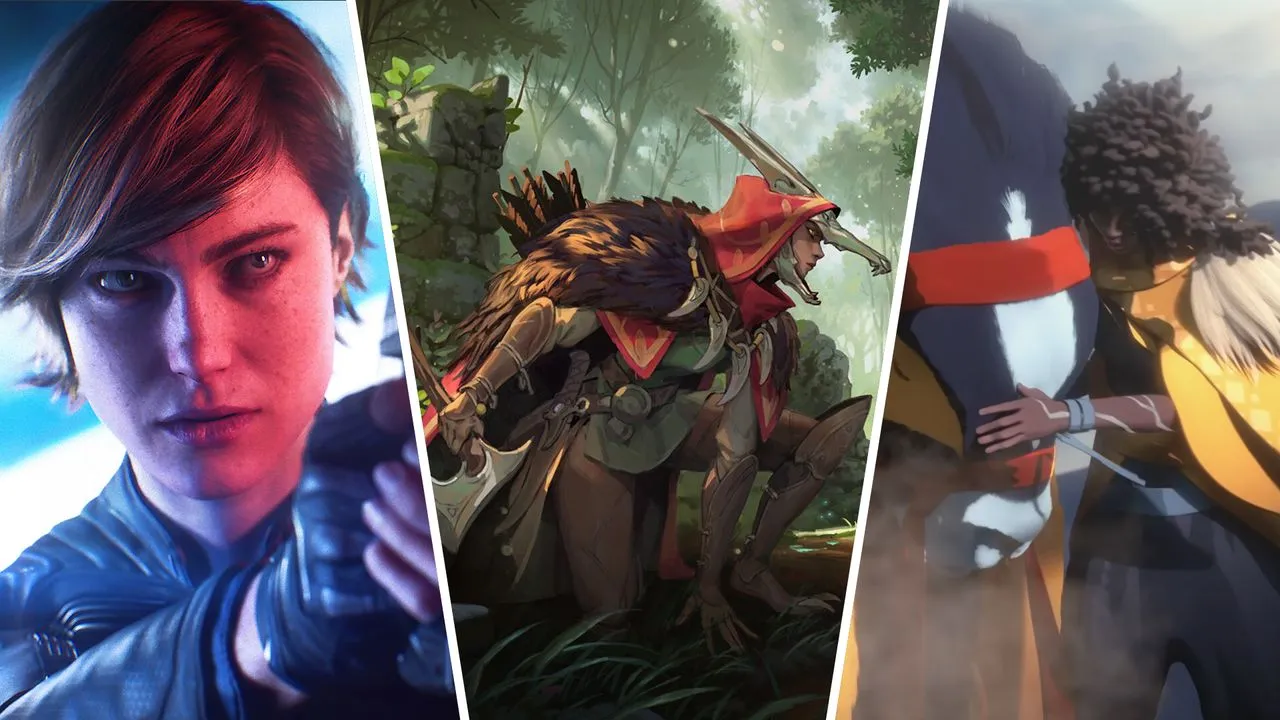
Microsoft cancelled five in-development games across 2024 and 2025: Blizzard’s Odyssey, Rare’s Everwild, a Perfect Dark reboot, Contraband, and ZeniMax Online Studios’ Project Blackbird. The consequence is a visible talent and strategy reshuffle at Xbox as leadership pushes a cost-reset and publishers fight over the leftovers.
Microsoft is chopping five in-development games out of its Xbox pipeline across 2024 and 2025. Those cancellations include Blizzard’s survival project Odyssey, Rare’s Everwild, a reboot of Perfect Dark developed by The Initiative, the co-op smuggling game Contraband, and ZeniMax Online Studios’ MMO project Project Blackbird.
The thread connecting them is not just “games didn’t work out.” It’s a years-long Xbox cost-cutting push that expanded under former Xbox CEO Phil Spencer, then is now being formalized under new CEO Asha Sharma as an “Xbox reset.” The public-facing result is more studio closures and job cuts, but the private-facing result is what founders and investors should care about: ambitious, sometimes internally praised projects getting crossed off before they could prove themselves.
Start with Odyssey. Blizzard first revealed it in 2022, and the project had been in development for almost five years by the time Microsoft cancelled it in 2024 after acquiring Activision Blizzard in 2023. The source also preserves the emotional backdrop: former Blizzard president Mike Ybarra said he had “played many hours” and was “incredibly excited about the team's vision and the brand-new world it presents for players to immerse themselves in together.” Novelist and Blizzard writer Christie Golden said, “All I can say is it's gonna absolutely rock,” and added, “Hella beautiful too. I cannot wait!” Microsoft’s acquisition came with a mandate change pressure point too. A Bloomberg report cited in the source says Odyssey began in Unreal Engine but ran into trouble after a mandate to switch to “an internal engine that the company had originally developed for mobile games.” The report also says Odyssey was not close to release when it was cancelled.
If you are wondering whether this reads like “business practicality” or “development hell,” the story gives you both ingredients. On one hand, the source notes Odyssey was not close to release. On the other, survival games can keep paying off even when they look unfinished. The source points to Subnautica 2, which sold over 4 million copies this year, as evidence that co-op survival has not calcified. In other words: the genre was not obviously dead. The question becomes whether the switch in engine and internal timelines made the project too expensive to keep carrying.
Next up is Everwild, cancelled in 2025. Rare is known for Sea of Thieves, and Everwild seemed to point in a different direction, framed here as “being kind to animals.” The source emphasizes that we “never got a complete picture” of what Everwild would be, and that it was reportedly rebooted once. That matters because repeated resets often mean repeated costly reinvention. The cancellation is also tied to one of Microsoft’s mass layoff waves in 2025.
Perfect Dark, also cancelled in 2025, illustrates the same pattern with sharper audience stakes. The source says the cuts claimed a reboot of the classic Rare first-person shooter and also one of the studios making it, The Initiative. (“Several unannounced projects” were also vaporized that day.) The gameplay reveal was met with positive response according to the source. It also says Take-Two reportedly tried to take the game off Microsoft’s hands, but couldn’t reach a deal. That tells you there was interest from a major publisher outside Microsoft, meaning the cancellation was not simply “nobody wanted it.” The source adds that Take-Two snatched up the former leads to found a new studio, reinforcing that the talent and the concept still had perceived value even if Microsoft decided to stop funding it.
Contraband, cancelled in 2025, is the cleanest “what we know is limited” example. Announced in 2021 with a gameplay-less teaser, Contraband was a collaboration between Microsoft and Avalanche Studios Group, intended as a co-op smuggling game set in the 1970s. In 2025, Avalanche announced that active development had ceased. The source notes it could theoretically still happen without Microsoft, but “it doesn’t seem likely.” For executives, that is the real warning label: once the flagship partner walks away, co-development arrangements often become a dead end unless another backer steps in quickly.
Then there is Project Blackbird, cancelled in 2025, and it is where the cost argument becomes explicit. ZeniMax Online Studios, the developer behind Elder Scrolls Online, had been working on a new MMO, codenamed Project Blackbird, for over six years before Microsoft cancelled it alongside other games it tossed out in 2025. The source says Phil Spencer reportedly liked the game a lot, but that wasn’t enough to save it. The cancellation triggered more than budget pain, too: ZeniMax Online Studios founder Matt Firor resigned as a result. Firor reportedly told the source that he had been waiting his entire career to make a game like Project Blackbird.
The most executive-relevant part is Firor’s explanation for why it got axed. The source attributes his reasoning to the mismatch between public-company expectations and MMO economics: public companies like “predictable, consistent revenue growth,” and an MMO with lots of “front-loaded development costs” is “a very large bet.” He says, “It's just: Big business is big business,” and that a giant successful videogame on Microsoft’s level wasn’t “frankly not that stimulating to them.” He is essentially describing a capital allocation constraint, where a long burn can fail to fit the boardroom’s risk appetite even if the creator believes in the vision.
Second-order, this cancellation also points to how game talent reallocates under pressure. The source says some of the laid-off Blackbird team went on to form a new studio called Sackbird. It adds that Sackbird is employee-owned and funded, aiming to take “smart risks” without waiting for a greenlight or chasing quarterly targets. COO David Worley is quoted saying, “We're fully employee-owned and funded, which means we only answer to people who are passionate about games.” That is not just a feel-good footnote. It is a structural response to the exact incentive mismatch Firor highlighted.
So what does this mean for peers watching Xbox from across the table? Microsoft is profitable “as a whole” according to the source and is “making billions even as it dumps money into AI,” which makes these cancellations more than simple survival decisions. The source frames Microsoft as doubling down on console exclusives and trying to hurry along heavy-hitters like The Elder Scrolls 6. In that context, killing Odyssey, Everwild, Perfect Dark, Contraband, and Project Blackbird signals a shift toward fewer, faster, more controllable bets. For leaders at other studios and investors backing them, the stake is simple: in a world of resets, the biggest risk is not a bad game. It’s a great game that takes too long to reach the moment the spreadsheet will tolerate.
This story's Key Insights and Take-aways are locked.
Create a free account to unlock Executive Actions for one credit.
Register to UnlockAlways free for Executives Club members. Join the Club
More in Business

A flaw in PHP just forced governments to pull their own sites offline
European agencies from Belgium to Germany took websites dark to patch a critical weakness in the language behind almost 70% of the web, and the blast radius extends far beyond government portals.
BioWare shuts down, Mass Effect 5 dead after $55B EA buyout
The legendary RPG studio's closure lands months after a $55 billion investment group buyout of EA, raising tough questions for gaming's biggest acquirers.
Musk weighs Tesla-SpaceX mega-merger as boards form review panels
Special committees at both companies will examine a tie-up that could fuse electric vehicles and space launch, forcing a fresh look at governance and valuation.