
Mink farm bird flu could spark a pandemic. Utah officials won't act.
A ProPublica investigation finds H5N1 has spread among Utah mink for two months, with no cull and no worker monitoring despite expert warnings.
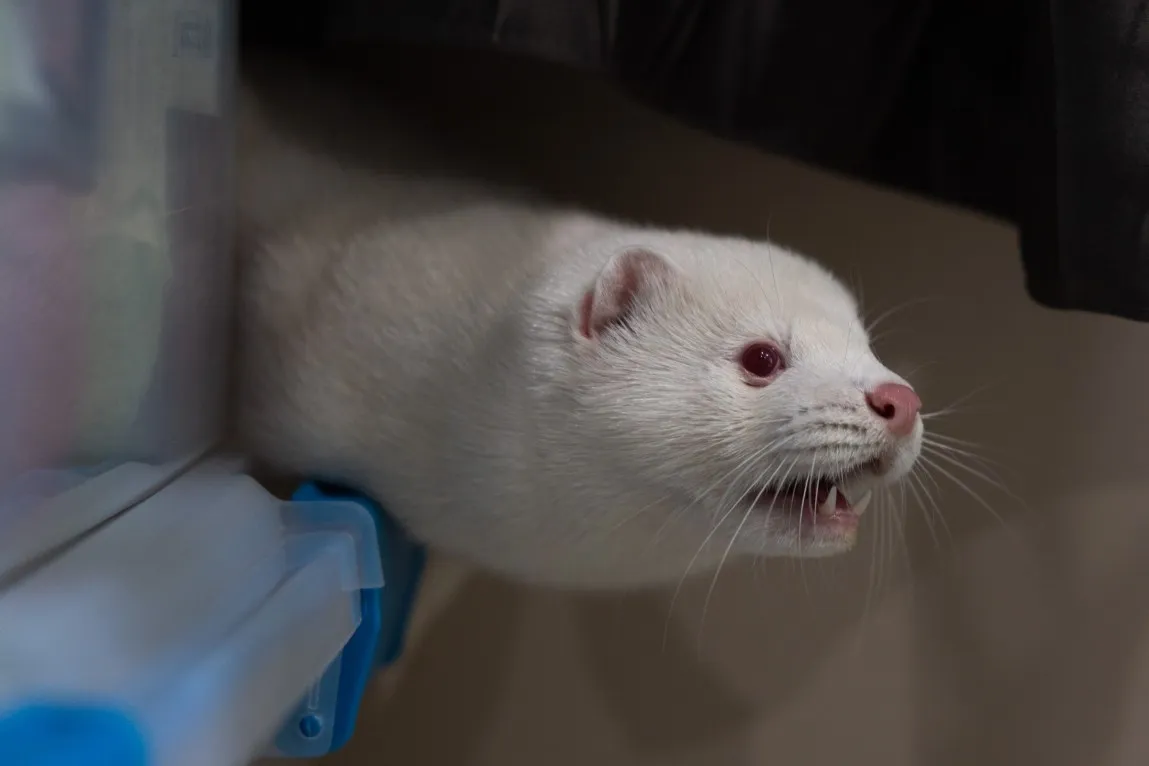
Utah state veterinarian Amanda Price and federal agencies have refused to cull mink or monitor workers during a two-month H5N1 outbreak at C&T Fenn Farms, even as flu experts call the inaction 'playing with fire.' For decision-makers, the outbreak exposes a regulatory gap that could turn a farm-level virus into a human pandemic.
A bird flu outbreak has been raging uncontrolled for more than two months on a Utah mink fur farm, and state and federal officials are doing almost nothing to stop it. A ProPublica investigation found that H5N1 has been spreading through C&T Fenn Farms, about an hour's drive south of Salt Lake City, since at least mid-August. Agriculture officials knew mink were dying, but they did not order the animals killed, did not monitor workers for symptoms, and, according to records, made little effort beyond trying to keep the outbreak quiet. Flu experts describe the response as a cascade of missteps that is "irresponsible," "puzzling," and, in the words of one researcher, "playing with fire."
The reason for the alarm is straightforward: mink are a near-perfect intermediate host for a virus that could evolve into a human pandemic. Their airways are cellularly similar to human airways, and mink have caught and spread other flus and infected some humans with COVID-19. The strain now in Utah has killed two people who caught it from sick animals, but it remains a true bird flu that cannot easily spread between humans. A single mutation could change that, experts say, and a crowded mink farm packed with infections, plus workers in close contact, is exactly the kind of environment where a new strain could emerge and go undetected. "Every other country that I'm aware of that has had H5N1 in fur farms, depopulation has happened pretty quickly," said Tom Peacock, an avian influenza researcher at the Pirbright Institute. "The fact that the first instinct wasn't just to depopulate and figure stuff out later is very concerning to me."
Utah had no playbook for this. If a single chicken tested positive for bird flu, federal rules require the entire flock to be killed to protect other farms and public health, with farmers reimbursed for their losses. But mink fall into a regulatory void. State veterinarian Amanda Price sought help from the U.S. Department of Agriculture, which takes the lead on bird flu in poultry and cows, but USDA officials said they don't regulate mink and have no approved vaccine for them. The Centers for Disease Control and Prevention spoke with Price's health department counterparts but never talked to her. Price did not reach out, and no one in the chain of command pushed for a cull. A fur trade representative warned Price that killing the mink would destroy the business and, ultimately, the industry, since farms spend decades breeding unique genetic lineages.
Price was candid about the calculus. "It has been devastating," she told ProPublica, describing the outbreak's impact on the farm's owner. "This is his life's work that he's seeing be destroyed." She also acknowledged the limits of the response: "There's just not a lot of options out there other than kind of sitting and waiting and seeing what happens." Yet while officials waited, workers kept interacting with sick, aggressive animals. Mink sneeze, they escape, they bite and claw; one worker showed scars from the fierce, solitary creatures. CDC guidance urges monitoring and testing of exposed workers, but Utah health officials had already stopped proactive monitoring after agriculture colleagues complained that farmers were annoyed by it. Under a 2025 agreement, the state agriculture department agreed to share outbreak information with health officials only if they did not track workers' health. "We will only do active monitoring in the case of evidence of human-to-human transmission," Utah respiratory disease epidemiologist Pamela Gomez Pinedo said in emails with a CDC epidemiologist.
The warning signs were visible. Last Saturday, a ProPublica reporter tracked down two people who worked at the mink farm, and one had a visibly red eye, the telltale sign of bird flu infection present in over 90% of human cases and often the only symptom. The CDC explicitly urges testing for it. After ProPublica reached out to the farm, owner Chad Fenn contacted the Utah County Health Department about the worker's eye, which had cleared up by Monday. Fenn said the department did not recommend testing, telling him there was no need unless other symptoms developed. "They're not going to do anything," Fenn said. "They said they don't see that there's a need."
The broader context is hard to ignore. Most of the new viruses that have shaken humanity in the past century spilled over from animals: Ebola likely came from fruit bats, HIV from chimpanzees, and the leading theory for COVID-19 is that it jumped from bats to humans through an intermediate mammal. All modern flu pandemics have been bird flu viruses that mutated to spread among people. "Utah doesn't want to be the epicenter of the next human flu outbreak, right?" said Gail Hansen, a former Kansas state public health veterinarian and epidemiologist. The state's position, as articulated by Price, is that it will change course "if we started seeing people actively dying from this." By then, it may be too late. For executives and policymakers, the lesson is that regulatory silos designed for one species fail when a virus crosses borders between animals and humans. The same pattern could play out in dairy, swine, or livestock markets anywhere, and the cost of waiting is not counted in mink pelts; it is counted in pandemic risk.
This story's Key Insights and Take-aways are locked.
Create a free account to unlock Executive Actions for one credit.
Register to UnlockAlways free for Executives Club members. Join the Club
More in Business

A flaw in PHP just forced governments to pull their own sites offline
European agencies from Belgium to Germany took websites dark to patch a critical weakness in the language behind almost 70% of the web, and the blast radius extends far beyond government portals.

BioWare shuts down, Mass Effect 5 dead after $55B EA buyout
The legendary RPG studio's closure lands months after a $55 billion investment group buyout of EA, raising tough questions for gaming's biggest acquirers.

Musk weighs Tesla-SpaceX mega-merger as boards form review panels
Special committees at both companies will examine a tie-up that could fuse electric vehicles and space launch, forcing a fresh look at governance and valuation.