

Mitsubishi buys $7.5B of Aethon gas fields, cementing Japan LNG and AI power bets
The largest Mitsubishi acquisition ever turns Haynesville supply into a supply-chain lever for LNG exports and AI data centers.
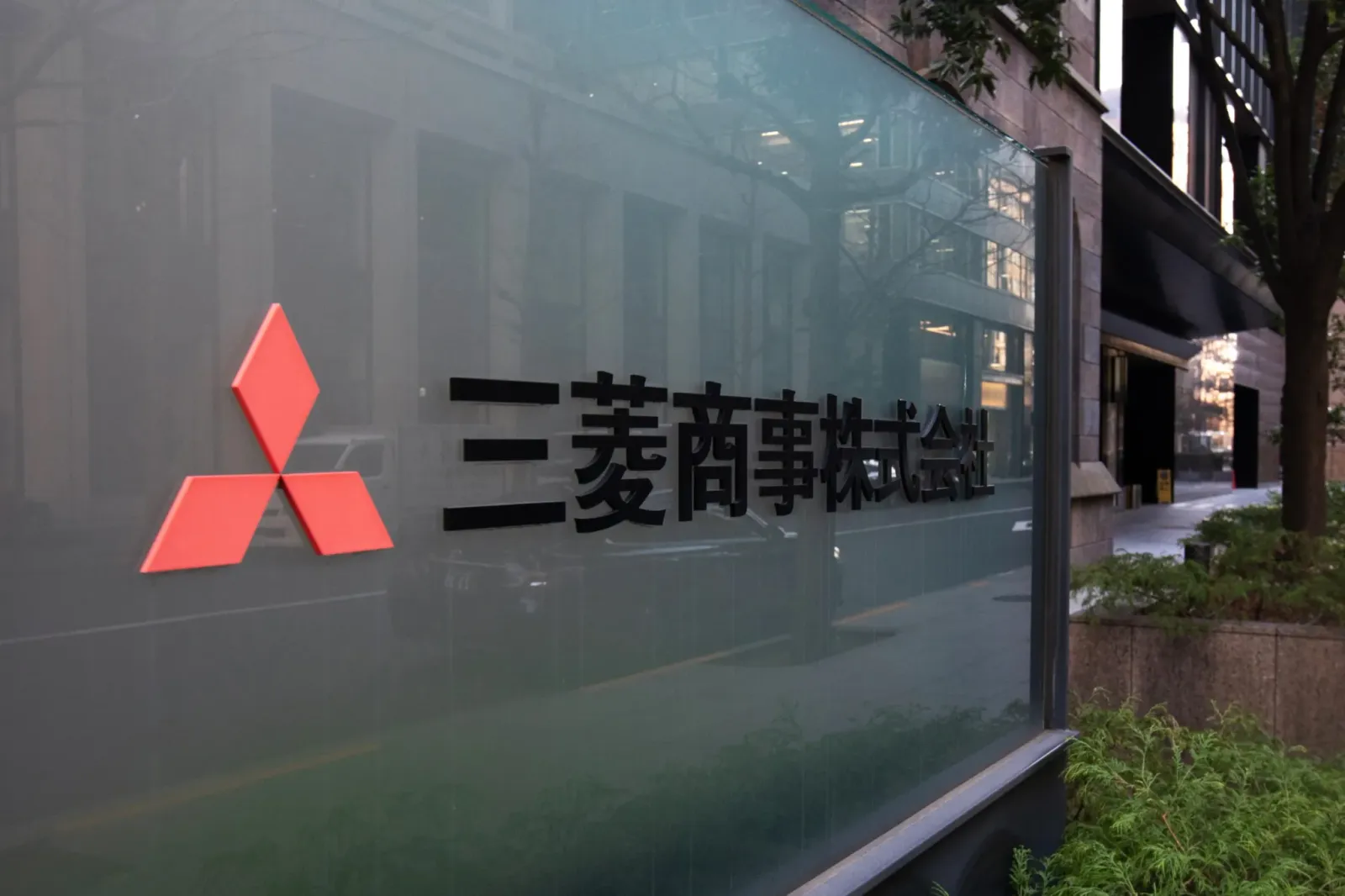
Mitsubishi officially became one of the largest natural gas producers in the U.S. after closing a $7.5 billion deal to take over the U.S. natural gas assets of Dallas-based Aethon Energy on July 15. The move deepens Japan's bet on LNG and the AI data center boom, while reshaping who controls key U.S. gas supply in the Haynesville Shale.
Mitsubishi just took a massive swing in U.S. natural gas: it closed on July 15 a $7.5 billion deal to buy Dallas-based Aethon Energy’s natural gas fields and related assets. The headline number matters because it is not just another portfolio trade. The transaction is Mitsubishi’s biggest acquisition ever, and it immediately puts the Japanese company among the largest U.S. natural gas producers, with Haynesville Shale assets in northern Louisiana and eastern Texas at the center of the story.
What Mitsubishi is buying is the physical starting point of the supply chain: “the land from which the natural gas is extracted as well as the processing facilities.” That is exactly why the deal is timed for two converging demand forces highlighted in the reporting. First, Japan is the world’s second-largest LNG importer after China, and the assets are positioned near U.S. Gulf Coast LNG export hubs where liquefied natural gas is shipped. Second, the same gas is increasingly relevant for electricity demand from AI data centers, which need reliable power, and where gas-fired generation is the go-to option when grids and capacity are stressed. The deal, as Fortune frames it, is designed to let Mitsubishi capture value not only at the point of extraction, but across the path that connects U.S. production to LNG exports and power generation demand.
To understand why this feels like a supply-chain power move, it helps to contrast ownership versus exposure. Fortune notes that foreign investors from Europe to Asia to Australia have invested massively in U.S. LNG infrastructure, but that strategy keeps them susceptible to volatile gas pricing. By buying the production assets, Mitsubishi gains more control over supply, which can make outcomes less hostage to price swings. And in energy, control is not a vibe. It is a different risk profile, and for decision-makers it changes what you underwrite and how you plan hedges and contracts.
Mitsubishi also structured the move through a dedicated U.S. platform. Ahead of the deal, Mitsubishi created Adamas Energy, with “Adamas” serving as the Dallas subsidiary. After the acquisition, Aethon has agreed to buy back a 25% stake in Adamas, and Aethon managing partner Gordon Huddleston will serve as Adamas CEO, representing Mitsubishi’s interests. In other words, Mitsubishi is not only moving capital. It is also trying to keep operational continuity by tapping the person who already ran the assets being acquired. Huddleston told Fortune that the logic is straightforward: “They recognize what a critical component the natural gas is.” He also said “The U.S. is blessed with a lot of gas, but those that are in the right places are going to benefit,” and he pointed to the AI demand angle, saying behind-the-meter power generation “is going to surprise a lot of people about how big these numbers are on the AI side for [gas-fired power demand].”
The broader market context is doing a lot of heavy lifting here. Fortune lays out how quickly the U.S. became an LNG powerhouse: in just a decade, the U.S. grew from being a first-time net exporter of LNG to becoming the world’s leading shipper, surpassing Australia and Qatar. It also flags that Qatar is now facing major facility repairs amid the ongoing Iran war. The key point for executives: supply certainty is not just about volumes. It is about access, infrastructure reliability, and the ability to meet global demand when geopolitical shocks and maintenance events hit. Huddleston ties the Mitsubishi decision to that “energy basket” reality, adding, “The Chinese would be here if they could be,” and Japan is leaning in.
There is also a reminder baked into the story about past foreign investing mistakes. Following the Fukushima nuclear disaster in 2011, some Japanese firms invested in U.S. shale gas at inflated price tags, then later regretted some of the large buys, with Sumitomo later exiting its U.S. shale gas investments. Fortune reports that this time Japanese firms are buying again, but at more reasonable prices, with more methodical approach. Huddleston says foreign investors “lost a lot of money” and that “By 2013, there was a lot of money put to work, and some of those deals did not turn out well.” He describes a shift toward a “wait-and-see” stance that has become more “methodical, thoughtful” investing. He also emphasizes the time horizon: “They have a very long-term perspective,” and “Mitsubishi is thinking 10, 20 years out.”
If you are a board member, CFO, or operator at an energy company watching this, the second-order signal is the changing face of the Haynesville region. Fortune notes that, after Houston-based Expand Energy, Mitsubishi’s Adamas is now the top natural gas producer in the Haynesville region. “Almost all the other key players there are now Japanese,” with exceptions including Dallas Cowboys owner Jerry Jones’ Comstock Resources, and Citadel’s recent jump into the region with its Apex Natural Gas. Tokyo Gas has rapidly grown its TG Natural Resources in the Haynesville, and Osaka Gas’ Sabine Oil & Gas is a key player. It also lists additional activity by Japanese energy firms, including JERA’s big purchase earlier this year, Mitsui’s acquisition of a Haynesville position, and JAPEX moving into the U.S. Rockies region.
For executives making capital allocation decisions, the Mitsubishi deal is a case study in how LNG demand, power generation needs, and ownership of upstream assets now intersect. The “wake-up call” framing from Huddleston matters too. He said the war reinforces the need for “energy supply diversity and resiliency,” and he characterizes the U.S. historically as “a very safe place to invest from a supply assurance standpoint.” The deal includes $2.3 billion in debt, and it is in the works before the war broke out, but the conflict strengthens the investment narrative: secure supply, near export capacity, and positioned for grid and AI-driven electricity demand. In short, Mitsubishi is not only buying gas. It is buying influence over how the world gets energy when the supply chain starts acting up.
This story's Key Insights and Take-aways are locked.
Create a free account to unlock Executive Actions for one credit.
Register to UnlockAlways free for Executives Club members. Join the Club
More in Business

T. rex sells for $50M, eclipsing Ken Griffin’s $44.6M stegosaurus to set auction record
The $50 million T. rex sale makes it the priciest dinosaur fossil ever auctioned, reshuffling the “trophy” market.
SK Hynix opens at $170, raises $26.5B, and tops foreign IPO records
In Friday's Wall Street debut, SK Hynix turns AI RAM demand into a $26.5B fundraising moment that rewrites comps.

China lands a reusable Long March booster, a first that matches SpaceX and Blue Origin
A barge landing and net-based recovery move China from theory to proof, reshaping the reusability race and satellite ambitions.