

Morgan Stanley’s quarter surges on equities trading, up 69%
A record quarter powered by equities trading growth reshapes expectations for investment banks and their capital markets bets.

Morgan Stanley posted record quarterly revenue and profit as equities trading surged 69%, mirroring a similar pattern at peers Goldman Sachs and JPMorgan Chase. For decision-makers, it signals where near-term earnings volatility is really coming from and what happens when markets move fast.
Morgan Stanley just delivered a record quarter, and the headline number hiding underneath it is equities trading, which surged 69%. That jump matters because it is not a slow, steady “business as usual” story. It is the kind of move that happens when trading activity ramps quickly, volatility picks up, and clients get more aggressive about buying, selling, hedging, and rebalancing.
CNBC reports that Morgan Stanley’s outsized results were driven by a massive beat in equities trading, a dynamic also seen at peers Goldman Sachs and JPMorgan Chase. In other words, this was not a one-firm fluke. Multiple big banks hit unusually strong results because the same market engine, equities trading, ran hotter than expected.
To understand why a 69% surge can swing a quarter, you have to zoom out to how investment banks earn money. Trading businesses are highly sensitive to market conditions because their revenue often moves with transaction volumes, bid-ask activity, spreads, and client demand for hedging. When trading desks get more orders, more risk gets transferred, and the bank can capture revenue across market-making, execution, and related trading services. That is why “equities trading surged” is not just a descriptive phrase, it is an earnings mechanism. It also means comparisons across firms carry extra weight, because if the same macro forces push trading volumes higher, you can see similar beats at multiple franchises.
This quarter’s pattern also fits the incentive structure that typically governs how boards and senior management think about performance. For banks, trading strength can translate quickly into profitability because it is closer to the front line of market activity than slower-moving advisory deals or long-dated underwriting pipelines. When investors see record revenue and profit, they tend to ask whether the strength is durable or simply synchronized with a strong patch of markets. The “peers also beat” part matters here, because it suggests the result is tied more to market demand than to idiosyncratic strategy changes.
There is also a regulatory backdrop that makes these quarters worth parsing. Investment banks operate under post-crisis rules that influence capital requirements, liquidity, and risk management. While the source does not add new regulatory specifics, the basic reality remains: firms must manage trading activity within frameworks designed to limit systemic risk. That makes it even more notable when a quarter can deliver a record outcome on trading momentum, because it implies the desks were both active and profitable within the constraints of the existing regulatory environment.
Second-order implications follow quickly for anyone managing teams across trading, balance sheet, and finance. A surge in equities trading often means risk teams are busy, hedging models get stress-tested, and operational systems have to keep up with increased volume. It can also reshape short-term resource allocation. If the quarter looks extraordinary, leadership teams may face internal pressure to “lean in” to what worked, even while remaining cautious about the fact that trading conditions can reverse just as quickly. The boardroom angle is straightforward: strong quarters can mask the fact that the next quarter may not replicate the same market-driven tailwinds.
For peers in similar roles, the message is not subtle. Morgan Stanley’s record revenue and profit, powered by equities trading that surged 69%, sets a high bar, especially since Goldman Sachs and JPMorgan Chase posted similar results tied to the same theme. Investors and clients will now calibrate expectations around how much of earnings strength is tied to trading intensity. That creates a real strategic tension: you want to capture market opportunities when they appear, but you also have to prepare for the inevitable reversion when the market regime shifts.
Bottom line: this is a trading-driven beat that ripples across multiple top-tier firms at the same time. The second you see a 69% surge in equities trading alongside record quarterly results, the story becomes bigger than one bank’s execution. It becomes a read-through on the market’s current mood, the earnings engine that is pulling the most weight right now, and the expectations that will follow into the next reporting cycle for the whole sector.
This story's Key Insights and Take-aways are locked.
Create a free account to unlock Executive Actions for one credit.
Register to UnlockAlways free for Executives Club members. Join the Club
More in Business

Epic and Google drop settlement bid, forcing rival Android app stores by July 22
Google told the court it is ready to carry third-party app stores starting Wednesday, July 22.
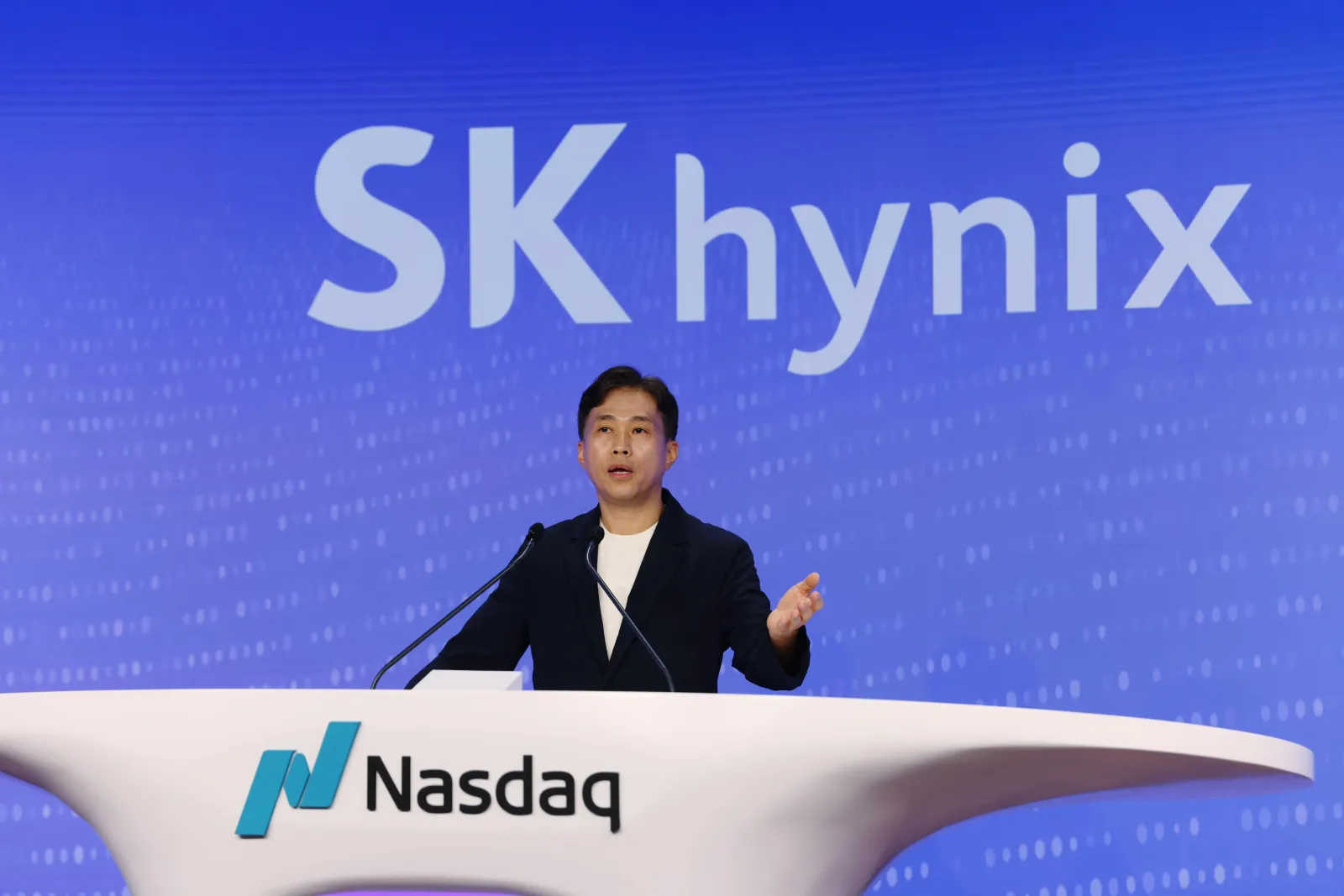
SK Hynix opens at $170, raises $26.5B, and tops foreign IPO records
In Friday's Wall Street debut, SK Hynix turns AI RAM demand into a $26.5B fundraising moment that rewrites comps.

China lands a reusable Long March booster, a first that matches SpaceX and Blue Origin
A barge landing and net-based recovery move China from theory to proof, reshaping the reusability race and satellite ambitions.