

Mossad reportedly courted Ahmadinejad for post-Tehran role after distancing from Khamenei
Reports say Israel sent its top spy to Budapest to meet Mahmoud Ahmadinejad, even as Gaza fighting escalated.
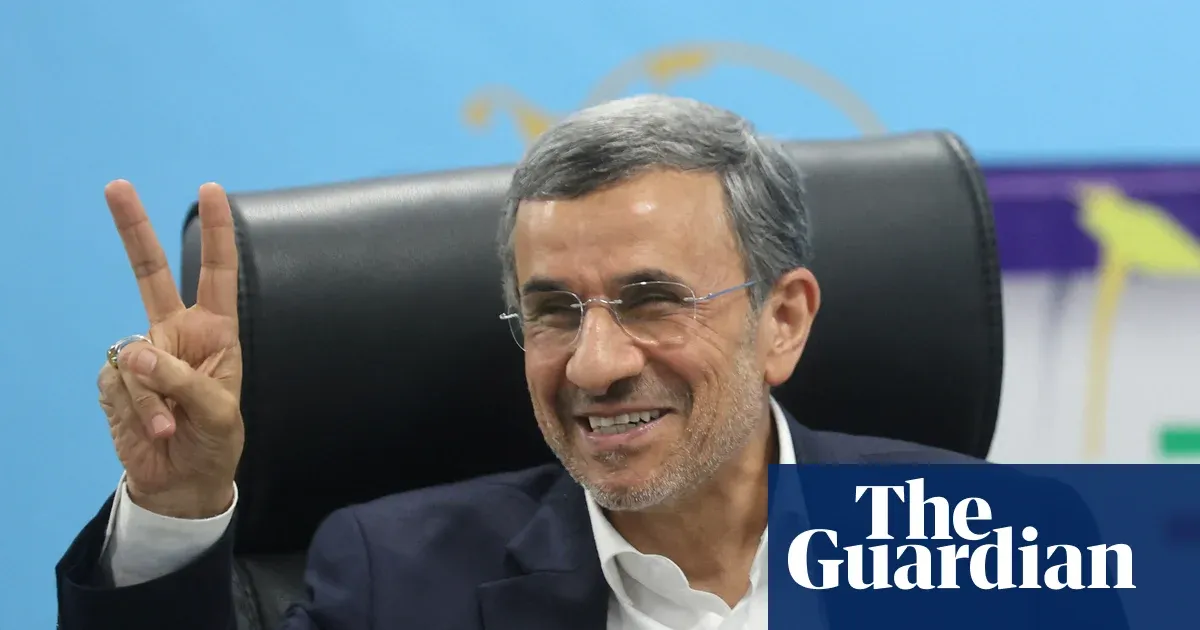
Mahmoud Ahmadinejad, Iran's former hardline president, reportedly drew Mossad outreach aimed at positioning him for a post-Islamic-regime role in Tehran. Media reporting says Israel's effort began in 2022 and included a meeting attempt in Budapest by Mossad's top spy.
Mahmoud Ahmadinejad is the target. According to media reports summarized by The Guardian Middle East, Israel tried to recruit Iran’s intensely anti-Zionist former president Mahmoud Ahmadinejad for a new post-Islamic regime role in Tehran. The outreach went beyond vague overtures, reportedly including Israel sending its top spy to Budapest to meet him, after Ahmadinejad had distanced himself from Iran’s Supreme Leader, Ayatollah Ali Khamenei.
This is the key timeline conflict embedded in the reporting: the effort to court Ahmadinejad began in 2022, yet it reportedly continued even after Israel launched a brutal campaign in Gaza against Hamas, a key Iranian ally. In other words, the alleged recruiting plan was not a quick, opportunistic idea that paused when the region’s fire got hottest. It kept running, which makes it more than a side story. It suggests Israel was pursuing a political endgame alongside kinetic operations.
To understand why that matters for decision-makers, zoom out to how these kinds of missions typically work. Intelligence services do not just chase information. They also chase leverage: people, networks, and scenarios. If the premise is that a post-regime Tehran could be led by someone who is not fully aligned with current hardline leadership, then courting a former, widely recognizable figure is a way to test whether a fracture is real and whether an alternative coalition could be assembled. The reporting as presented points to a wedge, Ahmadinejad’s distancing from Khamenei, as the opening Israel tried to exploit.
The source also matters because it does not frame the claims as a one-off rumor. It points to reporting by the New York Times and the Israeli newspaper Haaretz, and it says the quest began in 2022. That matters because it anchors the effort to a longer arc, not a momentary reaction. From a governance perspective, longer-running initiatives also imply institutional buy-in, which in turn suggests internal coordination between political planners and intelligence operators. If such a recruitment thread was being pursued through multiple phases of the conflict, then it was likely treated as part of a broader strategic plan, not a curiosity.
Now add the Gaza element. The reporting says the alleged outreach continued even after Israel became engaged in a brutal campaign in Gaza against Hamas, a key Iranian ally. This is where second-order implications start to show up. Israel was simultaneously managing a major military campaign and, per the reports, attempting to influence Iran’s political future. That combination raises practical questions for how states allocate attention and resources during wartime. It also raises the stakes for miscalculation, because political recruitment efforts can be interpreted by the target government as preparation for regime change, or at minimum as hostile meddling. That dynamic can harden positions and shrink space for diplomacy.
There is another angle too: the target personality. The source describes Ahmadinejad as intensely anti-Zionist and recalls that he had denied the Holocaust and called for Israel’s erasure. Those details are not just historical color. They define how the recruitment proposition would be perceived by others inside the region, including allies, adversaries, and the internal factions of Iran. If a former leader associated with maximalist rhetoric becomes a potential political alternative, then any process that lifts him into a “post” frame could be read as tactical rather than ideological. That can create friction among stakeholders who might otherwise be expected to align around a shared end goal.
If this reporting is even partially accurate, the strategic stakes extend well beyond the immediate Israel-Iran rivalry. For regional actors, it signals that political maneuvering and intelligence-driven recruitment could run alongside battlefield escalation. For European partners and other external governments watching sanctions and compliance risks, it also underscores that “de-escalation” narratives and “intelligence operations” can move on different clocks. And for investors and boards tracking geopolitics as a risk variable, regime transition attempts can translate into sharper compliance pressure, heightened security costs, and faster cycles of policy tightening when governments believe the political landscape is shifting.
The biggest takeaway for decision-makers is that intelligence recruitment is being portrayed as a sustained strategic effort, not a reflex. The reports say Mossad agents wooed Ahmadinejad after his distancing from Khamenei, with a Budapest meeting attempt by the top spy, and they say the effort started in 2022 and continued through Israel’s Gaza campaign. If you are advising a government, running a firm exposed to regional risk, or overseeing a board that treats geopolitical instability as a material factor, you should treat this as a reminder that regime-level politics can be actively shaped while conventional battles rage.
This story's Key Insights and Take-aways are locked.
Create a free account to unlock Executive Actions for one credit.
Register to UnlockAlways free for Executives Club members. Join the Club
More in Politics

Glacial collapse, not rain, killed 180 in Nepal's Himalayan flood
The Himalaya's extreme geography hid the true cause of Nepal's catastrophic flood, a glacial collapse that turned a geological battleground into a mass-casualty zone.

Iran’s Esmail Baghaei says Oman talks start shipping via Hormuz, not US talks yet
Temporary route plans with Oman aim to restart commerce while Tehran says Washington dialogue is not on the table.

Standards watchdog opens probe into Reform UK deputy leader Richard Tice over interests
The parliamentary standards commissioner says it began an investigation on 28 July into a possible undeclared interest.