

Muhoozi Kainerugaba shuts major independent outlets, Amnesty calls Uganda harassment crackdown
Uganda’s army chief clamps down on press, and analysts link it to a widening crackdown and a looming power shift.
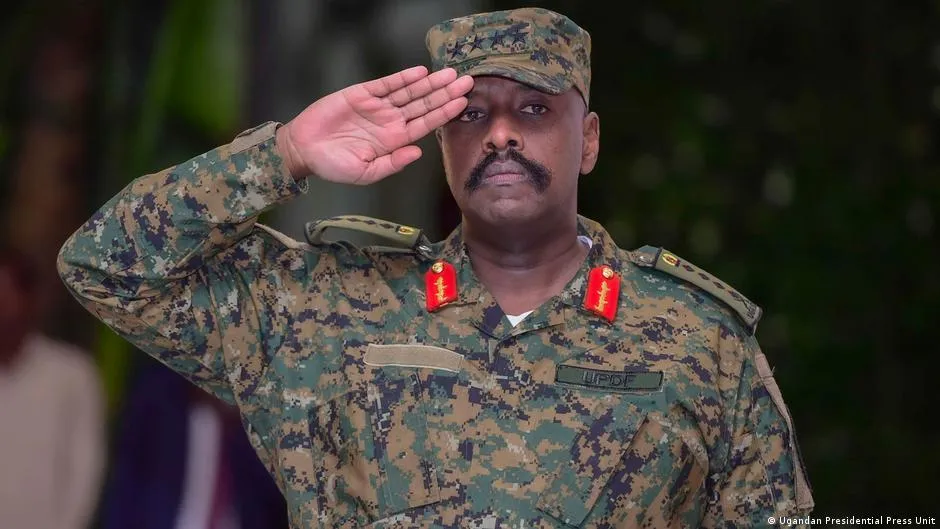
Uganda’s army chief, Muhoozi Kainerugaba, has shut down major independent media outlets, prompting Amnesty to urge Uganda to end harassment. For decision-makers, the move signals that media access and political risk are rising quickly in the country.
Uganda’s army chief, Muhoozi Kainerugaba, has shut down major independent media outlets, according to Deutsche Welle. Amnesty is now urging Uganda to end the harassment, framing the shutdowns as part of a broader crackdown on press freedom.
The key point for anyone tracking business continuity, political risk, or civil stability is that this is not being described as a one-off enforcement action. Amnesty’s appeal comes as analysts see the closures as part of a widening press crackdown, tied to a looming power shift. In other words, the media question is also a control-and-transition question.
To understand why this matters beyond headlines, it helps to translate what “shutting down outlets” usually means in practice. Independent media typically do more than report. They shape narratives, pressure officials through scrutiny, and provide a real-time record of governance. When authorities clamp down, even indirectly, the effect ripples into how fast information travels, how quickly rumors spread, and how confidently investors, partners, and civil society can make decisions.
Press freedom constraints also tend to change the incentive structure for everyone connected to the information ecosystem. Journalists and editors face heightened risk, which can reduce investigative output. Media companies may become more cautious with sourcing and coverage, especially if enforcement appears selective. And audiences often respond by shifting to alternative channels, including social media or foreign platforms, which can further complicate compliance expectations for firms that rely on local communication.
There is also a regulatory and institutional dimension. Uganda, like many countries, has formal and informal levers that can be used to limit media activity, including licensing, registration, and operational oversight. Even when specific details of “shutdown” mechanisms are not spelled out here, the pattern Amnesty is responding to is familiar in press crackdowns: actions that restrict who can publish, how content is distributed, or whether outlets can operate without interruption. The immediate consequence is reduced scrutiny. The longer consequence is self-censorship across the sector.
Analysts’ framing that this move signals a widening press crackdown and a looming power shift gives the story a second layer. If a power transition is on the horizon, governments frequently try to control the information environment to reduce uncertainty and limit challenges to authority. The risk for decision-makers is timing. When pressure rises before a transition, it can create sudden changes to operating conditions, ranging from legal exposure and reputational risk to disruptions in communications and stakeholder engagement.
For executives and boards considering exposure to Uganda, the practical question becomes: what happens when independent scrutiny disappears right as political risk is increasing? In periods like this, governance gaps become harder to detect early. Reporting that would normally flag corruption, procurement irregularities, or policy shifts may slow down or vanish. That does not mean problems stop. It means they can surface later, when the impact is already baked into contracts, partner relationships, and public sentiment.
The stakes, then, are not abstract. Amnesty’s call is a warning about harassment and the direction of travel for press freedom. Analysts’ view is a warning about where that direction may lead: a broader crackdown alongside a looming power shift. If you are a founder, investor, or operator watching similar environments, the signal is clear. When the press gets squeezed at the same time that power dynamics appear to be shifting, the “rules of the game” can change fast, and the downside often arrives before anyone can negotiate their way out.
This story's Key Insights and Take-aways are locked.
Create a free account to unlock Executive Actions for one credit.
Register to UnlockAlways free for Executives Club members. Join the Club
More in Politics

Obama Defends Ilhan Omar After Agents Search Her Home in Trump Inquiry
The former president's intervention raises the stakes in a federal probe into immigration paperwork that has put a prominent progressive lawmaker in the crosshairs.

Blair-era minister: cut welfare to fund youth job support
Alan Milburn's call for welfare cuts to fund employment support opens a Labour fight over benefits and the Neet crisis.

Hot September CPI: energy costs surge, voters feel the squeeze before midterms
The latest inflation print lands as Trump campaigns for GOP control of Congress, putting cost-of-living worries at the center of the midterm fight.