

Mukund Jha says Emergent raised $100M for vibe coding, launched in 2025
The CEO of Emergent explains how AI-powered coding tools affect hiring and what it means for software job stability.

Mukund Jha, CEO and co-founder of vibe-coding startup Emergent, joined Business Insider Live to discuss AI-powered coding tools and hiring. With Emergent launched in 2025 and raised $100 million as of January 2026, decision-makers need to recalibrate how software work gets built and staffed.
Mukund Jha is the CEO and co-founder of Emergent, a vibe-coding startup that launched in 2025. In a Business Insider Live Q&A, he laid out how AI-powered tools for coding are fueling a new crop of companies, and how that shift is changing what software engineers do and how he hires them.
The headline number is not small: as of January 2026, Emergent has raised $100 million. That capital stack is a signal that investors believe this is more than a novelty. It is part of a broader “Great Coding Reset” moment Business Insider is covering in a multi-part series, where AI is getting increasingly capable at writing code and companies are scrambling to understand who wins when code production speeds up.
Start with the simple economic lever. When AI gets better at generating code, it changes the shape of the work. Even if the underlying fundamentals of software engineering do not vanish, the day-to-day tasks can shift from writing large chunks of code from scratch to reviewing, steering, and testing AI outputs, plus handling the parts that still resist automation: edge cases, architecture tradeoffs, integrations, and quality. The fear Business Insider notes is that AI could make legacy software giants irrelevant, and it has “rattled markets.” In other words, the market has already started pricing a world where software creation, and therefore competitive advantage, moves faster than the old incumbents can adapt.
That fear is precisely why the funding flows matter. Business Insider also notes that companies building vibe-coding tools have attracted big dollars and seen their valuations skyrocket. Emergent is a concrete example of that pattern. Jha’s appearance is framed around two practical questions: what his company’s rapid growth looks like, and what he looks for when hiring software engineers. For decision-makers, the hiring piece is the real tell. If your engineering org does not update its staffing and evaluation approach, your pipeline can become misaligned with how AI actually changes throughput.
To understand why “vibe coding” is getting attention, it helps to translate the term into executive language. Vibe coding generally refers to the idea that people can describe an intent at a higher level, and AI helps turn that into working code. The premise is that teams can move from “write it line by line” to “express the goal,” with the tool doing more of the generation. Business Insider’s framing ties this to AI tools and their impact on software engineering roles, not just developer experience. The question is what happens to software engineers when code is no longer the bottleneck in the same way it used to be.
This is where boards and HR leaders should pay attention to second-order effects. First, when AI increases coding speed, product expectations tend to rise. That means teams may deliver faster, but also may be asked to ship more frequently, which increases the importance of testing discipline, observability, and incident response. Second, evaluation criteria in hiring can shift. If AI can generate plausible code quickly, the differentiator becomes the ability to judge correctness, security, maintainability, and fit with the existing system. Jha’s Q&A explicitly signals that he is thinking about what he looks for when hiring software engineers, which implies that job requirements may be evolving, even if the job title stays the same.
There is also a governance angle that rarely gets airtime in tech demos: how companies manage risk when AI is participating in software production. The source does not name specific regulations or compliance frameworks, but the stakes are obvious when markets rattle and valuations jump. As AI-generated code spreads through organizations, questions around security, auditability, and operational accountability intensify. For leadership teams, it becomes not just “can engineers use the tools,” but “how do we ensure the outputs are safe, traceable, and consistent with the company’s standards.” That can affect everything from internal review processes to how code changes are approved and monitored.
Finally, the timing and format of the Business Insider Live event points to where the industry attention is going. The Q&A is scheduled for Wednesday at 11 a.m. ET, with Business Insider’s Dan DeFrancesco sitting down with Jha. Viewers were invited to ask questions live. That matters because it tells you executives want answers they can act on, not just hype: how Emergent is growing quickly, how the CEO hires, and how vibe coding is changing the industry. If you are a founder building dev tools, a CTO staffing up, or an investor underwriting software execution risk, the core strategic stake is this: the “Great Coding Reset” is not theoretical. It is showing up in funding rounds like Emergent’s $100 million as of January 2026 and in the way leaders like Jha describe changes to hiring and engineering workflows.
This story's Key Insights and Take-aways are locked.
Create a free account to unlock Executive Actions for one credit.
Register to UnlockAlways free for Executives Club members. Join the Club
More in Business

T. rex sells for $50M, surpassing the stegosaurus Ken Griffin bought for $44.6M
A $50 million T. rex auction record reshuffles the rare-fossil leaderboard and sends a clear wealth signal to high-end bidders.
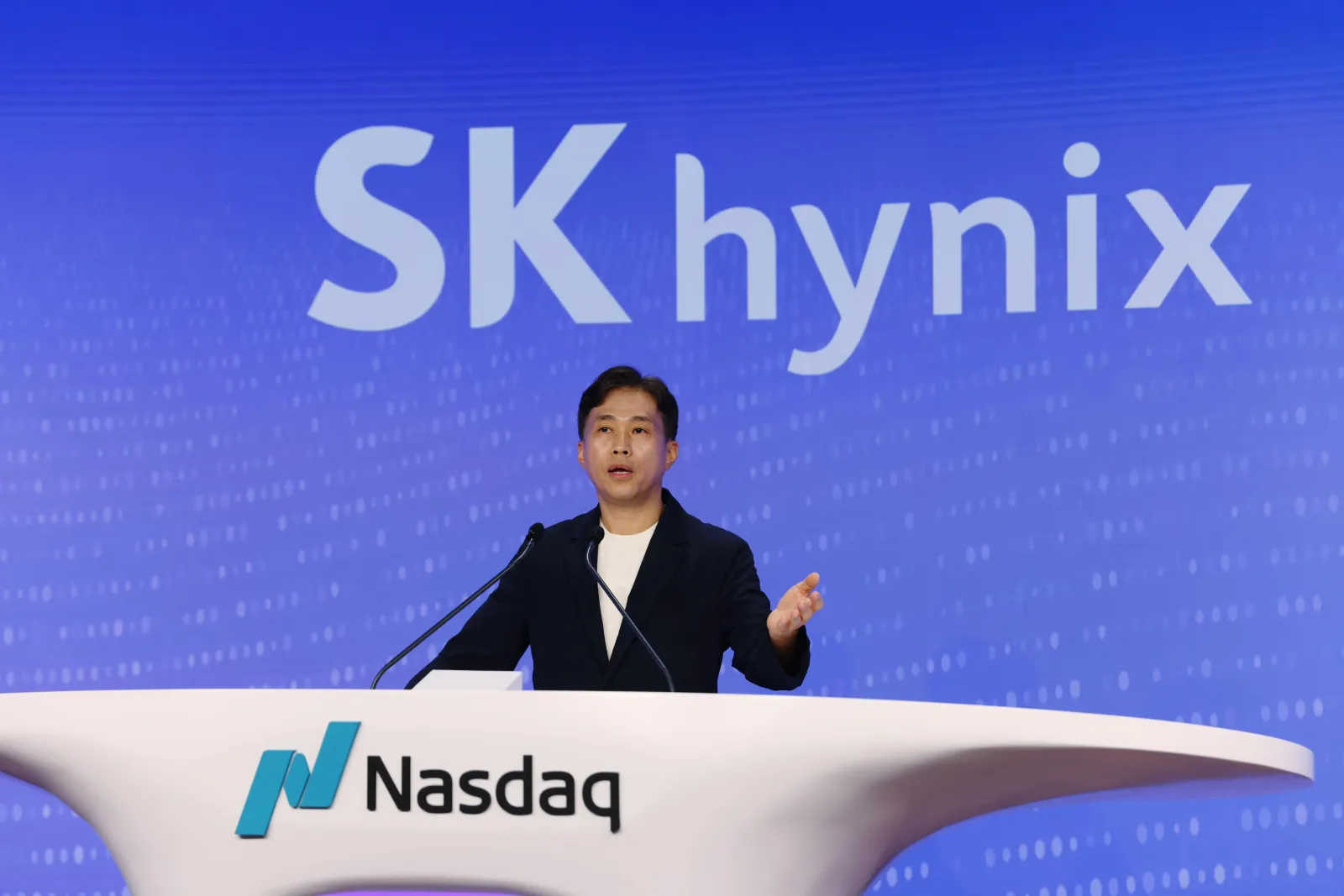
SK Hynix opens at $170, raises $26.5B, and tops foreign IPO records
In Friday's Wall Street debut, SK Hynix turns AI RAM demand into a $26.5B fundraising moment that rewrites comps.

China lands a reusable Long March booster, a first that matches SpaceX and Blue Origin
A barge landing and net-based recovery move China from theory to proof, reshaping the reusability race and satellite ambitions.