
Musk merges SpaceX and xAI, stacking rivals under one roof with trillion-dollar stakes
The CEO of SpaceX, Tesla, Neuralink, and The Boring Company is consolidating more businesses, and the market is taking notice.
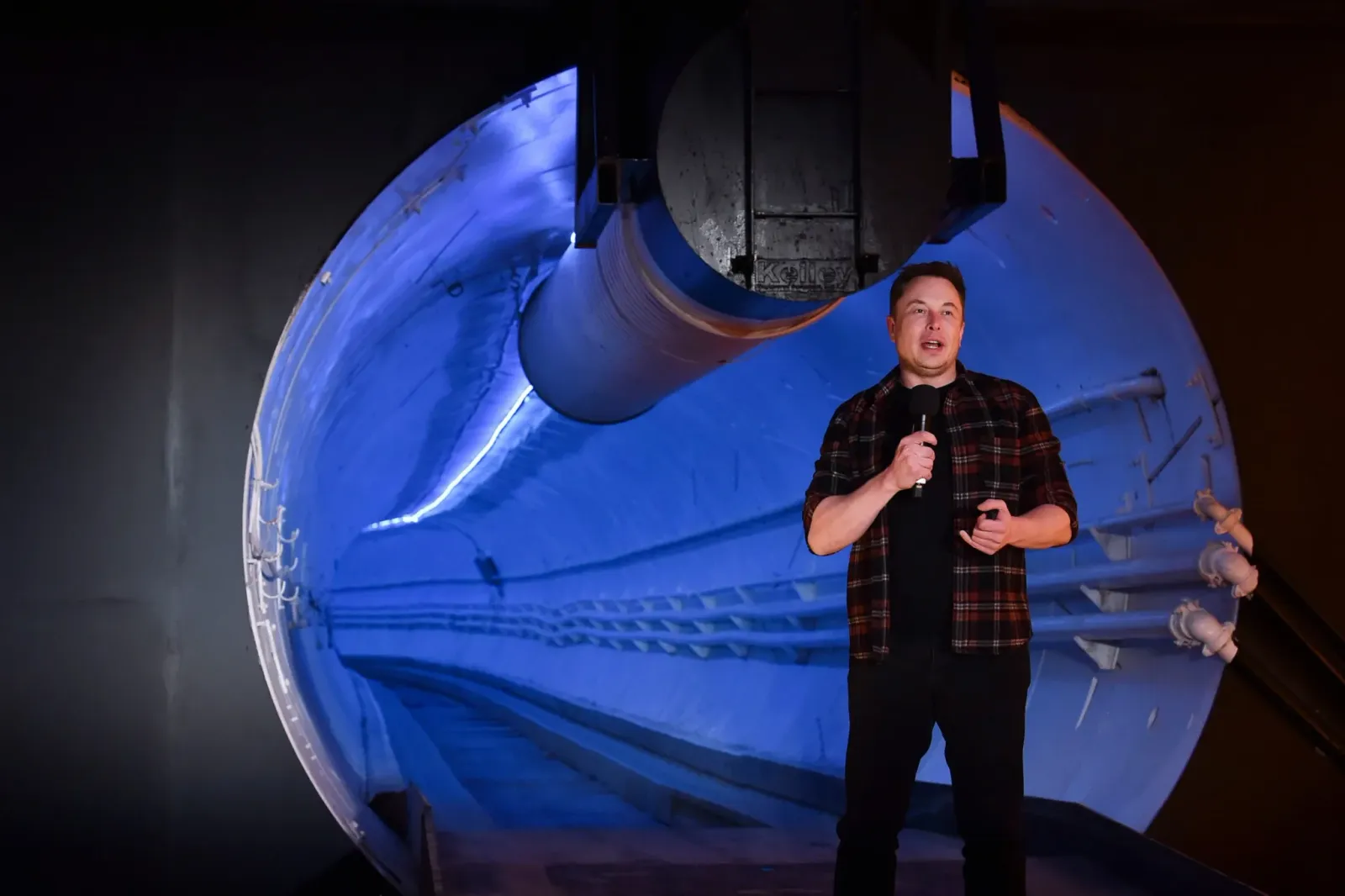
Elon Musk is merging SpaceX with his artificial intelligence company xAI, while still holding CEO roles across multiple companies including Tesla, Neuralink, and SpaceX. The consolidation reshapes capital flows and scrutiny across public-market valuation, AI spending losses, and regulated infrastructure.
Elon Musk just pulled the kind of corporate move that usually comes with a tidy PowerPoint and a disciplined strategy slide. Instead, he’s merging SpaceX with his artificial intelligence company xAI, earlier this year, stacking even more of his sprawling empire under one umbrella. And because SpaceX is the rocket maker that went public on Friday, this is not just an organizational tweak. It’s a market-facing decision happening right as the company debuts with the biggest initial public offering in history, closing just below $161 per share for a total market value of $2.1 trillion.
Here’s why the “under one roof” story matters immediately: SpaceX is not operating like a pure rocket company anymore. It owns Starlink, a satellite communications service that generated $4.4 billion in operating income last year, making it a cash engine inside a business that also contains X (formerly Twitter), the maker of the Grok chatbot, and now the AI unit that is being merged in. Yet the same consolidated ecosystem includes major loss-making pieces. Both xAI and X are money losers, with the AI business losing $6.4 billion in operations last year. SpaceX itself also lost $2.6 billion overall from operations last year.
That mix is the crux of what investors and boards are watching. In a typical corporate structure, you’d expect strong cash flow divisions to subsidize an experimental moonshot. Musk’s structure does something slightly different: it bundles cash-generating and loss-making segments together, then tries to convert technical ambition into a valuation narrative the public market will reward. The IPO signal is already doing the talking. SpaceX, after being able to “whip up enough market hype,” debuted at a scale that some observers think significantly overvalues the company. Musk’s public-facing goals are lofty and sci-fi flavored, from putting data centers in space to colonizing Mars. But the bulk of those ambitions, the source notes, hinges on unproven technology and massive capital needs.
The decision to merge SpaceX with xAI earlier this year also lands in a world where AI money is easy to spend and hard to make. xAI and X losing $6.4 billion in operations last year is not a rounding error. It’s the kind of figure that forces question after question from shareholders: What is the path to profitability? How much burn is acceptable? And, crucially, does consolidation accelerate execution or concentrate risk? When multiple companies sit under one leadership stack, they can move faster. They can also become harder to separate when regulators ask what’s really being funded, who benefits, and what conflicts of interest exist across related businesses.
Meanwhile, Musk’s executive footprint is wide enough that consolidation is only part of the story. He still holds the CEO role at Tesla, a role he has held since 2008. Tesla has struggled with rising competition in the EV space. Last year, the company lost its crown as the world’s largest EV maker to China’s BYD, and sales were bruised during boycotts over Musk’s politics. The numbers have rebounded some, but the strategic framing has stayed consistent: Tesla’s future, Musk has emphasized, lies less in car sales and more in getting people to take rides in them as self-driving taxis. Tesla is also upping production of robots for homes and businesses, and it has been in solar energy for about a decade after purchasing SolarCity, founded by Musk and two of his cousins.
Put those pieces next to SpaceX’s AI and communications buildout and the picture gets clearer. Musk is trying to turn a collection of industries into a connected system: vehicles, energy, robotics, satellites, and now AI, all steered from the top. That system is already embedded in one major public-market bet: the source says SpaceX went public on Friday and closed near $161 per share, totaling $2.1 trillion in market value, while Tesla’s market cap currently stands around $1.5 trillion after joining the trillion-dollar club on the S&P 500. When a founder-CEO spans multiple mega-cap narratives, even board members and sophisticated investors have to ask whether the org chart is an advantage or a distraction, and how to diligence risk across connected operations.
Then there are the more specialized, regulatory-exposed ventures. Musk has the CEO title at Neuralink, the brain-computer interface company he co-founded in 2016. Neuralink is one of many groups pursuing ways to connect the human nervous system to machines, and it has launched clinical trials for people with spinal cord injuries, ALS, and other conditions. In January, Neuralink said it had 21 trial participants worldwide. That kind of stage and patient exposure brings a different category of scrutiny than satellites or EV manufacturing, because approvals, trial design, and safety standards matter day to day.
And finally, Musk also founded The Boring Company, built around tunnel digging and underground transportation. The source points to the “Vegas Loop” network of underground, Tesla-hailing tunnels opened around the Las Vegas Convention Center in 2021, with plans for high speed transit routes in Dubai and Nashville. Pushback has piled up along the way, including accusations that the company broke multiple safety and environmental requirements in Las Vegas, where its full route is still unfinished, and criticism from some local officials in Nashville.
If you’re an executive at another multi-business company, the takeaways are uncomfortable in a useful way. Musk’s empire is consolidating, but the underlying economics remain split: Starlink throws off $4.4 billion in operating income last year, while xAI and X are money losers and SpaceX still lost $2.6 billion overall from operations last year. That tension between hype and cash flow is exactly what public markets price in, and exactly what boards get stuck defending. In other words, consolidation under a single roof may look like a clean strategy. But it also concentrates scrutiny, compresses explanations, and makes it harder to hide losses behind a successful brand. Investors and directors will be looking for whether this structure can turn massive capital needs into measurable outcomes, not just a bigger stage.
This story's Key Insights and Take-aways are locked.
Create a free account to unlock Executive Actions for one credit.
Register to UnlockAlways free for Executives Club members. Join the Club
More in Business

SpaceX Nasdaq debut makes it the 6th most-valuable U.S. company at record scale
The IPO flips the usual tech script, putting a revenue-light rocket maker among megacap peers on day one.

SpaceX debuts Friday on Nasdaq at $135, surges to $160.95, valued near $1.8T
A Nasdaq opening pop turns SpaceX into a public company overnight, forcing new money questions fast.

Mena construction CPMI slips 12% in April 2026, but execution momentum rebounds to 1.01
GlobalData’s April CPMI shows resilience masking pre-execution caution, with conflict risk surfacing unevenly by country and sector.