
Musk retires Ship 42: the first Starship ever caught will never fly again
SpaceX proved it can catch a Starship upper stage, and Musk is retiring the vehicle anyway, a decision that reveals how fast the company intends to move.
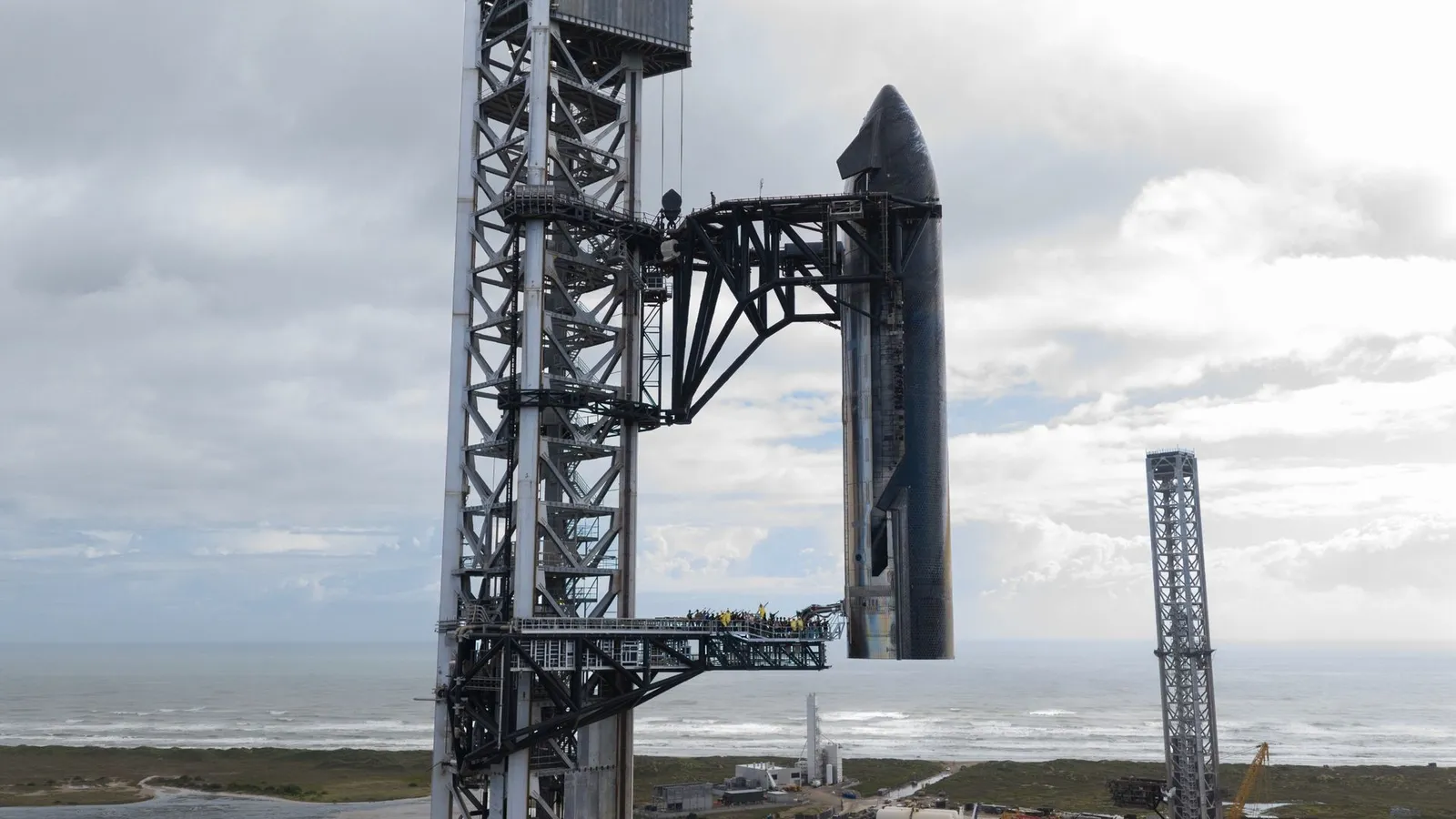
Elon Musk, founder and CEO of SpaceX, said the first Starship upper stage ever recovered, Ship 42, will not fly again and will go on public display instead. For decision-makers, retiring a flyable vehicle signals that SpaceX is optimizing for launch cadence and reuse speed, not for proving a single ship can fly twice.
SpaceX's first-ever recovered Starship upper stage is done flying. Elon Musk, the company's founder and CEO, said on Wednesday (Nov. 18) that the vehicle, known as Ship 42, will be preserved for public display rather than refurbished and reflown. "In this case, because it's kind of an historic ship, we're going to, I think, not take any chances with the ship and just kind of leave it for public display, because what it's done is historic," Musk said during a discussion at the TomorrowX Summit. The decision lands harder because Musk himself said the hardware was in good enough shape to go again: Ship 42 "could probably be reflown with a few weeks of refurbishment," he noted. Ship 42 launched Nov. 13 on Starship's 15th test flight and returned from orbit a day later, settling into the "chopstick" arms of its launch tower at SpaceX's Starbase site in South Texas.
That catch was a first. Before Flight 15, SpaceX had already snagged Starship's first-stage booster, Super Heavy, on three separate occasions, and it had reflown a booster twice. But the company had never attempted to catch a Ship, the upper stage, which is a taller order because upper stages fly faster and farther than boosters do. Nailing it on the first attempt was, by Musk's account, a milestone the company had been building toward for years. "Everyone knew, within SpaceX, at least, how important this milestone was, and that it was really something fundamental and profound - that Starship will be the first-ever fully reusable orbital space system," he told the moderators, venture capitalists Gavin Baker and Antonio Gracias, both friends of his.
Musk framed the catch as a step toward what he called the "holy grail of rocketry": a fully and rapidly reusable launch vehicle. The word "rapidly" is doing the heavy lifting. Musk has said the company wants to launch about 10,000 Starship missions per year by 2030, a cadence that would exist to serve two enormous megaconstellations in low Earth orbit. The first is the next iteration of Starlink, the company's broadband network, which will consist of about 100,000 satellites. The second is Starmind, an AI data-center constellation that will be 10 times bigger than that. Assembly of the new Starlink network is already underway: Ship carried 26 of the next-generation internet spacecraft for the first time on Flight 14, which launched on Sept. 28, and repeated the feat on Flight 15.
Musk did not say where Ship 42 will be displayed, but the likeliest locale is Starbase, SpaceX's Starship manufacturing and launch hub in South Texas. That choice carries its own signal. SpaceX plans to shift most Starship launches to a new Starbase Louisiana site, a $100 billion complex where construction has yet to begin. If the original Texas site becomes part museum, part heritage campus while flight operations migrate, it would mark a rare moment in aerospace: a launch pad turning into a monument while the program it spawned is still accelerating.
The setting of the announcement was itself notable. TomorrowX took place in Austin, Texas, but Musk joined virtually on Wednesday from China, where he was part of President Trump's delegation for his meeting with Chinese President Xi Jinping. That is a founder-CEO operating simultaneously as a government-adjacent figure and the head of the world's most valuable private launch company, a dual role that matters as Washington and Beijing compete over launch capacity, satellite constellations, and the orbital real estate both depend on.
For executives outside aerospace, the Ship 42 decision is a useful case study in how to read a technical milestone. The catch is the demo; the refurbishment cycle is the business. A vehicle that can be recovered but not quickly turned around is a trophy, not an asset. Musk's willingness to retire a flyable ship for display suggests SpaceX believes the next ships will be more valuable as data points than this one is as a reflight, and that the company is optimizing for cadence rather than for proving a single vehicle can fly twice. Boards watching capital-intensive hardware programs should note the pattern: the milestone that gets the headlines is rarely the one that moves the cost curve.
The open question is timing. SpaceX has caught a booster three times, reflown one twice, and now caught a Ship on the first try. What it has not yet demonstrated at scale is the rapid part of rapid reuse, the weeks-not-months turnaround that turns 10,000 launches a year from a slogan into a schedule. Ship 42 will sit on display as proof that the catching works. The flying, at volume, is still ahead.
This story's Key Insights and Take-aways are locked.
Create a free account to unlock Executive Actions for one credit.
Register to UnlockAlways free for Executives Club members. Join the Club
More in Business

GTA VI hauls $3.79bn in one day, out-earning every film ever made
Rockstar's own estimate covers a single Thursday plus a record 32.5m prerelease units, and it lands on every board weighing IP concentration, pricing power and launch risk.

FBI's crime database breached again, the second hack in months
CNN reports hackers hit the National Crime Information Center, the shared backbone of US policing, and the repeat timing is the part every security team should study.

S&P 500 Enters Correction, Down 10% From Its High on AI Worries
The index's slide past the 10 percent line is a symbolic verdict on investor mood, and the AI trade that powered the rally is now the thing testing it.