
Musk's Starlink gamble: robots will eclipse humans on bandwidth
SpaceX is expanding its satellite fleet on a contrarian bet that robotics, not people, will fuel the next surge in connectivity demand.

Elon Musk and SpaceX are pushing forward with Starlink expansion on the assumption that robotics will dramatically boost demand for connectivity. For decision-makers, the bet signals an accelerating machine-to-machine data wave that could reshape telecom economics and infrastructure planning.
Elon Musk is betting that the future of Starlink depends less on human subscribers and more on machines. His thesis, as outlined in SpaceX's expansion strategy, holds that robotics will dramatically increase demand for connectivity, making the sprawling satellite constellation the essential backbone for an automated world. The gamble is clear: pour billions into low-Earth-orbit infrastructure now, and reap the rewards when fleets of autonomous vehicles, drones, warehouse robots, and industrial machines start consuming bandwidth around the clock.
This is not a marginal shift in marketing. Starlink's expansion has been massive, moving far beyond rural broadband into maritime, aviation, and enterprise services. But Musk is now framing the trajectory through a robotics lens, suggesting that the real volume of traffic will come from machines that never sleep. If that bet pays off, Starlink transforms from a niche internet provider into a critical utility for the robotics age. If it misfires, SpaceX faces the challenge of overcapacity in a market where consumer demand alone may not justify the proliferation of satellites.
The logic of robotics-dependent connectivity is straightforward. Autonomous systems require constant, low-latency links to coordinate, navigate, and update. A self-driving car does not tolerate a dropped connection in a tunnel; a warehouse robot fleet needs real-time coordination across thousands of square feet; agricultural drones must stream data for precise crop management. Traditional terrestrial networks cover only a fraction of the planet, and most industrial activity happens outside dense urban cores. Starlink's advantage is its global reach from low Earth orbit, which promises latency close to ground-based networks without the cost of laying fiber to every field, port, or mine.
This is where the boldness of the gamble becomes clear. Building a constellation requires heavy upfront capital: satellites, rockets, launches, ground stations, and user terminals. SpaceX has innovated on the manufacturing and launch side to reduce costs, but the investment is still staggering, even by Musk's standards. The wager is that robotics adoption will occur at a pace and scale that fills that network with high-margin data traffic. Executives in industrial sectors should read this as a signal that the era of large-scale machine connectivity is closer than many assume, and that bandwidth planning is no longer just an IT issue; it is a strategic priority.
Regulatory dynamics add another layer of complexity. Satellite spectrum is finite, and every new constellation requires coordination with national regulators and international bodies. Countries are protective of their orbital slots and frequency rights, and approval can come with conditions on deployment timelines, space debris mitigation, and service obligations. Starlink's expansion has already drawn scrutiny in several markets, and a robotics-driven demand model might invite questions about whether consumer services are being deprioritized. For regulators, the key question will be whether infrastructure built for machines serves the public interest as much as one built for homes and businesses.
Musk is not alone in hunting for machine-scale demand. Amazon's Project Kuiper and OneWeb are also building constellations, though neither has matched Starlink's current size or launch cadence. If robotics demand materializes as Musk expects, the market could accommodate multiple players, because the appetite for connectivity would stretch far beyond the roughly five billion humans now online. But if the robotics wave is slower or spottier, the satellite industry risks a shakeout, with the weakest capital positions forced to consolidate or exit.
For executives in adjacent industries, the strategic implications are acute. Companies building robots must plan for networks that can guarantee uptime, not just in cities but across supply chains. Telecommunication leaders must weigh whether terrestrial 5G and satellite systems will be complements or competitors in the machine connectivity race. And boardrooms across manufacturing, logistics, and energy should be asking how their own operations will connect the increasing number of sensors, vehicles, and automated tools they deploy. The answer may involve staring up at the sky more often.
Musk's track record suggests he is willing to take outsized risks with infrastructure that others call premature. Starlink's expansion is only the latest, and the robotics thesis is the clearest articulation yet of why he believes the constellation matters. For anyone else charting a strategy in the coming decade, the lesson is not to mimic SpaceX's specific bet, but to understand that connectivity demand may soon follow machines, not just people. That reframing changes how you budget for data, where you build networks, and which partnerships you lock in before the robots start talking.
This story's Key Insights and Take-aways are locked.
Create a free account to unlock Executive Actions for one credit.
Register to UnlockAlways free for Executives Club members. Join the Club
More in Technology
AI weed tech could cut herbicides, but the costs are steep
A new University of Mississippi and Cornell review finds precision weed tools can replace chemicals and labor, yet adoption comes with serious financial and operational hurdles.
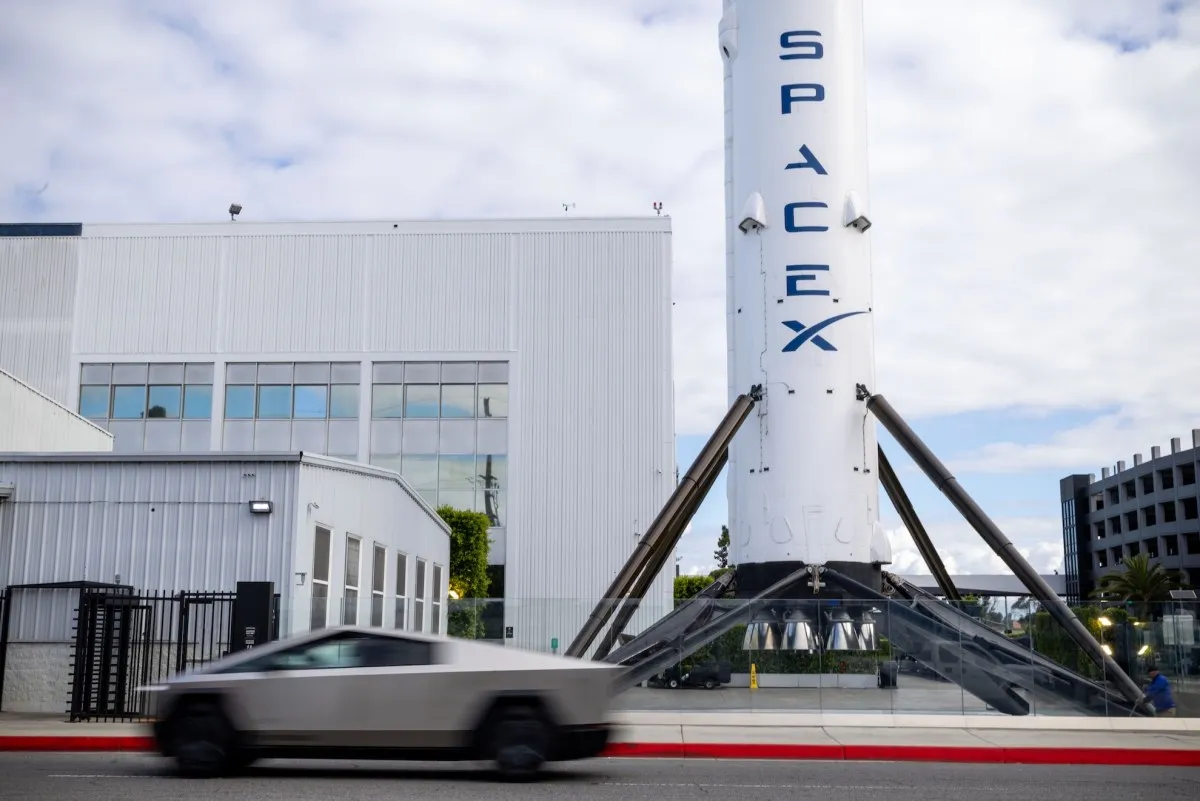
SpaceX and Tesla form merger committees, Musk steps aside
Independent director panels will explore a deal between the two companies, with the CEO recused from both.

AlphaGo builder's new London lab bets LLMs can't be trusted to reason
Thore Graepel, who helped build DeepMind's AlphaGo, is applying game-winning search techniques to general reasoning. His warning: LLMs can't be trusted to reason.