
Musk thanks Micron, then plans a $55B fab to secure AI memory supply
Tesla’s call-out for Micron comes alongside a massive $55 billion chip-fab bet aimed at loosening memory constraints.
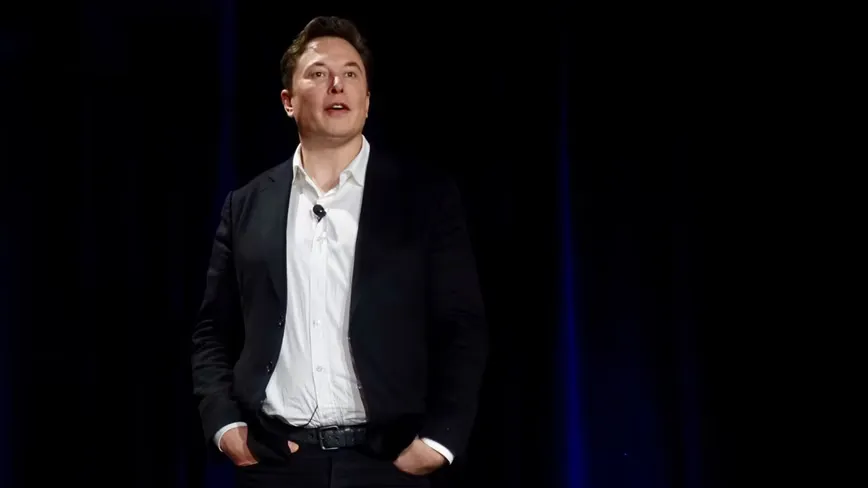
On Tesla’s quarterly call, Elon Musk publicly thanked Micron for providing “a significant allocation” of memory on “reasonable terms.” The move is tied to building a $55B fab to replace Micron and shore up AI memory availability.
Elon Musk used Tesla’s quarterly call to do something suppliers almost never get: he publicly thanked Micron. In the same breath, he tied that relationship to a much bigger plan, saying the company will build a $55 billion fab to replace it. That combination matters because memory chips are the “oil of the AI boom,” and right now they are hard to get.
The specific reason Musk flagged is the part procurement people care about. Micron recently gave Tesla a “significant allocation” of memory on “reasonable terms,” Musk said. That is the rare shout-out that reveals more than gratitude. In a supply-constrained market, “allocation” is effectively a ticket to production, and “reasonable terms” signals the supplier is not just selling, it is managing risk for customers who need supply certainty.
To understand why this is such a loud signal, you have to remember how semiconductors work when demand spikes. In ordinary times, companies can place orders and wait for ramp-ups. But during an AI surge, memory capacity often becomes the binding constraint. When that happens, the market punishes anyone who assumes supply will magically keep up. Chips are not like inventory you can instantly pull from a shelf. Memory supply has to be built, equipment has to be secured, and fabs have long lead times. So when Musk talks about “significant allocation,” he is essentially describing an urgent, negotiated bridge between what Tesla needs and what the industry can deliver.
That is also why “suppliers rarely get shout-outs” is not just a colorful line. It reflects a deeper dynamic: customers typically avoid spotlighting specific suppliers because it can create dependency politics. If you publicly crown one provider, you may make negotiations harder later, or trigger competitive pressure from others. When Musk does it anyway, the implication is that the allocation itself is too consequential to ignore. For executives, that is a governance lesson too. Public procurement praise can function like relationship management at scale, but it can also expose your bargaining position. If the supplier knows you need them, the supplier may hold leverage. If you publicly say you are pleased with terms, you may signal you have options.
Now add the $55B fab plan, and the story shifts from “thank you” to strategy. Building a giant fabrication facility is not a casual move. It is a capital allocation decision that commits years of execution, workforce planning, and supply-chain buildout. It is also a hedge against the exact problem Musk is pointing at: scarcity. A replacement fab is the classic answer to constrained supply, because it moves you from negotiating for allocations to producing your own inputs. In other words, instead of relying on Micron to ration availability, Tesla is trying to reduce the need for rationing entirely.
For decision-makers, the second-order question is not just “will the fab happen.” It is what this signals to the broader memory market. If Tesla is willing to spend $55 billion to secure memory throughput, that tells other players that large customers are prepared to invest aggressively when allocations get tight. That can change negotiation behavior across the ecosystem. Suppliers may demand longer commitments or restructure pricing. Competitors may accelerate capacity expansions. Customers may look more seriously at multi-sourcing, not because they prefer it, but because memory allocation can feel like a high-stakes lottery when demand outpaces supply.
Regulatory and policy framing also matters for capital-heavy chip projects. Large semiconductor investments often intersect with industrial policy, local permitting, energy infrastructure, and workforce development. While the source here does not add regulatory details, the basic reality is that a $55 billion fab is the kind of project that does not float above government. It becomes part of a national or regional competition over manufacturing capacity. That means executives watching this story should consider not only supply chain timelines, but approval timelines, incentive structures, and the political dimension of advanced manufacturing.
The strategic stakes for executives are clear: AI is only as fast as the memory and compute pipeline that feeds it. If memory supply is constrained, everything downstream slows, including production schedules, model training timelines, and product roadmaps. Musk’s thank-you to Micron is one snapshot of that constraint in action. The $55B fab plan is the counter-move: shift from dependence on “significant allocations” to manufacturing leverage. For peers in similar roles, the message is hard to miss. When scarce inputs become strategic bottlenecks, the boardroom question stops being “how do we negotiate” and starts becoming “how do we build resilience, even if it costs $55 billion.”
This story's Key Insights and Take-aways are locked.
Create a free account to unlock Executive Actions for one credit.
Register to UnlockAlways free for Executives Club members. Join the Club
More in Technology

Google quietly links your phone number to every Android account on your SIM
Adding a SIM now ties your phone number to all Google accounts - and future accounts inherit it. Here's the security and privacy stakes.

Hijacker AI 'Skynet mode' runs 100,000 attack steps against exposed models
Symantec caught a criminal AI agent that borrows other models, steals data, and mines crypto; the only relief is no confirmed victims yet.

Nvidia's AI-financier shift faces its first big test as neoclouds stumble
A rout in neocloud stocks is forcing investors to weigh Nvidia's hidden exposure as both supplier and lender to the AI buildout.