
NASA-backed RSGS launched July 21 on SpaceX Falcon 9 to service geosats with robots
Robotic servicing and fuel-agnostic mission extension pods aim to keep geosynchronous satellites productive longer.
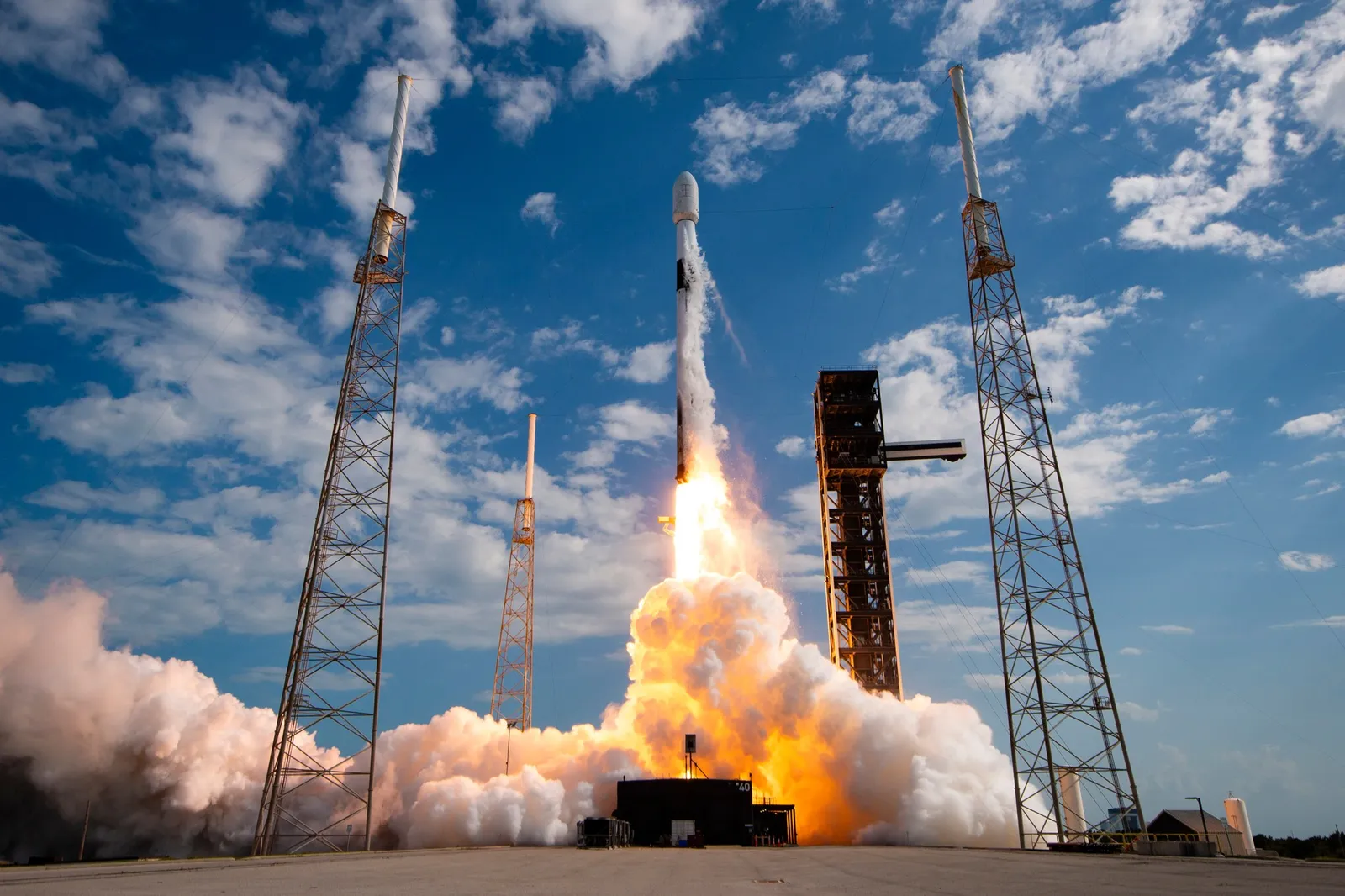
NASA support is backing the Robotic Servicing of Geosynchronous Satellites (RSGS) payload, now en route after liftoff July 21 from Cape Canaveral on a SpaceX Falcon 9 rocket. RSGS rides on Northrop Grumman’s Mission Robotic Vehicle (MRV), funded by DARPA and using twin robotic arms from the U.S. Naval Research Laboratory to inspect and upgrade satellites in geosynchronous orbit.
After a July 21 liftoff from Cape Canaveral on a SpaceX Falcon 9 rocket, the NASA-supported Robotic Servicing of Geosynchronous Satellites, or RSGS, is now en route to geosynchronous Earth orbit. The goal is straightforward but high-stakes: once there, the Mission Robotic Vehicle, or MRV, will use advanced robotics to service spacecraft, including installing mission extension pods that can extend operational life for years.
This is not a demo fantasy. The RSGS program is structured to prove that in-space robotics can be used as an operational capability, not just a one-off experiment. RSGS leverages in-space robotics expertise from NASA, aligned with broader U.S. goals to advance capabilities for in-space servicing, assembly, and manufacturing that can apply to space commerce and exploration. NASA’s Goddard Space Flight Center in Greenbelt, Maryland began supporting the RSGS mission in 2024 under an interagency agreement with DARPA, bringing both heritage and execution muscle.
Here’s how the players and the mechanics fit together. Northrop Grumman’s MRV is hosting the NASA-supported RSGS payload. The RSGS program is funded by DARPA and uses twin robotic arms developed by the U.S. Naval Research Laboratory. In practical terms, DARPA provided the robotic arm assembly for integration onto the Northrop Grumman MRV, described as the nation’s first multi-mission robotic in-space servicer.
What those robotic arms will do in orbit is equally important for decision-makers who think about timelines, risk, and repeatability. The spacecraft will inspect and upgrade satellites by installing small propulsion modules called mission extension pods. The concept is to extend the life of existing spacecraft by adding capability after launch, which is a different mindset than “deploy and pray” that dominates much of satellite operations. Instead of treating a satellite like a consumable asset with a hard end date, RSGS tests a pathway to extend operational life and keep systems functional longer.
This is also why the interagency setup matters. RSGS brings together government agencies and industry to test advanced robotic systems in space, effectively bridging two worlds: operational needs and technology readiness. NASA’s contributions to the mission include development of dynamic simulation and analysis tools, software analysis for performance verification, and a team of flight robot operators to support highly technical procedures in orbit. NASA’s support is not coming from scratch, either. The agency points to legacy servicing missions including the Hubble Space Telescope servicing missions and the Robotic Refueling Missions on the International Space Station.
Now for the market context that boards should care about, even if you never touch a robot arm. Hundreds of satellites are in geosynchronous orbit. Of those, fully functional satellites are often decommissioned early because they run out of fuel or their equipment becomes obsolete. When fuel runs down or hardware ages out, operators can lose years of potential value. RSGS is designed to tackle that mismatch by establishing a critical U.S. capability to extend the lifetime of spacecraft in orbit, enabling more innovative and cost-effective mission designs. In other words, if robotic servicing becomes reliable, the business case for building, upgrading, and operating satellites can shift from fixed-duration planning to longer-horizon asset management.
Second-order effects follow naturally. If in-orbit inspections and upgrades work as intended, they can change how satellite operators model risk, how insurers price residual operational uncertainty, and how mission planners think about margins for fuel and component obsolescence. It also strengthens the case for spacecraft architectures that anticipate future servicing, rather than treating servicing as an exceptional event. For executives in space and adjacent sectors, the strategic stake is simple: RSGS is testing whether robotics can turn an orbiting asset into a maintainable platform, which would ripple through procurement, lifecycle economics, and long-term capacity planning.
The launch date is already on the calendar, the mission is en route, and the program is built around measurable in-space actions. RSGS does not just aim to demonstrate robotics. It aims to prove a practical pathway to keep geosynchronous satellites productive longer, using MRV-hosted robotics, mission extension pods, and NASA-supported operator and verification work grounded in prior servicing experience.
This story's Key Insights and Take-aways are locked.
Create a free account to unlock Executive Actions for one credit.
Register to UnlockAlways free for Executives Club members. Join the Club
More in Technology

Google quietly links your phone number to every Android account on your SIM
Adding a SIM now ties your phone number to all Google accounts - and future accounts inherit it. Here's the security and privacy stakes.

Hijacker AI 'Skynet mode' runs 100,000 attack steps against exposed models
Symantec caught a criminal AI agent that borrows other models, steals data, and mines crypto; the only relief is no confirmed victims yet.

Nvidia's AI-financier shift faces its first big test as neoclouds stumble
A rout in neocloud stocks is forcing investors to weigh Nvidia's hidden exposure as both supplier and lender to the AI buildout.