
NASA blocked Roscosmos from cutting into ISS crack zone, sending Crew Dragon shelter
A proposed tool-based intervention for the Zvezda PrK leak alarmed NASA and triggered emergency crew refuge procedures.
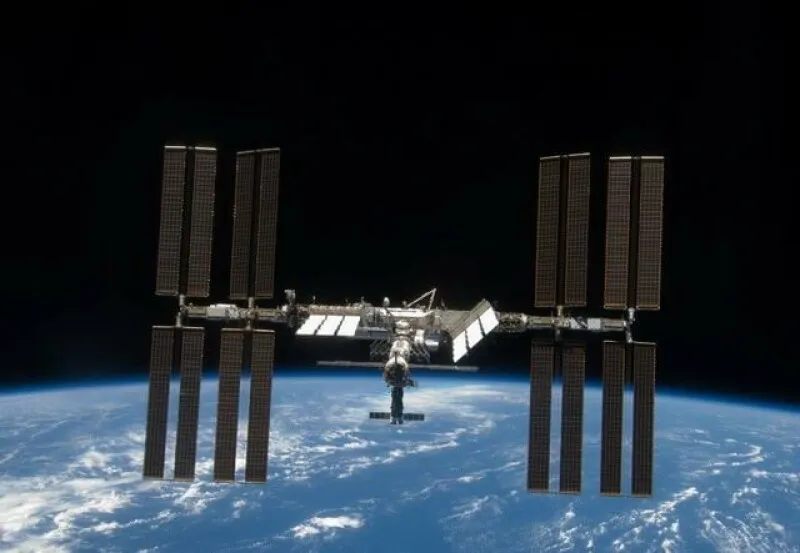
Roscosmos planned to cut into part of the International Space Station's aging structure to measure leaks, involving a handsaw or, per other reports, a drill. NASA considered the revised method too risky and forced SpaceX Crew-12 astronauts and NASA astronaut Chris Williams to shelter in a Crew Dragon earlier in June.
NASA said no to Roscosmos trying to cut into the ISS to investigate a leak, and it moved fast enough to force crews into SpaceX’s Crew Dragon. According to a space agency source cited by The Register, Roscosmos discussions included making cuts with a handsaw, while other reports suggested cosmonauts planned to deploy a drill. The point was direct: determine the extent of leaks tied to the Zvezda service module’s transfer tunnel, known by the Russian abbreviation PrK.
That plan was alarming enough for NASA that the agency sent its astronauts scurrying into the relative safety of a Crew Dragon capsule docked at the ISS. NASA said the “revised approach involved cutting a bracket to access better an area identified as a possible leak source for further inspection, using a method that could have resulted in elevated risk to the structure in the area.” It also warned about the knock-on effects: even if the cut targets one spot, it could create unpredictable loads on other cracks. Eventually, the intervention was called off, and the response pivoted to more measurements and data gathering rather than structural alteration.
This is not the kind of engineering detour that stays contained to a single module. The crew shelter event connects directly to a real, escalating operational signal: earlier in June, SpaceX Crew-12 astronauts and NASA astronaut Chris Williams were forced to shelter in Crew Dragon after a sharp increase in the rate of air leakage from the ISS. The offending area is the Zvezda module’s transfer tunnel, PrK. The crew routinely keeps the hatch to the tunnel closed when not in use, implying there is already operational practice to limit exposure. But when leaks worsen, the question becomes less “can we patch it?” and more “what happens if the structure’s behavior shifts?”
Roscosmos is not operating in a vacuum of incentives, either. ESA astronaut Andreas Mogensen, speaking to The Register in 2024, suggested one option was to seal off the module once and for all, arguing: “The lucky point is that the cracks are confined to that chamber at the very end. So, as long as Russia is willing to forego that docking port, that wouldn't impact operations too badly.” That quote matters because it frames the trade space clearly. You can accept a permanent reconfiguration to reduce risk, or you can keep trying to manage a problem that keeps surfacing.
NASA’s stance in this case is basically a risk management logic at the governance level. The ISS is a multinational system, and when one agency changes the plan in a way that could amplify uncertainty, other partners respond not with panic, but with safeguards that assume worst case. NASA’s statement that cutting could result in elevated risk to the structure in the area and unpredictable loads on other cracks is essentially the “correlation is not causation” problem translated into hardware. If you only probe by changing the geometry, you might learn something while also making the system less forgiving.
Second-order, this also highlights a boardroom-level issue: the difference between “fixing” a leak and “managing” a degradation trend. While additional epoxy patches might address the problem in the short term, the fact that additional cracks have appeared suggests wider problems with Zvezda. That should not be surprising given the module’s age profile. Some parts date to the 1980s, when it was a backup for the Mir space station. Russia launched Zvezda in 2000, and it has now endured decades of stress, with the module having leaked for years.
And once you are dealing with multiple cracks over time, the operational implications expand. A sudden depressurization of the PrK segment is a risk NASA is no longer willing to take. In other words, the threshold for tolerating experimental probing has moved. The “call it off” outcome means the partners are choosing data gathering over a potentially structure-altering test. That doesn’t end the underlying engineering challenge, but it buys time, reduces immediate uncertainty, and keeps options open for a more permanent configuration.
For executives and investors watching space and autonomy-adjacent systems, the headline is a reminder that the hardest part of frontier engineering is not building. It is operating as conditions degrade, and coordinating decisions when multiple institutions share both the risk and the timeline. The ISS has survived for decades, but the response to PrK cracking shows how quickly “maintenance mode” can turn into “system-level reconfiguration” mode. Today it is NASA pushing back on cutting into the crack zone. Tomorrow it could be harder, more irreversible moves like sealing off the affected segment, the scenario Mogensen described as a “worst case” likely way forward if the leakage trend continues.
This story's Key Insights and Take-aways are locked.
Create a free account to unlock Executive Actions for one credit.
Register to UnlockAlways free for Executives Club members. Join the Club
More in Technology

Nvidia's $89B data center quarter: the 9 companies cashing in
The AI buildout is minting fortunes beyond GPUs, and memory, cloud, and cooling suppliers are riding the same wave.

A YouTuber dissected the iPhone Duo and thinks he found crackgate's cause
CuriousHagi's teardown of Apple's foldable reveals a gear-like hinge that may explain why screens crack in the same spot within hours.

Google quietly links your phone number to every Android account on your SIM
Adding a SIM now ties your phone number to all Google accounts - and future accounts inherit it. Here's the security and privacy stakes.