
NASA data: 58,000+ Venezuela buildings damaged, tens of thousands still unaccounted after twin quakes
A week after the twin earthquakes, NASA estimates over 58,000 damaged buildings, and the accounting gap is still large.
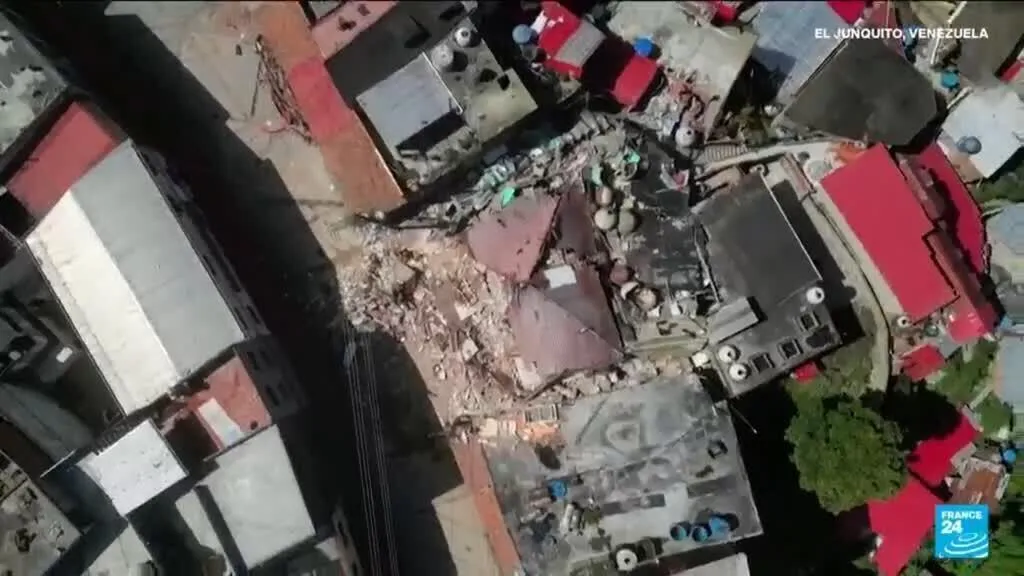
NASA data indicates more than 58,000 buildings in Venezuela were destroyed or damaged by last week’s twin earthquakes. For decision-makers, the lingering “unaccounted” tens of thousands signal how fast disaster-response plans can break when visibility lags.
More than 58,000 buildings in Venezuela have been destroyed or damaged after last week’s twin earthquakes, according to NASA’s data. And nearly a week later, tens of thousands are still unaccounted for, meaning responders and authorities are operating with a partial picture when they most need precision.
That timing matters. When earthquakes hit, the first week sets the tempo for search-and-rescue, emergency shelter, utilities triage, debris removal, and the early shape of recovery budgets. But if tens of thousands of structures remain unaccounted for almost a week later, it implies either damage assessments are incomplete, access is constrained, or satellite-derived estimates are still catching up to on-the-ground reality. In executive terms, this is the difference between planning with a forecast and planning with a gap.
NASA’s role in this story is also a useful reminder for corporate and public-sector leaders who coordinate risk. Satellite imagery can move faster than manual surveys, but “faster” is not “instant.” Organizations typically combine remote sensing with local reporting, engineering assessments, and civil documentation. The source here points specifically to NASA data as the basis for the building damage figure, which underscores how much modern disaster response depends on the flow of geospatial information. When those inputs arrive, they can shift priorities quickly, even if the final damage ledger is still being reconciled.
For executives watching from outside Venezuela, the second-order implication is operational continuity. Even when your own facilities are not in the impact zone, earthquake-driven disruption cascades through supply chains, logistics routes, construction materials markets, and service-provider demand. If tens of thousands of buildings are still unaccounted for, the demand curve for engineering inspections, emergency construction, and housing replacement likely stays elevated longer than expected. That can tighten capacity regionally and raise costs for contractors and insurers who are trying to estimate risk at the same time the repair market is heating up.
There is also a governance and reporting angle. Large-scale disasters usually force agencies and institutions to make regulatory and financial decisions under uncertainty: how to certify building safety, how to structure assistance eligibility, and how to prioritize infrastructure repairs such as water, power, and transport. While the source does not name specific regulators or policies, the dynamic is consistent across disaster contexts: initial damage estimates drive early funding decisions, and delayed verification can lead to reclassification later. When tens of thousands of buildings are unaccounted for nearly a week later, it creates a risk of mismatched categories, where some areas receive resources while others wait for confirmation.
Finally, this is a reminder for boards and leadership teams that “data availability” is its own form of operational risk. The figure of more than 58,000 damaged buildings is already large enough to dominate planning. The more revealing part is the accounting gap: tens of thousands still unaccounted for after nearly a week. That gap can translate into delayed procurement decisions, revised recovery timelines, and shifting assumptions about who needs shelter and services. For leaders, the strategic stakes are simple. The difference between a response that is merely active and one that is effective often comes down to how quickly you can close the uncertainty loop, and how prepared you are to operate when you cannot.
In other words, the earthquakes did not just damage buildings. They exposed the timeline mismatch between immediate harm and complete visibility. And with tens of thousands still unaccounted for nearly a week later, the hardest work for planners is not only recovery, it is decision-making with imperfect information.
This story's Key Insights and Take-aways are locked.
Create a free account to unlock Executive Actions for one credit.
Register to UnlockAlways free for Executives Club members. Join the Club
More in Politics

Obama Defends Ilhan Omar After Agents Search Her Home in Trump Inquiry
The former president's intervention raises the stakes in a federal probe into immigration paperwork that has put a prominent progressive lawmaker in the crosshairs.

Blair-era minister: cut welfare to fund youth job support
Alan Milburn's call for welfare cuts to fund employment support opens a Labour fight over benefits and the Neet crisis.

Hot September CPI: energy costs surge, voters feel the squeeze before midterms
The latest inflation print lands as Trump campaigns for GOP control of Congress, putting cost-of-living worries at the center of the midterm fight.