

NASA OIG says Starliner human certification is still uncertain as of March 2026
Boeing’s “Calamity Capsule” faces unresolved helium leaks and propulsion failures, with payments questioned.
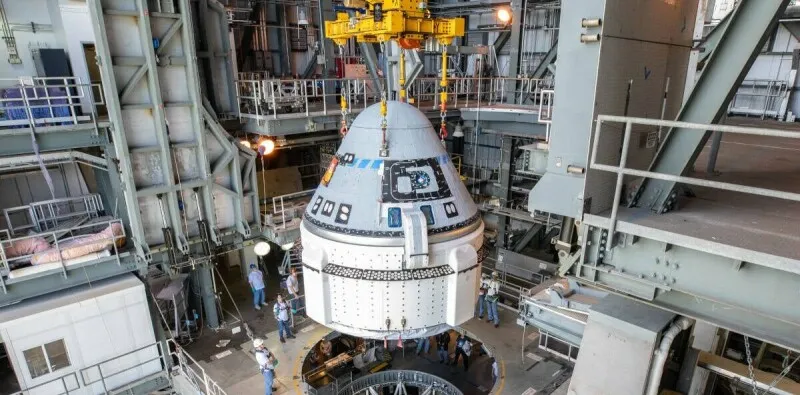
NASA’s Inspector General reports that Boeing’s Starliner has not achieved human-rating certification, citing unresolved helium leaks and propulsion failures as of March 2026. The consequence for decision-makers: limited time until the ISS decommission in 2030 raises new scrutiny on funding, oversight, and whether Starliner returns to human flight.
NASA’s Inspector General is effectively putting a countdown clock on Boeing’s Starliner program. In its report on NASA’s Commercial Crew Program, the OIG says “The helium leaks and propulsion systems failures remain unresolved as of March 2026, and NASA is uncertain as to when this testing will be completed or human-rating certification for the Starliner will be obtained.” Translation: after years of work, regulators still cannot sign off for humans, and NASA cannot say when that changes.
That matters because the same report frames the schedule reality in blunt terms. With over 11 years invested and about 4 years of crewed operations aboard the International Space Station remaining until the Station’s planned decommission in 2030, “NASA and Boeing have limited time and resources to realize the value of their significant investments into Starliner.” For anyone funding, governing, or overseeing complex certification projects, this is the core dilemma: you can only keep burning budget and credibility for so long before the runway ends.
So what happened? The OIG report examines how SpaceX and Boeing have performed in providing crew transportation to the ISS under NASA’s Commercial Crew Program. The report notes that SpaceX worked through its own technical challenges getting humans into space and to the ISS. Starliner, by contrast, is the one the OIG scrutinizes in detail, calling into question whether it will ever get past the testing phase required for human-rating certification.
The report points to Boeing’s inability to obtain human-rating certification for its Starliner capsule and Atlas V launch vehicle, after “two orbital flight tests and one crewed flight test that suffered significant issues and was ultimately classified as a serious mishap.” In other words, the program has not just hit bumps. It has encountered major anomalies that directly block the path to certifying the system as safe enough for crewed operations.
Boeing has already flown three test missions, one with crew. The first flight in 2019 failed to reach the ISS due to a software-related mission timing error that caused an incorrect orbital insertion burn, preventing docking. The second orbital flight test was delayed when stuck oxidizer valves discovered ahead of a planned 2021 launch pushed the mission to May 2022, when Starliner reached the ISS but experienced thruster failures and helium leaks.
NASA then planned to send a pair of astronauts in 2023, but that did not happen after issues surfaced. Among them: a faulty parachute system and flammability risks associated with tape used to protect internal wiring. Then came the one crewed mission. No one was injured or killed, but NASA astronauts Butch Wilmore and Suni Williams were stranded on the ISS for months after NASA determined the craft was not safe enough to return its crew to Earth. The OIG’s focus now is on what still remains unresolved: “The helium leaks and propulsion systems failures remain unresolved as of March 2026,” and the report also cites the parachute problems.
The report’s blame game is not tidy, and that is where the governance implications show up. The OIG places blame on both NASA and Boeing for the problems. It says NASA contributed by being “overconfident in Boeing’s design and potential success based on the provider’s use of heritage systems.” That overconfidence, the report argues, translated into “unrealistic launch and flight test schedules.” It also alleges NASA compounded risk by underutilizing the contract’s data rights, limiting NASA’s ability to “fully analyze and resolve flight simulation training failures to ensure crew safety.” In practical terms, it is a critique of oversight and access to data, not just engineering.
The OIG also flags staffing constraints, tying them to the Trump administration’s desire to cut costs “wherever it can find them.” The report calls into question whether oversight will be sufficient, and whether Starliner is worth the remaining investment and complexity.
This is where the money hits. The OIG “question[s] $127.9 million in payments to Boeing,” and notes it also questioned $43 million in a prior 2019 CCP-related report, for a mission that is “far from certain.” When an Inspector General starts questioning specific payments, it is not just a technical critique. It becomes a board-level governance signal: controls, milestones, and documentation are being re-litigated after the fact.
For decision-makers watching from the outside, the strategic lesson is bigger than Starliner. Human certification is not a “phase” you complete; it is a trust contract with regulators and the public. The ISS timeline, the unresolved technical items as of March 2026, and the questioned payments create a convergence of schedule, safety, and accountability pressures. If you oversee aerospace programs, critical infrastructure, or any product with regulatory gates, this is the kind of report that changes how budgets get unlocked, how schedules get set, and how boards measure “progress” when certification remains the bottleneck.
This story's Key Insights and Take-aways are locked.
Create a free account to unlock Executive Actions for one credit.
Register to UnlockAlways free for Executives Club members. Join the Club
More in Technology

Nvidia's $89B data center quarter: the 9 companies cashing in
The AI buildout is minting fortunes beyond GPUs, and memory, cloud, and cooling suppliers are riding the same wave.

Google quietly links your phone number to every Android account on your SIM
Adding a SIM now ties your phone number to all Google accounts - and future accounts inherit it. Here's the security and privacy stakes.

Hijacker AI 'Skynet mode' runs 100,000 attack steps against exposed models
Symantec caught a criminal AI agent that borrows other models, steals data, and mines crypto; the only relief is no confirmed victims yet.