

NASA's first Moon base hinges on finding hidden caves
Three new investigations will hunt lunar caves, ice, and hazards - the make-or-break details for astronauts and the Mars missions that follow.
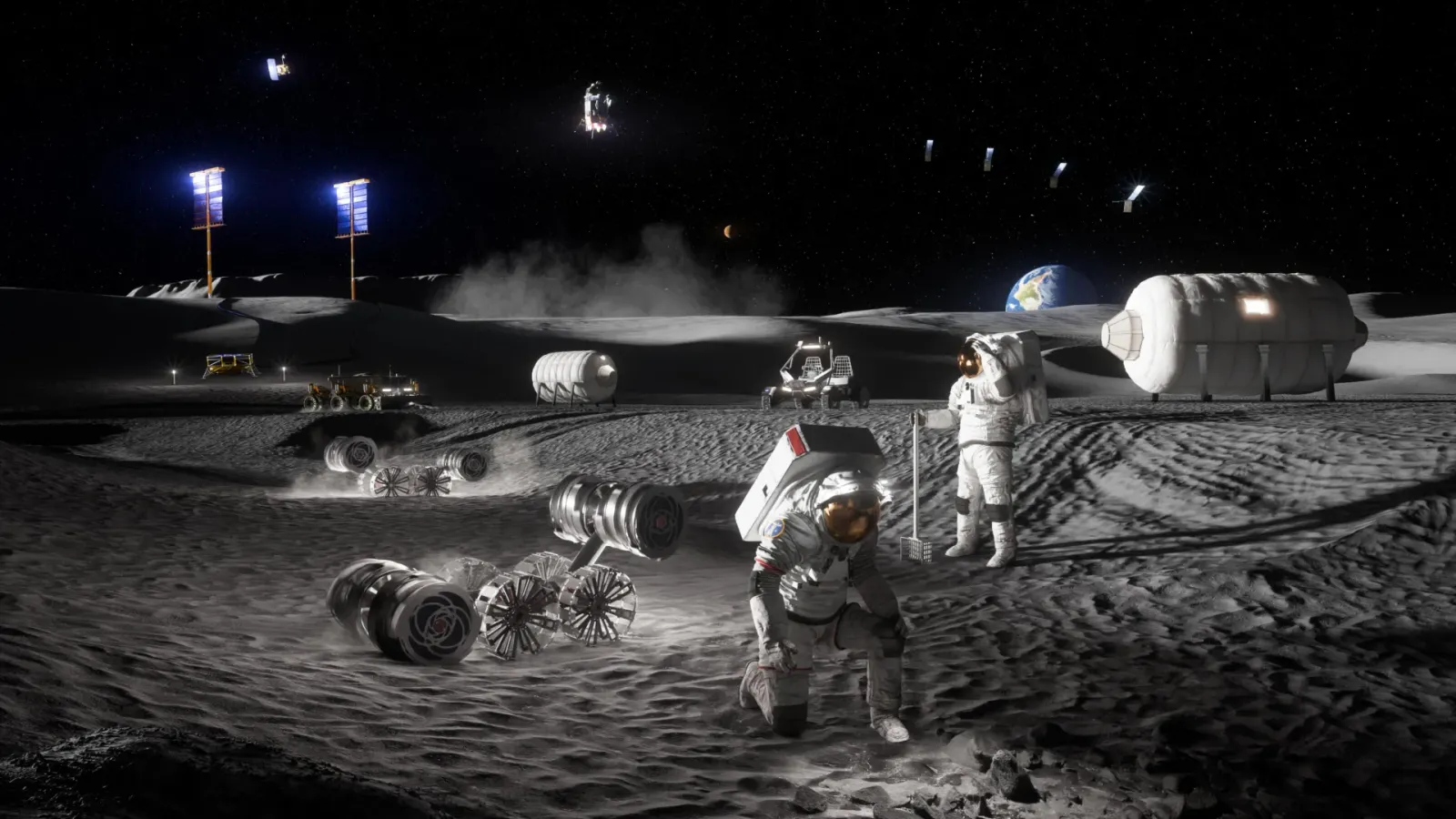
NASA is launching three investigations to locate underground shelters, hidden ice, and surface hazards ahead of humanity's first Moon base. The results will determine where astronauts can safely live and whether the Moon becomes a stepping stone to Mars.
NASA is betting humanity's first Moon base on what it cannot see from orbit. The agency is launching three investigations to hunt for underground shelters, hidden ice, and dangerous surface conditions, because the difference between a lunar outpost and a failed mission may come down to a cave entrance.
The three investigations are designed to answer one question: where can astronauts actually survive? They will scan for caves and lava tubes that could shield crews from radiation and temperature swings, map deposits of water ice that could be turned into drinking water and rocket fuel, and track hazards like dust and seismic activity that could wreck equipment or kill astronauts. The findings will directly shape where NASA builds its first permanent Moon base, and how it prepares for the much longer trip to Mars.
The stakes are existential for any lunar program. The Moon has no atmosphere and no global magnetic field, so surface radiation is brutal and unrelenting. Underground lava tubes, formed by ancient volcanic flows, are thought to offer natural shielding from cosmic rays and solar particles. But their locations and structural integrity remain largely unknown. That is why the first investigation is essentially a planetary-scale treasure hunt: find the voids, map their entrances, and determine whether they are stable enough to hold a pressurized habitat.
The second investigation targets ice, the most valuable resource on the Moon. Water ice locked in permanently shadowed craters can be split into hydrogen and oxygen, providing breathable air and rocket propellant. That would let a Moon base refuel spacecraft and reduce the cost of every subsequent mission. But ice is not uniformly distributed, and extraction in extreme cold and darkness is an engineering nightmare. The new surveys aim to pinpoint where ice is actually accessible, not just where it exists.
The third investigation is about survival in a hostile environment. The lunar surface swings from scorching daylight to cryogenic night, abrasive dust clings to everything, and moonquakes and micrometeorite impacts are constant threats. Tracking these hazards will help NASA choose landing zones that minimize risk and design habitats that can withstand the worst the Moon throws at them. It is the kind of unglamorous data that never makes a press release but determines whether a base lasts a year or a decade.
The broader implication is that the Moon is a proving ground for Mars. If astronauts can live off the land, using local ice for fuel and natural caves for shelter, then a Mars mission becomes more feasible because it would not need to carry every kilogram of water and shielding from Earth. If the surveys come back empty, every future mission gets heavier, more expensive, and more dangerous. That is why these three investigations are not just science projects; they are the strategic reconnaissance for the next era of human spaceflight.
These investigations also signal a shift in how NASA approaches exploration. Instead of sending astronauts to an unknown surface and hoping for the best, the agency is doing the geological and environmental homework first. That is a lesson for any industry: the cost of bad location data is measured in lives and billions of dollars. For the private companies already selling lunar landers and habitat modules, this survey data will be the difference between a sound investment and a gamble.
For decision-makers in aerospace, defense, and venture capital, the signal is clear: the next big space race is not about rockets, but about location data. The companies and agencies that map the Moon's underground and its ice reserves first will hold the keys to the most valuable real estate in the solar system. NASA's three investigations are the opening move, and the findings will ripple through every future contract, partnership, and mission architecture. The winners in the lunar economy will be those who can turn raw survey data into operational advantage, whether that means building habitats, extracting water, or simply knowing where not to land. NASA is searching for hidden caves, but the real discovery may be that the Moon's most important resources are the ones we cannot see from the surface.
This story's Key Insights and Take-aways are locked.
Create a free account to unlock Executive Actions for one credit.
Register to UnlockAlways free for Executives Club members. Join the Club
More in Science

France euthanized Félicette, the first cat in space, two months after her flight
Félicette's 1963 flight made France a space-race player, but her euthanasia and a crowdfunded statue reveal how high-risk programs are remembered.

Ultracold atoms just created a 'fractional Fermi sea' that breaks quantum rules
A new quantum state challenges decades of theory and hints at 'super-Fermions,' with real stakes for quantum computing and materials science.

Bangladesh's 202,000 measles cases are a 'real warning' to other nations
The world's worst measles outbreak is spreading as routine vaccination falters. Here is why every country's immunization program should pay attention.