

Netflix Down 40% as HSBC, Wells Fargo Downgrade on YouTube's Living-Room Grab
Two banks cut Netflix ratings and price targets over falling engagement and YouTube's rise, signaling the streamer's content strategy is under Wall Street scrutiny.
HSBC's Mohammed Khallouf and Wells Fargo's Steve Cahall downgraded Netflix within a week, citing YouTube's expanding living-room footprint and weak engagement trends. The back-to-back downgrades leave Netflix shares down 40% over the past year and intensify pressure on its push into sports, live events, and podcasts.
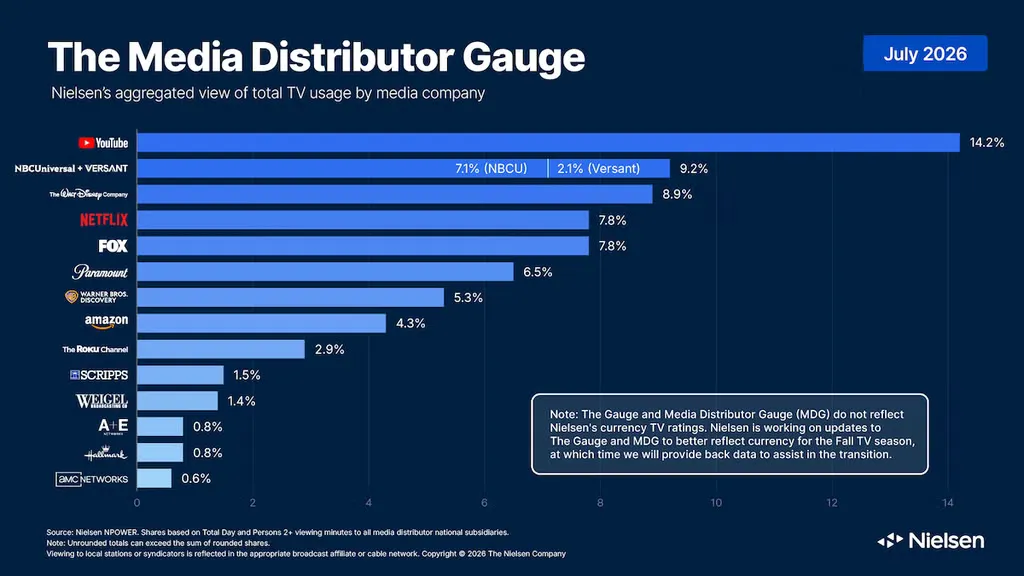
Netflix shares have lost 40% of their value over the past year, and on Tuesday the pain got a fresh catalyst: HSBC analyst Mohammed Khallouf downgraded the stock from Buy to Hold, slashing his price target from $96 to $76. His reasoning points straight at YouTube, which he says has a "rapidly expanding" living-room footprint while Netflix's share of U.S. TV time slipped to 7.8% in July. Khallouf also cited a "declining reception" to Netflix's original content and argued that a "near-term recovery in engagement looks unlikely." The downgrade lands less than a week after Wells Fargo's Steve Cahall cut Netflix to underweight from equal weight, with a price target drop from $80 to $57, over what he called "worrying" engagement trends.
Cahall's numbers are stark. He estimates Netflix members watched an average of 1.6 hours per day in the first half of 2026, roughly 8% less than the same period in 2023 after adjusting for the extra households brought in by the password-sharing crackdown. He also warned that hours spent on Netflix's top 100 original programs could fall 21% year over year in the second half. "Netflix has lacked big original series and it's showing," Cahall wrote. "We see breakout hits as a must for the stock to work again." Together, the two downgrades frame a simple problem: the streaming giant that defined binge-watching is now fighting for attention in a world where YouTube owns the living room's second screen.
Netflix is not sitting still. The company has pushed into podcasts, live events, sports, vertical video, and gaming, all in an effort to boost engagement and give viewers reasons to return beyond the next scripted season. It has also tried to lure YouTube talent to its platform, expanded its overseas lineup through a partnership with French broadcaster TF1, and is reportedly exploring live channels and bundles with services like Peacock. These moves signal a strategic pivot from pure subscription video to a broader entertainment ecosystem, but the downgrades suggest Wall Street wants proof, not promises.
The competitive backdrop is getting tougher. Beyond YouTube, Netflix faces legacy rivals Disney and Paramount, and the latter is on track to close its $110 billion merger with Warner Bros. Discovery within the next two weeks. Once that deal closes, Paramount-WBD would become the second-largest TV distributor by U.S. viewership based on Nielsen's July figures, though its individual streaming share still trails Netflix. The merger creates a stronger content library and distribution muscle, which could squeeze Netflix's negotiating power with talent and studios even as it fights YouTube for casual viewing time.
For investors, the stock's current price of $71.74 sits well below its 52-week high of $124.86, but still above its 52-week low of $65.08. The recent slide is steep: down 21% year to date, 10% in the past month, and 6.6% in the past five days. Yet over five years, Netflix is still up 21%, a reminder that the company has survived existential threats before, from DVD disruption to the rise of Disney+. The question now is whether engagement can recover without a hit machine that consistently produces cultural moments.
The downgrades also carry a broader lesson for executives across media and tech: engagement metrics are becoming the new earnings. Wall Street is no longer satisfied with subscriber counts or revenue growth alone; it wants proof that audiences are spending time, not just signing up. For Netflix, that means the next big original series isn't just a creative goal, it's a financial imperative. For peers like Disney, Paramount, and even YouTube's parent Alphabet, the same scrutiny will apply as streaming matures and growth slows.
Netflix's response will likely accelerate its move into live programming and sports, where appointment viewing can drive engagement spikes that on-demand content cannot. The company has already dipped into live events and sports, and the pressure from these downgrades may push it to double down. But live content is expensive and competitive, and YouTube has the advantage of a massive creator ecosystem that produces fresh content daily without Netflix's production costs. That asymmetry is exactly what HSBC and Wells Fargo are flagging, and it won't be solved by a single hit show.
For now, the market is watching for Netflix's next engagement data points, especially any signs that its top 100 originals are stabilizing. The stock's 40% decline over the past year has reset expectations, and the lowered price targets from two major banks suggest the downside may not be fully priced in. If Netflix can deliver a breakout hit or prove that its sports and live strategy drives hours, the narrative could flip quickly. Until then, the bears have the data on their side.
This story's Key Insights and Take-aways are locked.
Create a free account to unlock Executive Actions for one credit.
Register to UnlockAlways free for Executives Club members. Join the Club
More in Business

Royal Caribbean just spent $3B to own half of Sandals
The cruise giant is buying a 50% stake in the all-inclusive resort chain for $3 billion, a bet that land-based vacations are the next growth engine.

Paramount's Ellison: Merger Clearance Done, WBD Deal by Oct 1
David Ellison says the Paramount-WBD merger has full clearance after settling with state AGs, clearing the path for an October 1 close.
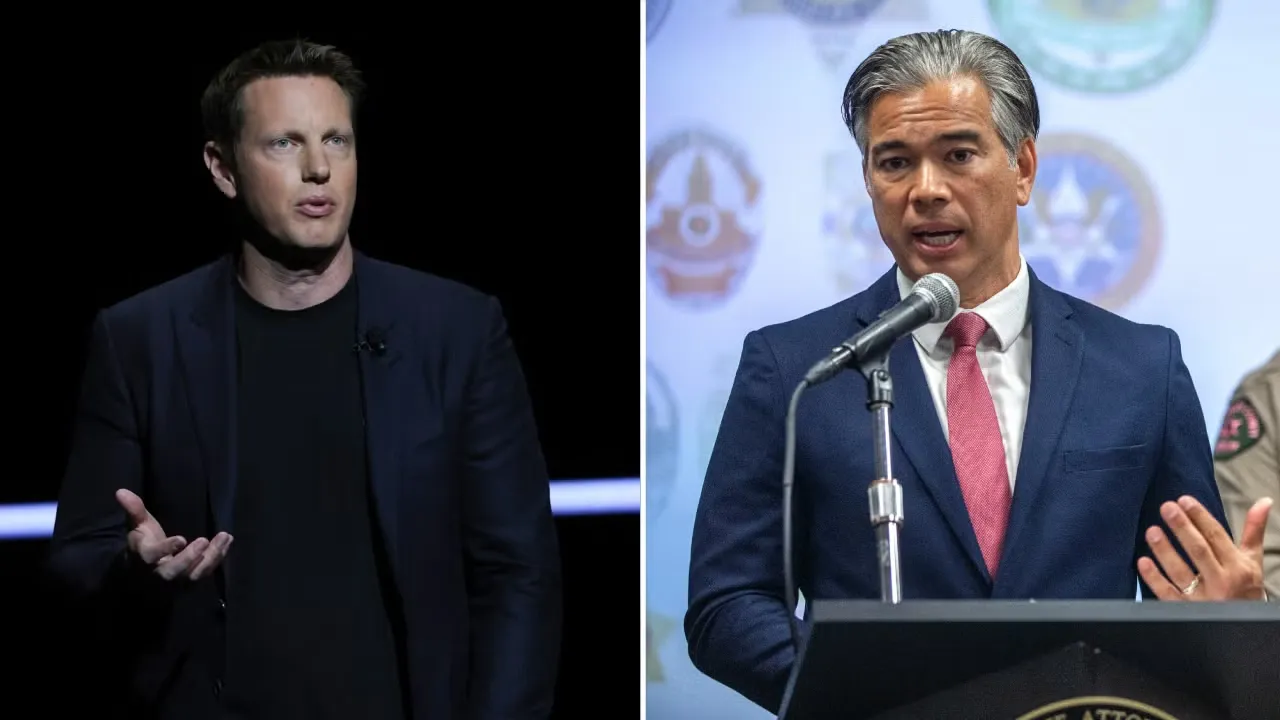
Paramount settles with 12 states, $110B Warner merger clears final hurdle
David Ellison's studio avoids a March trial and a $7M-a-day ticking fee by settling with state AGs over local job losses.