
Netflix's 'Minimum Wage' Wants 15 Minutes to Be the New Sitcom Standard
The 22-minute broadcast sitcom already lost ground to the 30-minute dramedy; Netflix is now betting shorter episodes win the fight for shrinking attention spans.
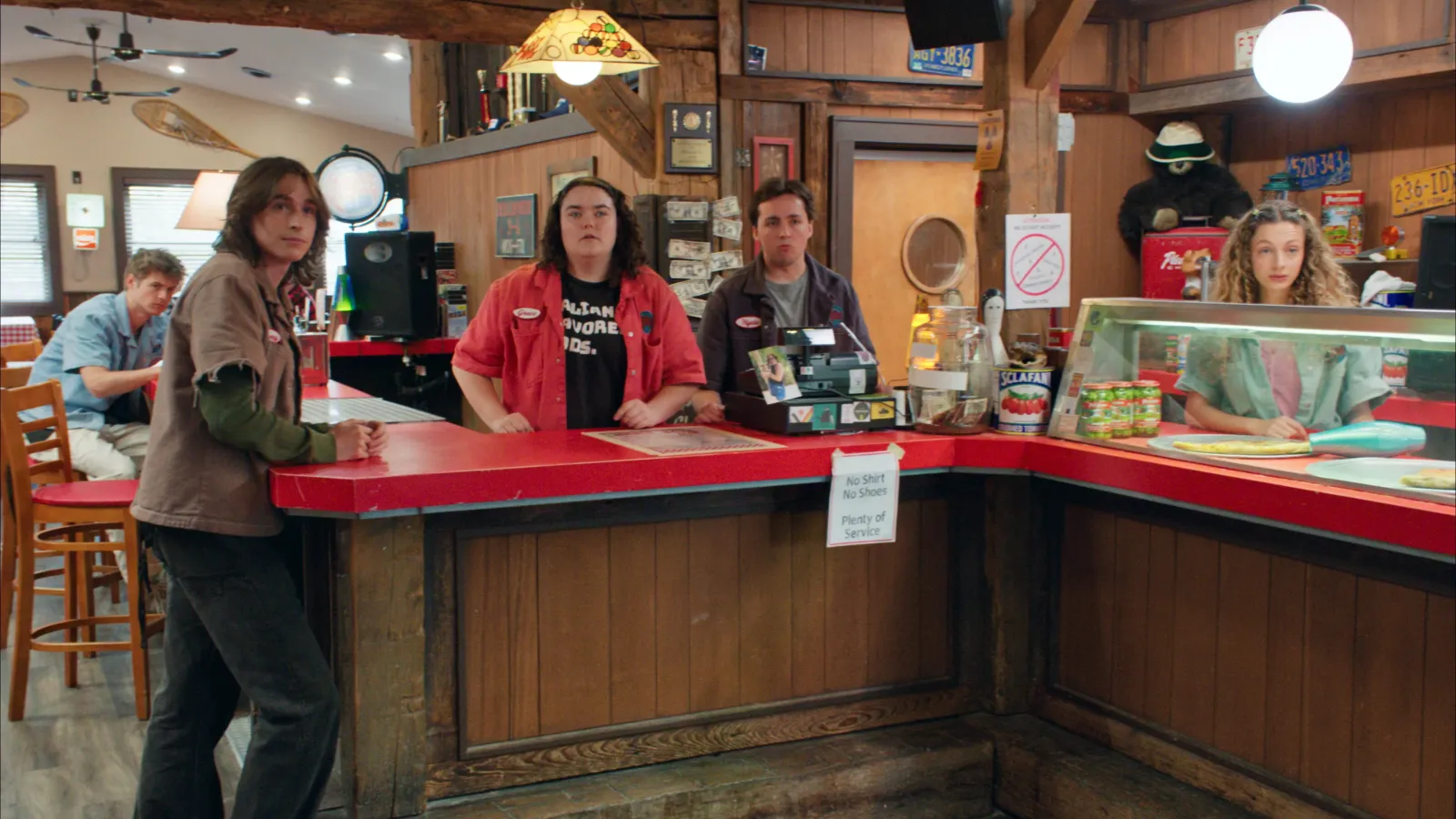
Netflix's new sitcom 'Minimum Wage' is built on roughly 15-minute episodes, with the format framed as 'the future' being 'SpongeBob'-length. For decision-makers, it is a test of whether runtime, not genre, is the next lever in the fight for shrinking attention spans.
Netflix has a new sitcom called "Minimum Wage," and its episodes run about 15 minutes each. That is the entire pitch, and it is the reason the show matters. As Deadline put it, the argument behind the format is blunt: "The future is 15-minute 'SpongeBob'-length episodes." SpongeBob SquarePants, the Nickelodeon cartoon, has historically run in segments of roughly that length, so the comparison is not a throwaway line. It is a benchmark. Netflix is not trimming a sitcom to fit a schedule. It is rebuilding the sitcom around the length of a cartoon short and betting that the shorter unit is the one audiences will actually finish.
The reversal is what makes this a story. In the streaming era, television got longer, not shorter. The 22-minute broadcast sitcom was largely replaced by the 30-minute dramedy, and the 43-minute procedural was overshadowed by the hour-long premium drama. Every one of those moves pushed in the same direction: more minutes per episode, fewer episodes per season, more prestige. Netflix is now walking that back. If the 15-minute sitcom works, it does not just add a format to the shelf. It questions the assumption that streaming's default runtime should keep expanding.
For context on why 22 minutes existed in the first place: broadcast television was built around ad breaks and fixed half-hour slots. A 30-minute block minus commercials leaves roughly 22 minutes of show. That number was never a creative ideal; it was a container. Streaming removed the container, and runtimes drifted upward because nothing was forcing them down. What is forcing them down now is not a schedule. It is attention.
That is the real competitor. A 15-minute sitcom is not fighting other sitcoms; it is fighting short-form video, the endless scroll, and the phone in the viewer's hand. The source framing is unsparing about the environment: shrinking attention spans, social media slop, doomscrolling brainrot. Against that backdrop, a 15-minute episode is a smaller ask. It is easier to start, easier to finish, and easier to start again. For a platform, the metric that matters is not how long a viewer stays in one sitting. It is whether they come back.
The economics point the same way. Shorter episodes typically carry smaller per-episode budgets than premium drama, and a shorter runtime usually means more episodes can be produced for a given spend. That changes the math on talent deals, writers' rooms, and production schedules. It also changes how a show is marketed: a 15-minute episode is a low-commitment sample, which is exactly what a platform wants when it is trying to convert a scroller into a subscriber. None of this is free. Short episodes have to earn their laughs faster, and there is less room to hide a weak premise.
The creative risk is real. The 22-minute sitcom gave writers room for an A-plot, a B-plot, and a runner. Fifteen minutes typically supports one clean idea, executed hard. That is closer to how animation has worked for decades, and it is why the SpongeBob comparison is more than a size joke. It is a structural claim: comedy can be built in short, repeatable units and still hold an audience. If that holds for live-action sitcoms, it reopens a format that broadcast abandoned.
For executives at rival streamers, the question is not whether "Minimum Wage" is funny. It is whether the format is a lever. If short episodes improve completion and retention, the format spreads, and it spreads fast, because it is cheap to test and easy to copy. If it does not, Netflix has spent a small amount of money learning that runtime was never the problem. Either way, the experiment is informative, and it is being run in public.
Watch three things: whether rivals announce short-format comedies of their own, whether the 15-minute unit shows up outside comedy, and whether Netflix starts treating runtime as a variable it can tune per genre rather than a fixed property of a show. The 22-minute sitcom was a container built for ads. The 15-minute sitcom is a container built for a phone. That is the shift worth tracking.
This story's Key Insights and Take-aways are locked.
Create a free account to unlock Executive Actions for one credit.
Register to UnlockAlways free for Executives Club members. Join the Club
More in Entertainment

Mahershala Ali's Two Oscars Buy Him Nothing: 'There Are Not Roles for Me'
The two-time Oscar winner told the 7PM in Brooklyn podcast that his trophies do not unlock work in 'the vast majority of projects,' a blunt read on what Hollywood's franchise economy actually rewards.

Robert Pattinson Is 007: Amazon's Bond Pick Sends a Divisive Film Surging
Amazon confirmed Pattinson as Bond under Denis Villeneuve, and within days the franchise's most controversial entry started climbing the streaming charts, a reminder that casting is catalog strategy.

GTA 6 Ate Nearly a Quarter of Comcast's Traffic on Its Biggest Day
Comcast says the November 19 launch pushed network traffic 31% above an average day, and the fine print on its own chart is the part operators should read twice.