
Nick Reiner argues grandfather's money should fund his murder defense
New filing invokes Carl Reiner's bequest to bypass California's slayer statute and access a $1.6M trust.

Nick Reiner, son of Rob Reiner and Michele Singer Reiner, filed new legal documents seeking release of trust funds for his murder defense, arguing money from grandfather Carl Reiner is not subject to California's slayer statute. The outcome could determine whether defendants can access inherited assets before conviction and reshape estate planning for families facing criminal proceedings.
Nick Reiner, the 33-year-old son of Rob Reiner and Michele Singer Reiner, is asking a California court to release funds from a $1.6 million trust to pay for his defense in the murder trial for his parents' deaths. His new filing argues that money left to him by his grandfather, Carl Reiner, should be segregated and released, because "Nick is not accused of causing his death." The filing directly challenges the application of California's slayer statute, which typically blocks killers from inheriting from their victims.
The legal team's argument rests on two pillars: Reiner has not been convicted of any charge related to his parents' deaths, and the funds from Carl Reiner, who died in 2020, are not "money received by Nick from or through his parents." As the filing states, "To the extent the funds Nick received from his grandfather are Nick's personal assets, they remain Nick's and should be segregated and released from this trust." The trust, valued at $1.6 million, has been the subject of a long-running dispute since Reiner turned 30.
Reiner was placed under a mental health conservatorship by his parents in 2020, according to People. He has since sued both the former fiduciary in charge of the trust and the current one, seeking access to the money. His previous attorney, well-known lawyer Alan Jackson, stepped down from the case, reportedly due to a lack of funds. The new filing also alleges that the fiduciaries have spent about $250,000 from the fund to retain legal counsel to block Reiner from accessing the trust, a detail that underscores how expensive and adversarial trust administration can become.
The criminal case itself remains in its early stages. Reiner has entered a not guilty plea in the murders of his parents. Prosecutors recently announced they will not seek the death penalty, after consulting with Reiner's siblings on the case. That decision removes one layer of stakes, but the trial still looms, and the funding question is existential for the defense. Without access to the trust, Reiner may struggle to afford the kind of legal representation expected in a high-profile double murder case.
The slayer statute argument is the crux. California law, like many jurisdictions, prevents a person who kills another from profiting from the victim's estate. But Reiner's attorneys are drawing a sharp line: Carl Reiner's bequest to his grandson is independent of the parents' assets. The filing argues that even if the funds are held by the trust, the slayer statute does not supply a basis for withholding them. This is a novel application, and a court's ruling could clarify how far the statute reaches when a defendant stands to inherit from a relative who is not the alleged victim.
For families and trustees, the case is a cautionary tale about the intersection of estate planning and criminal law. Trusts are often designed to protect assets and provide for beneficiaries, but when a beneficiary faces criminal charges, those assets can become a battleground. The $250,000 spent on legal fees to block access is money that would otherwise go to the beneficiary or other heirs. Trustees have a duty to act in the best interests of beneficiaries, but they also must navigate ambiguous legal territory when a beneficiary is accused of a crime.
The broader lesson for executives and boards is about the importance of clear trust language and contingency planning. If a trust does not explicitly address what happens when a beneficiary is accused of a crime, the courts will have to decide. That uncertainty can lead to costly litigation and delayed access to funds, exactly what is happening here. For anyone with a family trust, this case is a reminder to review the terms and consider adding provisions that anticipate extreme scenarios. The outcome of Reiner's motion could set a precedent for how similar disputes are resolved.
This story's Key Insights and Take-aways are locked.
Create a free account to unlock Executive Actions for one credit.
Register to UnlockAlways free for Executives Club members. Join the Club
More in Business

Royal Caribbean just spent $3B to own half of Sandals
The cruise giant is buying a 50% stake in the all-inclusive resort chain for $3 billion, a bet that land-based vacations are the next growth engine.

Paramount's Ellison: Merger Clearance Done, WBD Deal by Oct 1
David Ellison says the Paramount-WBD merger has full clearance after settling with state AGs, clearing the path for an October 1 close.
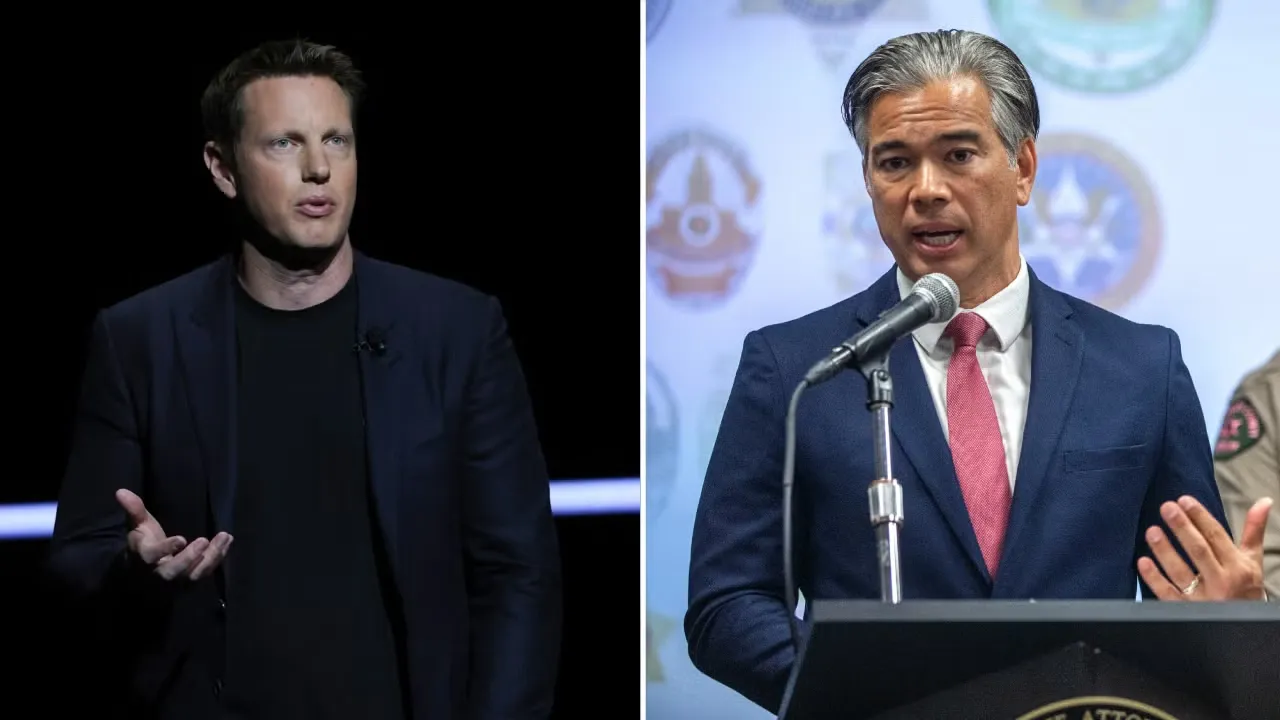
Paramount settles with 12 states, $110B Warner merger clears final hurdle
David Ellison's studio avoids a March trial and a $7M-a-day ticking fee by settling with state AGs over local job losses.