
Niger’s 2023 military takeover promised change. Three years later, stability remains uneven
A third year of rule has not delivered consistent social, security, or economic gains, leaving decision-makers to measure what comes next.

Niger’s military government seized power in 2023 with promises of social, security, and economic improvements. After three years, there are mixed reviews of its performance, with stability still an open question for regional and investor planning.
Niger’s military government took power in 2023 with a clear pitch: social progress, better security, and economic improvement. Three years later, that promise is meeting reality with mixed reviews. Some observers see partial movement, but the overall picture is that stability is not yet locked in, which is the only outcome that truly matters to civilians, businesses, and anyone funding or insuring cross-border activity.
This is the heart of the moment for executives and investors looking at Niger and the wider Sahel. The government originally framed the takeover as a path to improvements, but three years is enough time to test whether a regime change can convert hope into measurable functioning. The source is blunt about the verdict: performance is uneven, and stability is still being sought rather than delivered. That matters because “promised change” is not the same thing as predictable governance. Even when conditions improve in pockets, investors and operators need consistent rules, credible security trajectories, and confidence that policy shifts will not be reversed overnight.
To understand why mixed reviews hit so hard, you have to look at how military rule typically changes the incentives around public life and the economy. In a standard transition, civilian institutions absorb shocks and gradually rebuild legitimacy through elections and legal processes. Under military governments, the legitimacy equation tends to be managed through control, messaging, and security operations, while long-term economic reforms compete with immediate priorities. That can delay improvements, especially those requiring coordination across ministries, local governments, and private actors. The source does not detail which areas improved most, but it does specify that the promises covered three domains: social, security, and economic.
Security is often the first domain where perceptions shift, but it is also the most volatile. When stability is uncertain, operational risk increases quickly: supply chains slow, costs rise, and insurers and lenders become more conservative. That affects more than big investors. Small firms feel it through delayed payments, higher input prices, and difficulty hiring or retaining staff safely. In the background, governments face a trade-off: spend enough on security to quiet immediate threats while still funding economic measures that can reduce underlying strain. If the balance is off, the country can experience a cycle where insecurity undercuts economic growth, and weak growth makes security harder.
Economic improvement, meanwhile, is the slowest to show consistent results, even in peaceful transitions. It requires policy continuity, tax and regulatory clarity, and predictable incentives for businesses to invest. Under a military government, decision-making may be faster at the top but less stable at the margins. That is where “mixed reviews” can come from: some reforms or initiatives may move forward, while others stall or fail to take hold because implementation depends on trust across institutions and with the private sector. For executives, the second-order implication is that you cannot treat headline progress as a substitute for on-the-ground operating conditions.
Social improvement is the third pillar, and it connects directly to stability. Social services, education, healthcare, and livelihoods determine whether people experience the government’s performance as legitimacy, frustration, or fear. When social outcomes do not improve consistently, stability becomes harder to sustain, even if security operations reduce certain threats temporarily. This is why “still seeks stability” is more than a phrase. It signals that the state and its leaders are not yet at the point where people and markets can plan around a stable baseline.
For regional peers, Niger’s three-year arc also functions as a warning and a checklist. Neighboring governments and organizations watching the Sahel will treat Niger’s experience as evidence that regime change alone does not automatically produce the promised improvements across all three domains. For boards and investment committees, it reinforces a practical reality: evaluating political risk is not just about ideology or headlines. It is about time horizons, measurable governance capacity, and whether stability is trending in a direction that reduces operational uncertainty.
The strategic stake is straightforward. Niger’s military government promised improvements when it usurped power in 2023, but three years down the line, stability is still being sought and reviews are mixed. That combination tends to keep risk elevated, constrain investment decisions, and increase the burden on any organization operating or partnering in the country. The question now is not whether change was promised. The question is whether stability can become consistent enough to make future commitments durable.
This story's Key Insights and Take-aways are locked.
Create a free account to unlock Executive Actions for one credit.
Register to UnlockAlways free for Executives Club members. Join the Club
More in Politics
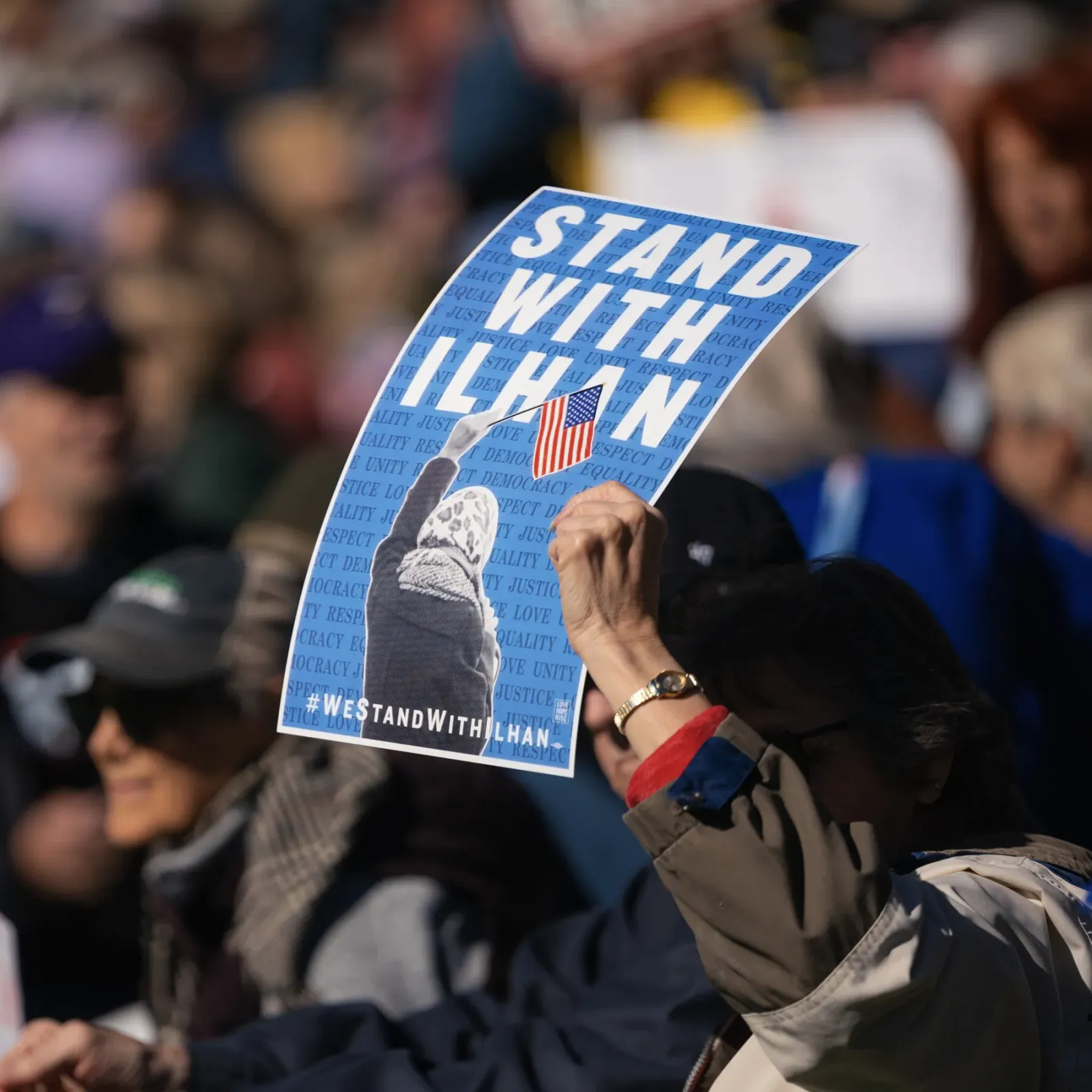
Obama Defends Ilhan Omar After Agents Search Her Home in Trump Inquiry
The former president's intervention raises the stakes in a federal probe into immigration paperwork that has put a prominent progressive lawmaker in the crosshairs.

Blair-era minister: cut welfare to fund youth job support
Alan Milburn's call for welfare cuts to fund employment support opens a Labour fight over benefits and the Neet crisis.
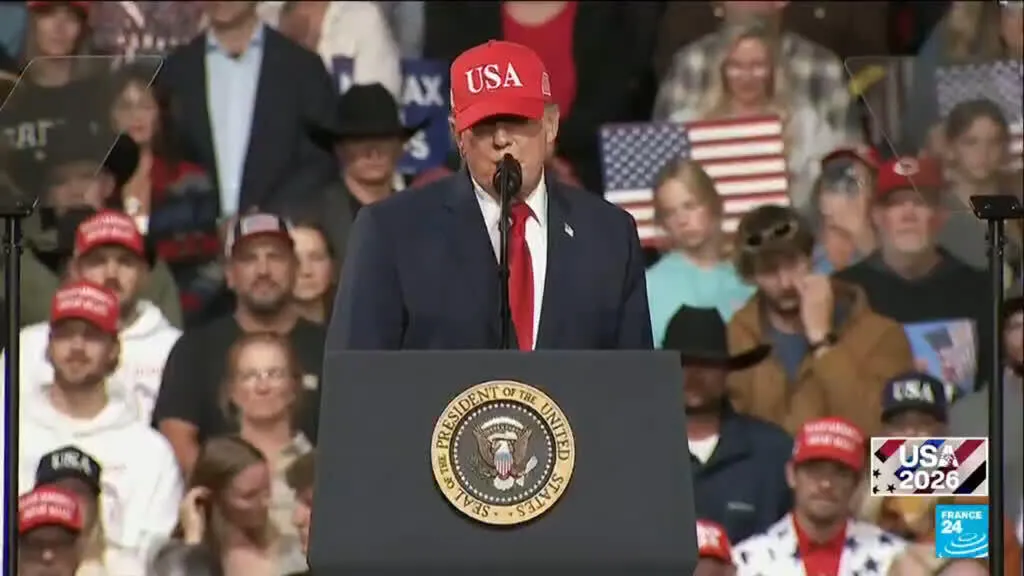
Hot September CPI: energy costs surge, voters feel the squeeze before midterms
The latest inflation print lands as Trump campaigns for GOP control of Congress, putting cost-of-living worries at the center of the midterm fight.