
Nirav Shah jumps into Maine governor race to replace Graham Platner
The Democratic primary runner-up turns “already in the race” into an official bid, banking on pandemic credibility and an outsider pitch.
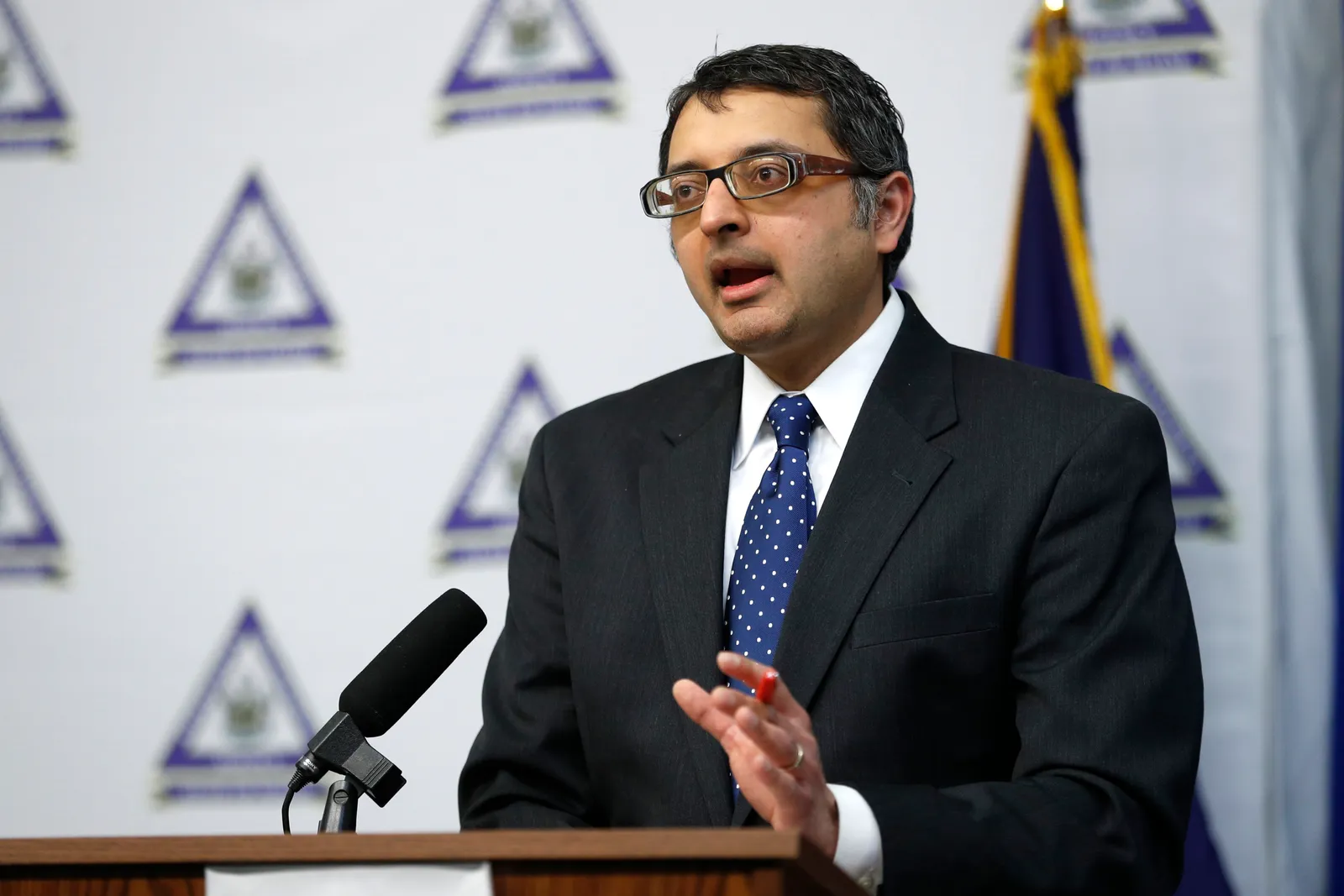
Nirav Shah, the former Maine CDC director and Democratic primary runner-up for governor, officially entered the race on Thursday to succeed Graham Platner. The move reshapes the party’s succession calculus and raises the question of whether the “outsider” brand can unite Democrats fast enough to face Susan Collins.
Nirav Shah, the former Maine Center for Disease Control and Prevention director who recently lost in the Democratic primary for governor, officially threw his name into the race to succeed Graham Platner on Thursday morning. This is not a late-night “maybe” or a symbolic nod. Shah’s entry follows Platner’s exit on Wednesday evening, and it cements what the party already suspected after early signals: on Tuesday, Shah was doing interviews and calling for debates and an open process, and by Thursday, his public comments posted to social media turned that groundwork into an explicit candidacy.
In the post that effectively locked in his status as a candidate, Shah framed the entire political stakes around dissatisfaction and targeting Susan Collins. “Establishment politicians have failed us,” Shah said on X. “To defeat Susan Collins, we need an outsider who is not afraid to take on the broken system she has spent decades upholding.” In other words, Shah is trying to convert statewide name recognition into a clear electoral contrast, positioning himself as the Democratic vehicle for taking down Collins.
That “name recognition” part is the real asset. Before running for governor, Shah led Maine through the Covid-19 pandemic, something that has given him an incredibly high name ID statewide. In politics, credibility is often hand-waved. Here it is operational. Pandemic leadership is the kind of experience voters remember because it was high-visibility, high-stakes, and constantly measured against results. Shah’s campaign posture reflects that: he brands himself as a progressive, but also underscores separation from the previous power center of the race.
The distancing is not subtle, and it shows up in how candidates relate to one another inside ranked-choice voting. Shah has distance from Graham Platner, who did not endorse Shah as one of his ranked-choice candidates in the gubernatorial primary. That detail matters because it signals intra-party friction at the exact moment Democrats need cohesion. Ranked-choice endorsements are not just about optics. They shape how supporters decide where to place second preferences, and they can also signal who the “grown-ups” of a coalition think should lead. Shah’s entry, timed and amplified, implicitly challenges that kind of establishment handoff.
At the same time, Shah is not arriving as an accidental replacement candidate. He explicitly talks about unity and urgency in his post: “I’m proud to have dedicated my career to public service, and to have delivered for Mainers in our darkest times,” Shah said. “Now, in this unprecedented moment, I’m ready to unite our party and fight for you once again.” That is a direct bid to neutralize the most damaging narrative for any replacement run: that the candidate is opportunistic or divided from the prior coalition. By referencing his service during Maine’s darkest times, Shah leans on a moral authority story. By promising to unite the party, he is trying to paper over the earlier lack of Platner backing.
There is also a broader political mechanics point here, and it matters beyond Maine boardrooms and donor calls. When an incumbent exits and multiple Democrats are already moving informally, the first official candidacy can become the anchor point for endorsements, fundraising, and debate scheduling. Politicians often do the “quiet courtship” early. Then, when someone formally files or declares, the calendar firms up and the coalition decisions become harder to reverse. The source explicitly notes that many Democrats were “essentially already in the race” following Platner’s exit Wednesday evening, including Shah who had already been doing interviews and pushing for debates and an open process Tuesday. Thursday is the moment those soft signals harden into a structured contest.
For decision-makers watching this, the strategic question is whether Shah’s outsider frame can convert into party unity quickly enough to handle the general election math against Susan Collins. Shah is not only arguing he can win, he is arguing why the system has failed. That rhetoric can energize disaffected voters. It can also irritate moderates who prefer incrementalism over confrontation. The payoff is that if the “outsider who is not afraid” message sticks, Democrats can consolidate around a narrative of accountability and change. The risk is that if factions interpret his entry as a wedge, Democrats could spend the replacement cycle fighting inside the tent instead of focusing on the external opponent.
Ultimately, Shah’s entry turns a succession moment into a branding and coalition stress test for Maine Democrats. He brings pandemic leadership credibility, statewide name ID, and a progressive identity, but he also brings a history of not being endorsed by Platner as one of his ranked-choice candidates. That combination is potent, because it gives Shah both legitimacy and a built-in contrast. Now the party has to decide whether that contrast becomes a unifying engine or a lingering fracture right before the race to defeat Susan Collins.
This story's Key Insights and Take-aways are locked.
Create a free account to unlock Executive Actions for one credit.
Register to UnlockAlways free for Executives Club members. Join the Club
More in Politics

Glacial collapse, not rain, killed 180 in Nepal's Himalayan flood
The Himalaya's extreme geography hid the true cause of Nepal's catastrophic flood, a glacial collapse that turned a geological battleground into a mass-casualty zone.

Iran’s Esmail Baghaei says Oman talks start shipping via Hormuz, not US talks yet
Temporary route plans with Oman aim to restart commerce while Tehran says Washington dialogue is not on the table.
Standards watchdog opens probe into Reform UK deputy leader Richard Tice over interests
The parliamentary standards commissioner says it began an investigation on 28 July into a possible undeclared interest.